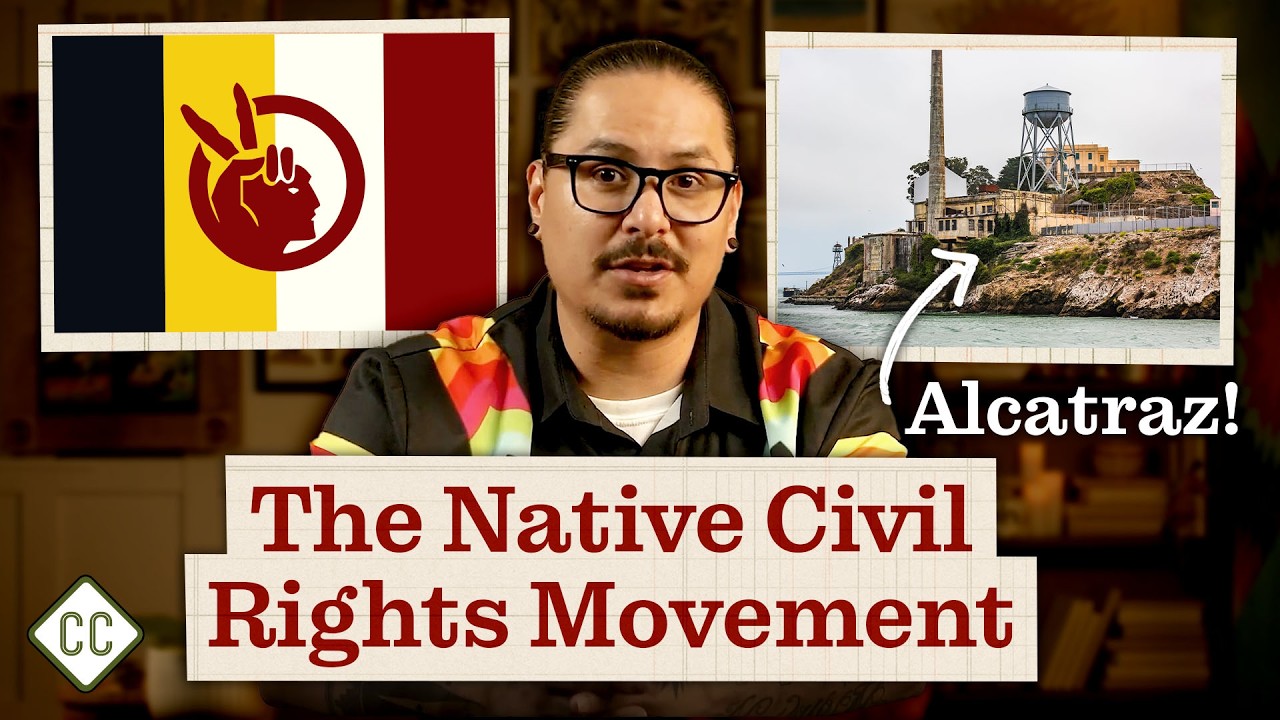
The Native Civil Rights Movement: Ep 15 of Crash Course Native American History
Keywords
Summary
157 words
Critical Evaluation
Value of the Information & Strength of the Argument
The video provides valuable historical context and clearly explains the significance of the self-determination era. It effectively argues that the occupation of Alcatraz was a pivotal moment that led to policy changes, and it supports this with specific examples and quotes. The argumentation is solid, presenting both the benefits and limitations of self-determination, which adds nuance to the narrative. The inclusion of contemporary issues, such as food distribution, demonstrates the ongoing relevance of the topic.
Scientific Rigor, Source Quality, Title Accuracy
The video maintains a high level of scientific rigor, referencing specific legislation, reports, and historical events. The sources are credible, including congressional reports and the Indian Child Welfare Act. The title accurately reflects the content, and the episode is well-structured with clear sections. The use of a Native American host adds authenticity and perspective. The video does not shy away from discussing problems, such as corruption and the exclusion of some tribes, which enhances its credibility.
166 words
Title / Content Match
The title accurately reflects the content, which focuses on the Native civil rights movement and the era of self-determination.
Quality & Reliability
8/10
The video is produced by CrashCourse, a well-established educational channel known for its rigorous research and expert consultation. The content is presented by Che Jim, who is Native American, and the episode includes references to primary sources and specific legislation. The information is accurate and well-contextualized, with a clear presentation of historical events and their implications.
Key Moments
Markers derived by PSI from the transcript: the creator did not define chapters.
- Introduction to the episode and the significance of Alcatraz
- Indians of All Tribes occupation of Alcatraz
- The Self-determination Era begins
- Effects of Self-determination on education and services
- The Indian Child Welfare Act
- Problems with Self-determination, including corruption
- Self-determination Today and ongoing efforts
- Review and Credits
Cited Sources
- Sources document for Crash Course Native American History — The video description links to a document containing sources used in the episode.
- How this series was made — The video description provides a link to a document explaining the production process of the series.
Concurring Sources
- Indian Self-Determination and Education Assistance Act — The video discusses this act as a key outcome of the self-determination movement.
- Alcatraz Island occupation — The video describes the occupation as a catalyst for policy change.
External References
Contribution & Novelties
The video provides a concise and accessible overview of the self-determination era, highlighting its origins in the Alcatraz occupation and its lasting impact. It offers a balanced perspective, acknowledging both achievements and ongoing challenges. The episode is part of a larger educational series that aims to provide a comprehensive history of Native Americans.
Pour aller plus loin :
- Indian Self-Determination and Education Assistance Act of 1975 — The key legislation discussed in the video.
- Alcatraz Island occupation — The event that catalyzed the self-determination movement.
- Indian Child Welfare Act — Legislation aimed at protecting Native children.
- Bureau of Indian Affairs — The federal agency central to the trust relationship and self-determination policies.
112 words
Radar Profile
The radar profile shows high scores in information quantity, quality, and reliability, with a moderate technical level. This indicates a well-researched and informative video that is accessible to a general audience, with a strong emphasis on factual accuracy and historical context.