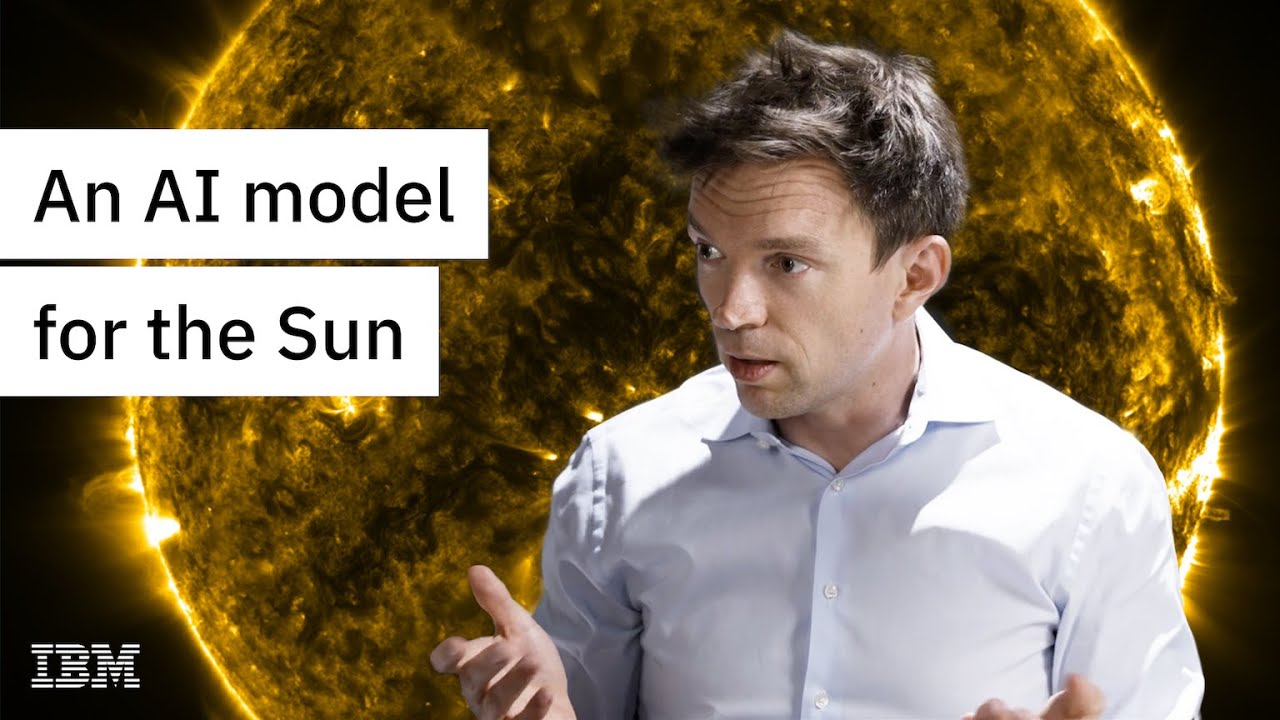
Why NASA and IBM made a new AI model that predicts the Sun's damaging flares
Keywords
Summary
190 words
Critical Evaluation
Value of the Information & Strength of the Argument
The video provides valuable insights into the development of a novel AI foundation model for solar physics. It explains the scientific and AI challenges, such as the difficulty of predicting solar flares from limited observational data and the decision-making process for model design. The argumentation is coherent and credible, supported by the interviewer’s questions and the expert’s detailed responses. However, the discussion is high-level and lacks quantitative performance metrics or comparisons with existing methods, which would strengthen the scientific value.
Scientific Rigor, Source Quality, Title Accuracy
The video is produced by IBM Research, and the interviewee is the technical project lead, lending authority to the claims. The sources cited include the IBM Research blog and the Hugging Face model repository, which are appropriate for verifying the model’s existence and details. The title accurately represents the content, focusing on the motivation and development of the Surya model. The video does not include any external sources or references to peer-reviewed literature, which limits the scientific rigor.
173 words
Title / Content Match
The title accurately reflects the content, which focuses on the motivation and development of the Surya model for predicting solar flares.
Quality & Reliability
8/10
The video is an interview with the technical project lead, providing credible insights into the development and capabilities of the Surya model. The claims are plausible and align with the open-source release and benchmark. However, the video is promotional in nature and lacks independent verification or detailed technical evidence.
Key Moments
Markers derived by PSI from the transcript: the creator did not define chapters.
- Introduction to the Surya model and its purpose.
- Discussion on the challenges of building a foundation model for a new domain.
- Explanation of the training data from SDO and the forecasting pretext task.
- Description of the model's ability to generate visual predictions of solar flares.
- Introduction of Surya Bench and the open-source release.
- Discussion on potential applications in space weather forecasting and satellite protection.
- Surprises encountered, including the ineffectiveness of injecting domain knowledge.
- Comparison with Earth and climate models, and future plans.
Cited Sources
- Surya on Hugging Face — Model repository for Surya, mentioned as the release platform.
- IBM Research blog on Surya — Blog post providing more details about the model, mentioned in the description.
Concurring Sources
- IBM Research blog on Surya — The blog post likely provides additional details and confirms the claims made in the video.
External References
Contribution & Novelties
The video presents the Surya model as a pioneering AI foundation model for solar physics, capable of generating visual predictions of solar flares. This is a novel contribution compared to traditional binary classification approaches. The model is open-sourced, along with a benchmark, to foster community adoption and further research. The discussion also highlights the counterintuitive finding that purely data-driven approaches outperformed models with injected domain knowledge, which is a valuable insight for AI for science.
Pour aller plus loin :
- Solar Dynamics Observatory (SDO) — The satellite providing the training data, relevant for understanding the data source.
- Foundation models — The AI paradigm underlying Surya, useful for context.
- Space weather — The application domain, relevant for understanding the impact of solar flares.
122 words
Radar Profile
The radar profile shows high scores in quality and reliability, reflecting the credible source and expert interview. The quantity of information is moderate, and the technical level is accessible to a general audience. The overall profile suggests a well-produced, informative video with strong scientific backing.
💬 No comments were provided for analysis.