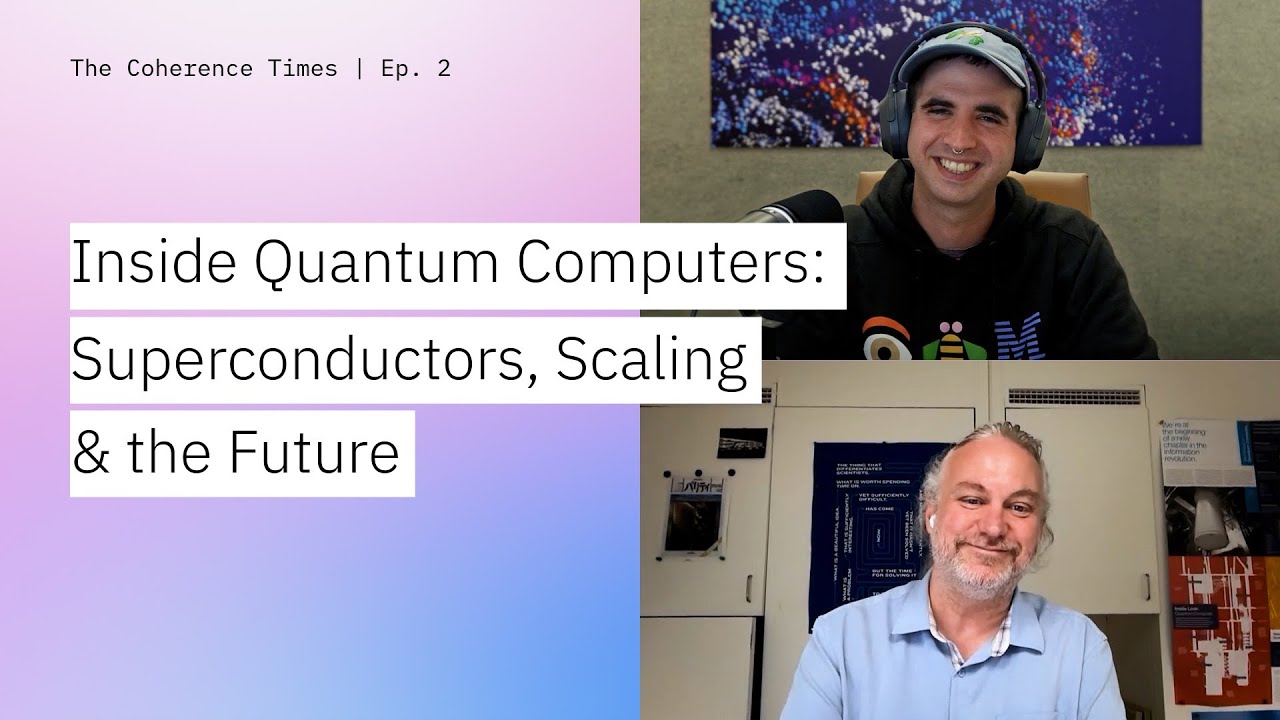
Inside Quantum Computers: Superconductors, Scaling & the Future
Keywords
Summary
139 words
Critical Evaluation
Value of the Information & Strength of the Argument
The value of the information is high for a general audience seeking to understand quantum computing fundamentals. Oliver Dial offers clear analogies (e.g., joystick vs. on-off switches) and explains complex concepts like superposition and isolation without oversimplifying. The argumentation is coherent and logically structured, moving from basic principles to hardware specifics and scaling issues. However, the discussion is largely descriptive and lacks critical examination of competing technologies or challenges beyond IBM’s approach. The podcast serves as an informative introduction rather than a rigorous technical analysis.
Scientific Rigor, Source Quality, Title Accuracy
The scientific rigor is moderate: the content is accurate and reflects current IBM research, but it is presented as expert opinion without citations to peer-reviewed literature. The title accurately represents the content, which focuses on superconducting qubits and scaling. The description provides a link to IBM’s quantum learning resources, but no specific external sources are cited. The podcast is a corporate production, so potential bias should be considered, though the technical explanations appear sound.
174 words
Title / Content Match
The title accurately reflects the content, covering superconducting qubits, scaling challenges, and future prospects.
Quality & Reliability
8/10
The podcast features Oliver Dial, CTO of IBM Quantum, providing expert insights into quantum computing hardware. The content is technically accurate and well-explained, though it represents a corporate perspective and lacks peer-reviewed citations.
Chapters
Cited Sources
- IBM Quantum Learning — Referenced in the video description as a resource to learn more about quantum computing.
Concurring Sources
- IBM Quantum Learning — Official IBM resource providing educational content on quantum computing, consistent with the podcast's explanations.
Contribution & Novelties
The podcast provides a clear, expert-led explanation of quantum computing hardware, specifically IBM’s superconducting qubit technology. It offers valuable insights into the engineering challenges of building and scaling quantum computers, such as cryogenics and noise isolation. The discussion is accessible yet technically informed, making it a useful resource for those new to the field.
Pour aller plus loin :
- Quantum computing — Overview of quantum computing principles and history.
- Superconductivity — Explanation of the phenomenon enabling lossless current flow.
- Qubit — Detailed description of the quantum bit and its properties.
- Quantum error correction — Key challenge for scaling quantum computers.
100 words
Radar Profile
The radar profile shows high scores in information quantity and quality, reflecting the podcast's comprehensive coverage. The technical level is moderate, suitable for a general audience. Reliability is high due to the expert speaker, but the lack of external citations slightly lowers the score.