Building Trustworthy AI Through Collaboration
Keywords
Summary
140 words
Critical Evaluation
Value of the Information & Strength of the Argument
The talk provides valuable insights into the practical challenges of implementing AI in healthcare, emphasizing the need for collaboration and community involvement. The speaker’s argumentation is solid, grounded in her extensive experience and specific project examples. She effectively illustrates the importance of explainable AI and the limitations of current methods. The discussion of fairness and the difficulty of fixing biases is particularly insightful. However, the talk is more of an overview than a deep technical dive, and some claims could benefit from more detailed evidence.
94 words
Title / Content Match
The title accurately reflects the content, as the talk focuses on building trustworthy AI through collaborative approaches in healthcare.
Quality & Reliability
7/10
The talk is based on the speaker's extensive experience in biomedical informatics and presents several real-world projects. The methods are described at a high level, and while the speaker is credible, the talk is an expert opinion rather than a peer-reviewed presentation. The content is plausible and aligns with known challenges in healthcare AI, but lacks detailed methodological transparency.
Key Moments
Markers derived by PSI from the transcript: the creator did not define chapters.
- Introduction to the talk and the importance of collaboration in trustworthy AI.
- Description of AI-FOR-U project with HBCU and community engagement.
- Discussion of barriers to AI implementation in low-resource settings.
- Exploration of fairness and bias in AI models.
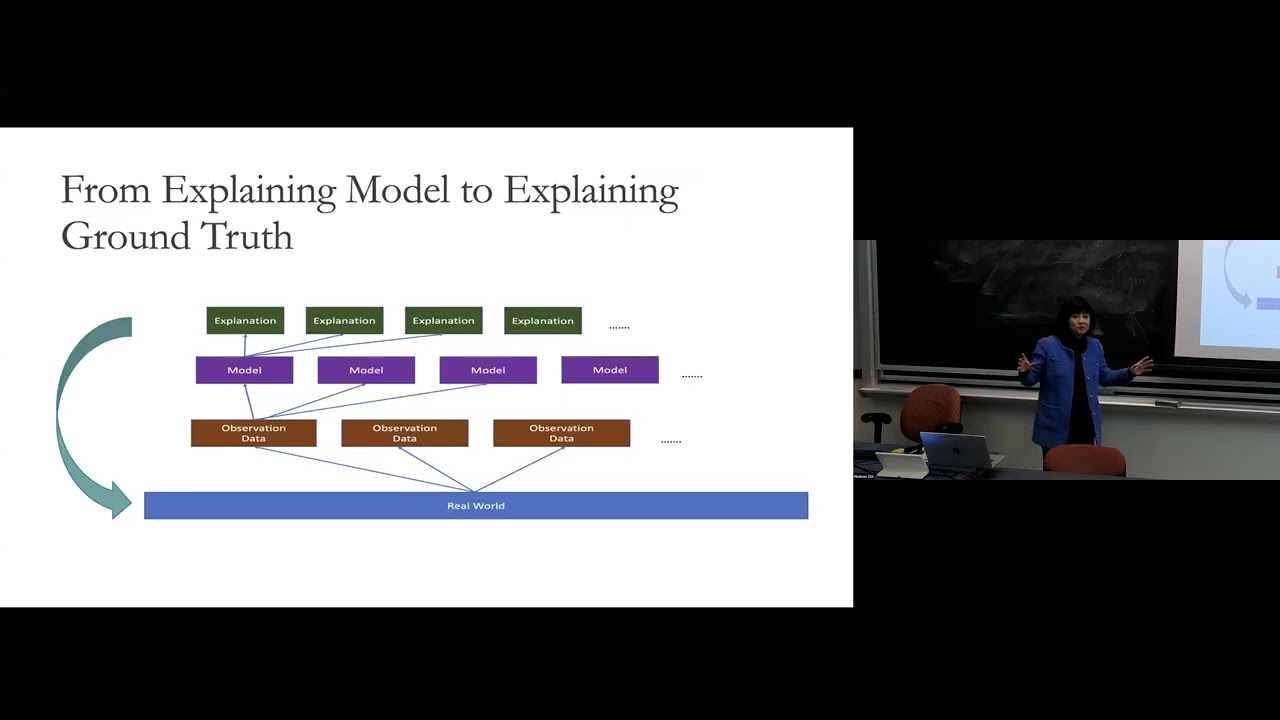
- Introduction to explainable AI and the impact score method.
- Case study on predicting unused appointments using large EHR data.
- Discussion of model performance and the importance of routine clinical data.
- Case study on mental health support and medication selection for depression.
- Case study on chronic disease management and the potential of AI to improve outcomes.
- Conclusion emphasizing the need for collaboration and transparency in AI development.
Cited Sources
- AIM-AHEAD program — Mentioned as the funding source for AI-FOR-U and ArtAI projects.
- SPARC (nonprofit) — Collaborator on ArtAI project for individuals with severe disabilities.
- Cerner (EHR vendor) — Used as the data source for the appointment prediction study.
Concurring Sources
- AIM-AHEAD program — Supports the collaborative approach and focus on health disparities.
- Explainable AI literature — Aligns with the talk's emphasis on explainability.
Contribution & Novelties
The talk contributes to the field by showcasing real-world examples of collaborative AI development in healthcare, emphasizing community-centered approaches and the importance of explainability. It introduces the concept of ‘impact score’ as a method to make AI predictions more interpretable to clinicians and administrators. The talk also highlights the challenges of fairness and the need for transparency in AI systems.
Pour aller plus loin :
- Explainable AI — Overview of methods and importance.
- Participatory design — Approach used in AI-FOR-U project.
- Health disparities — Context for the projects.
- AIM-AHEAD — Funding program for AI in health disparities research.
98 words
Radar Profile
The radar profile shows balanced scores across all dimensions, with slightly higher scores in information quantity and quality, indicating a well-rounded presentation. The technical level is moderate, suitable for a general scientific audience, while the reliability is solid due to the speaker's expertise.