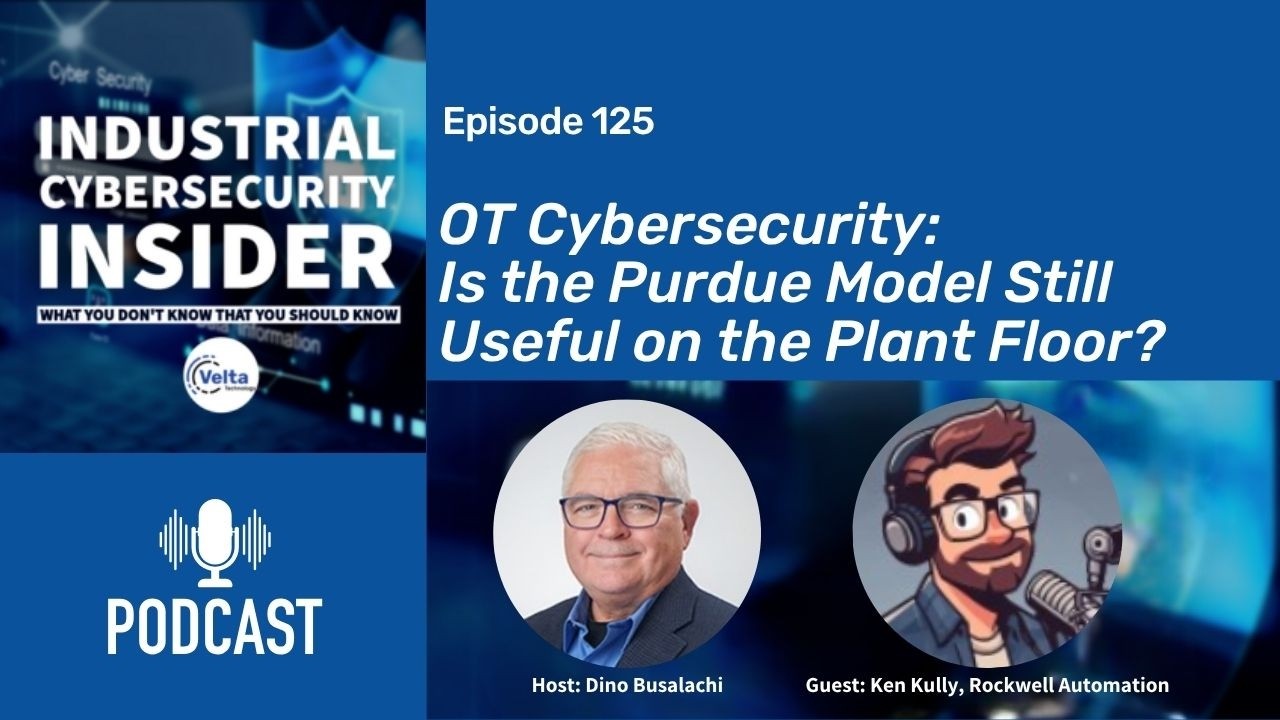
OT Cybersecurity: Is the Purdue Model Still Useful? #industrialcybersecurity
Keywords
Summary
180 words
Critical Evaluation
Value of the Information & Strength of the Argument
The value of the information lies in its practical, practitioner-level insights. The speakers provide concrete examples of challenges in OT environments, such as legacy systems, resistance to MFA, and the difficulty of asset discovery. The argumentation is solid, built on years of field experience, and they effectively argue that the Purdue Model, while not perfect, is still a useful framework for segmentation. They also make a strong case that IT/OT convergence is primarily a people and process issue, not a technology one, which is a valuable perspective.
Scientific Rigor, Source Quality, Title Accuracy
The scientific rigor is moderate. The discussion is based on anecdotal evidence and professional experience rather than formal research. No specific sources are cited, but the speakers reference industry standards and frameworks like NERC CIP and the Converged Plantwide Ethernet (CPwE) design. The title accurately reflects the content, which is a focused debate on the Purdue Model’s utility. The lack of formal citations is a limitation, but the expertise of the speakers lends credibility.
176 words
Title / Content Match
The title accurately reflects the core topic of the conversation, which is an evaluation of the Purdue Model's relevance in modern OT environments.
Quality & Reliability
7/10
The discussion is based on extensive practitioner experience from two experts in the OT cybersecurity field. They provide practical insights and real-world examples, but the content is largely anecdotal and lacks formal citations or references to specific studies or standards. The information is credible but not rigorously sourced.
Key Moments
Markers derived by PSI from the transcript: the creator did not define chapters.
- Introduction and context for the discussion on the Purdue Model.
- Ken's background in OT, from early jobs to current role at Rockwell.
- The main question: has the Purdue Model outlived its usefulness?
- Discussion on using Purdue as a framework rather than a strict blueprint.
- IT/OT convergence as a people and process challenge, not technology.
- The 'silver tsunami' and the challenge of transferring tribal knowledge.
- MFA, shared logins, and the perception that security gets in the way.
- Legacy systems, vendor lock-in, and the economics of downtime.
- The importance of discovery: diagrams, configs, and documentation.
- Purdue as a map: brokering traffic, one-up/one-down, and the '3.5' DMZ.
Contribution & Novelties
This episode provides a candid, practitioner-level perspective on the Purdue Model’s relevance, emphasizing that it remains a useful map for network segmentation despite its age. The discussion adds value by highlighting the people and process challenges of IT/OT convergence, which are often overlooked in favor of technology solutions. The emphasis on asset inventory as a foundational step is a key takeaway.
Pour aller plus loin :
- Purdue Enterprise Reference Architecture — Overview of the model’s structure and levels.
- ISA/IEC 62443 — International standards for industrial automation and control systems security, which build on the Purdue model.
- NIST SP 800-82 — Guide to Industrial Control Systems (ICS) Security, which references the Purdue model.
112 words
Radar Profile
The radar profile shows a balanced score across all dimensions, with slightly higher scores in quantity of information and global reliability, reflecting the depth of practical knowledge shared. The lower score in technical level indicates that the content is accessible to a broad audience, while still providing valuable insights for professionals.