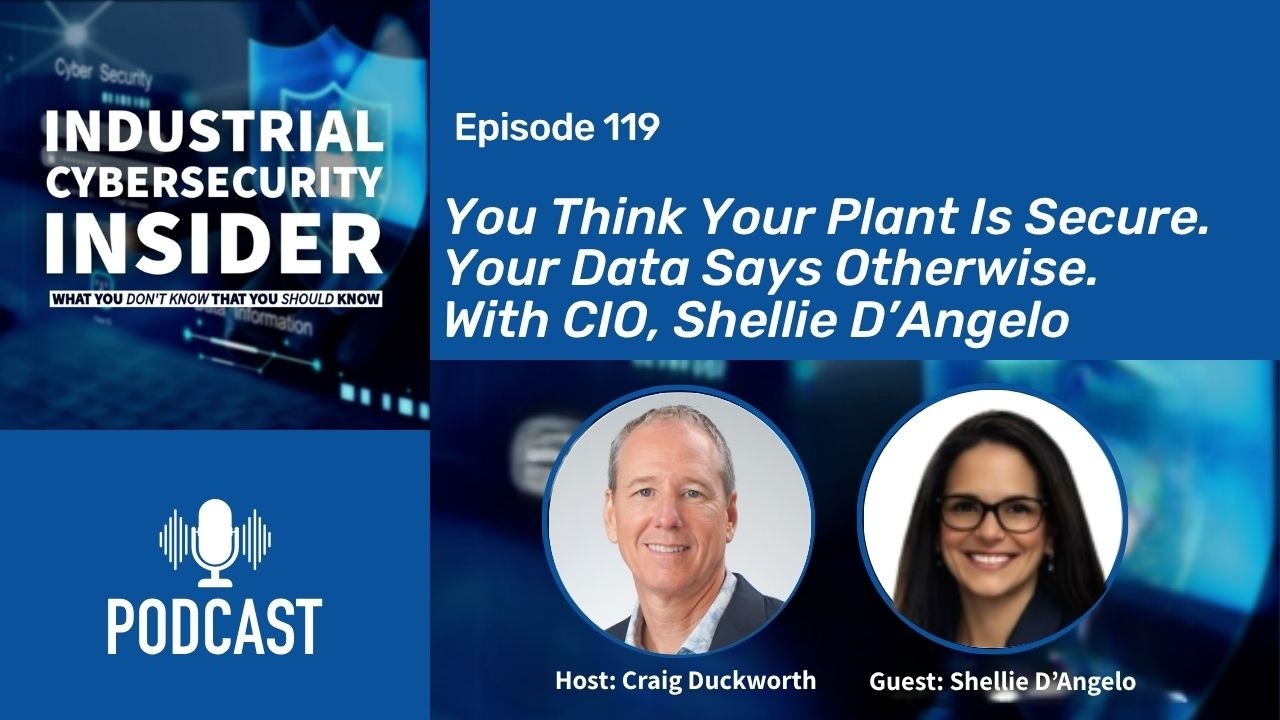
Your OT Assets Are Invisible (And That's a Bigger Problem Than You Think)
Keywords
Summary
181 words
Critical Evaluation
Value of the Information & Strength of the Argument
The value of the information lies in the practical, experience-based insights from a senior IT leader, which are directly applicable to organizations navigating OT/IT convergence. The argumentation is coherent and well-structured, with a clear logical flow from the importance of data governance to the necessity of asset visibility and the risks of shadow IT. The discussion on AI as a double-edged sword is particularly relevant, highlighting both the potential and the dangers. However, the arguments are largely anecdotal and lack empirical evidence or case studies, which weakens the overall persuasiveness. The emphasis on ’turning chaos into cash’ provides a business-oriented perspective that is compelling but could benefit from more concrete examples.
Scientific Rigor, Source Quality, Title Accuracy
The scientific rigor is moderate; the conversation is based on professional experience rather than peer-reviewed research. No specific sources are cited, and the podcast format is more conversational than analytical. The title accurately reflects the content, focusing on the invisibility of OT assets and the associated risks. The lack of citations and reliance on personal anecdotes reduces the overall reliability, but the insights align with common knowledge in the cybersecurity field. The adéquation between title and content is good, as the discussion consistently returns to the theme of asset visibility and its importance.
219 words
Title / Content Match
The title accurately reflects the core theme: the invisibility of OT assets and the associated risks, which is discussed throughout the episode.
Quality & Reliability
7/10
The conversation is based on the expert experience of a CIO and chief enterprise architect, providing practical insights but lacking empirical data or references. The claims are plausible and align with industry knowledge, but the lack of citations and the promotional nature of the podcast reduce the score.
Key Moments
Markers derived by PSI from the transcript: the creator did not define chapters.
- Introduction and the need for honest risk conversations.
- Shellie D'Angelo's background and experience in rebuilding enterprise tech foundations.
- Discussion on OT/IT convergence, starting with business drivers and data governance.
- Critique of 'tools first' approach versus business-first security decisions.
- Importance of knowing what you have before buying more tools.
- Assessment of how far most organizations are in their OT security maturity.
- AI as a double-edged sword: defense vs attacker acceleration.
- Where to start: inventory first vs governance structure.
- OT tech as easy prey: PLCs, HMI/SCADA, cameras.
- Partnering vs going it alone: don't reinvent the wheel.
- Tech debt and why technology can't be an afterthought.
- Governance should increase speed, not slow it down.
- Final advice: 'turn chaos into cash' and own your impact.
Contribution & Novelties
The episode provides a practical perspective from a CIO with extensive experience in manufacturing, emphasizing the foundational role of data governance and asset visibility in OT security. It offers actionable advice for organizations struggling with IT/OT convergence, such as starting with an inventory and establishing governance before investing in tools. The discussion on AI’s dual role and the prevalence of shadow IT adds depth to common cybersecurity concerns.
Pour aller plus loin :
- NIST Cybersecurity Framework — A widely adopted framework for improving cybersecurity, relevant to the governance and risk management discussed.
- IEC 62443 — International standards for industrial automation and control systems security, directly applicable to OT security.
- Data Governance Institute — Provides resources and best practices for data governance, a key theme of the episode.
127 words
Radar Profile
The radar profile shows a balanced but moderate performance across all dimensions, with slightly higher scores in information quantity and quality, reflecting the expert-driven content. The lower technical level and reliability scores indicate a lack of deep technical detail and citations, typical of a conversational podcast.