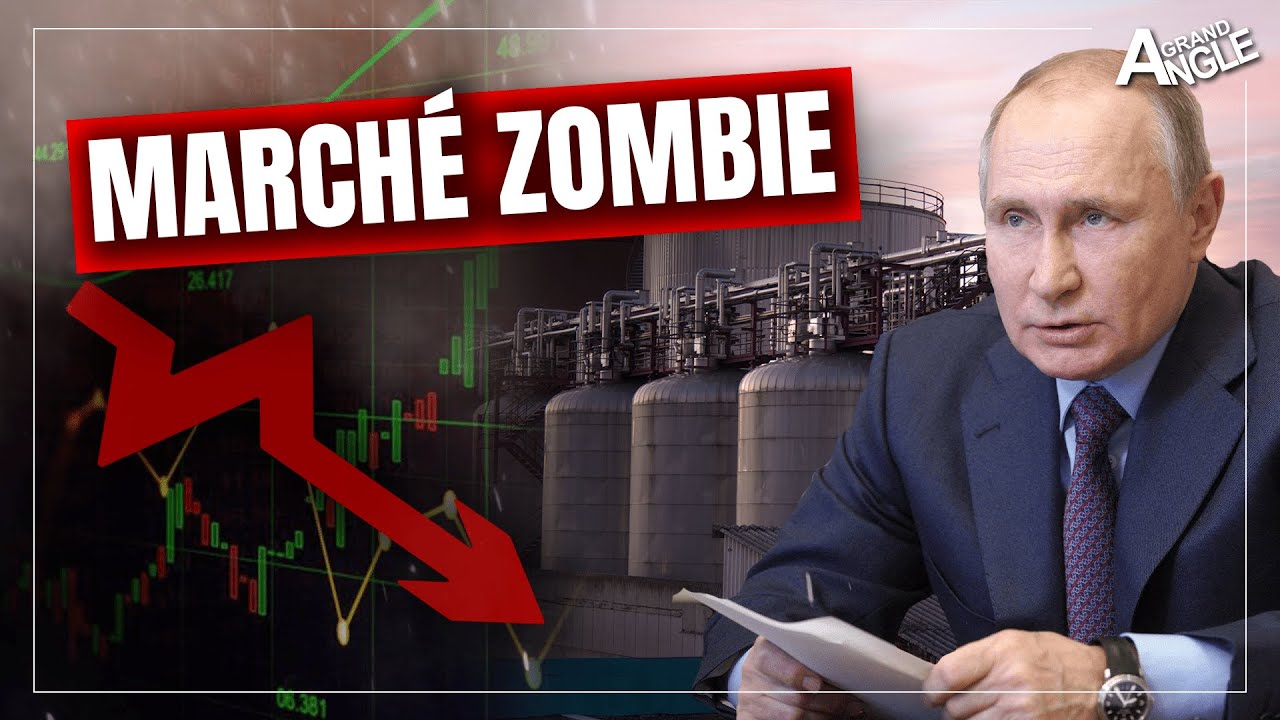
Quel avenir pour les marchés ?
Keywords
Summary
138 words
Critical Evaluation
Value of the Information & Strength of the Argument
The video provides a coherent narrative linking geopolitics and markets, with some insightful observations (e.g., the logic behind Russia’s ruble demand). However, the argumentation is often speculative and lacks rigorous evidence. For instance, the claim that ‘peak oil’ is imminent and that shale production will decline sharply by 2025-2030 is presented without supporting data. The discussion on interest rates and debt sustainability is oversimplified, ignoring many variables. The video also makes a leap from economic analysis to speculative political scenarios, which weakens its credibility.
Scientific Rigor, Source Quality, Title Accuracy
The video cites few specific sources, mentioning media outlets like BBC and Stratpol, and a commentator Xavier Tytelman, but without providing direct references. The description contains no links to studies or reports. The title ‘Quel avenir pour les marchés ?’ is broad, and the content does address market implications, but the focus is more on geopolitical energy dynamics. The video’s scientific rigor is moderate; it mixes factual data with personal opinions and unverified projections.
173 words
Title / Content Match
The title is broad but the content focuses on market implications of the Ukraine war, which is adequately covered.
Quality & Reliability
6/10
The video presents a mix of factual observations and speculative analysis. It correctly identifies key economic mechanisms (e.g., ruble appreciation due to gas-for-ruble payments, inflation and rate hikes) but also makes unverified claims (e.g., 'peak oil' and 'shale oil decline by 2025-2030') without citing sources. The analysis is opinionated and sometimes lacks nuance, especially regarding geopolitical motives.
Chapters
Cited Sources
- BBC Ukraine conflict maps — Cited as a source for military maps.
- Stratpol (YouTube channel) — Cited as a pro-Russian perspective on the conflict.
- Xavier Tytelman (YouTube channel) — Cited as a pro-Ukrainian perspective on the conflict.
Concurring Sources
- IMF World Economic Outlook — Provides data on global economic impact of the war.
Dissenting Sources
- IEA Gas Market Report — The IEA provides a more optimistic outlook on gas supply diversification than the video's claim of no alternatives.
Contribution & Novelties
The video offers a synthesis of geopolitical and economic factors affecting markets during the Ukraine war, with a particular focus on energy dependencies and currency dynamics. It provides a perspective that is often underrepresented in mainstream media, emphasizing the strategic logic behind Russia’s ruble payment demands and the potential long-term benefits for China. However, the analysis is not entirely novel and relies on widely discussed concepts.
Pour aller plus loin :
- Peak oil — Relevant to the video’s claim about oil production limits.
- Shale oil — Discusses the characteristics and decline of shale wells.
- Modern Monetary Theory — Referenced in the video’s speculation about future monetary policies.
107 words
Radar Profile
The radar profile shows moderate scores across all dimensions, indicating a balanced but not exceptional video. The highest score is in quantity of information, reflecting the breadth of topics covered, while technical level and reliability are lower due to speculative elements.
💬 Sur les 30 commentaires analysés, le ton est globalement positif, avec des éloges pour la qualité de l'analyse et la pédagogie. Plusieurs commentaires expriment des désaccords sur des points spécifiques (comme la fiabilité des sources militaires) et des critiques mineures sur des détails techniques (ex: transport du GNL).