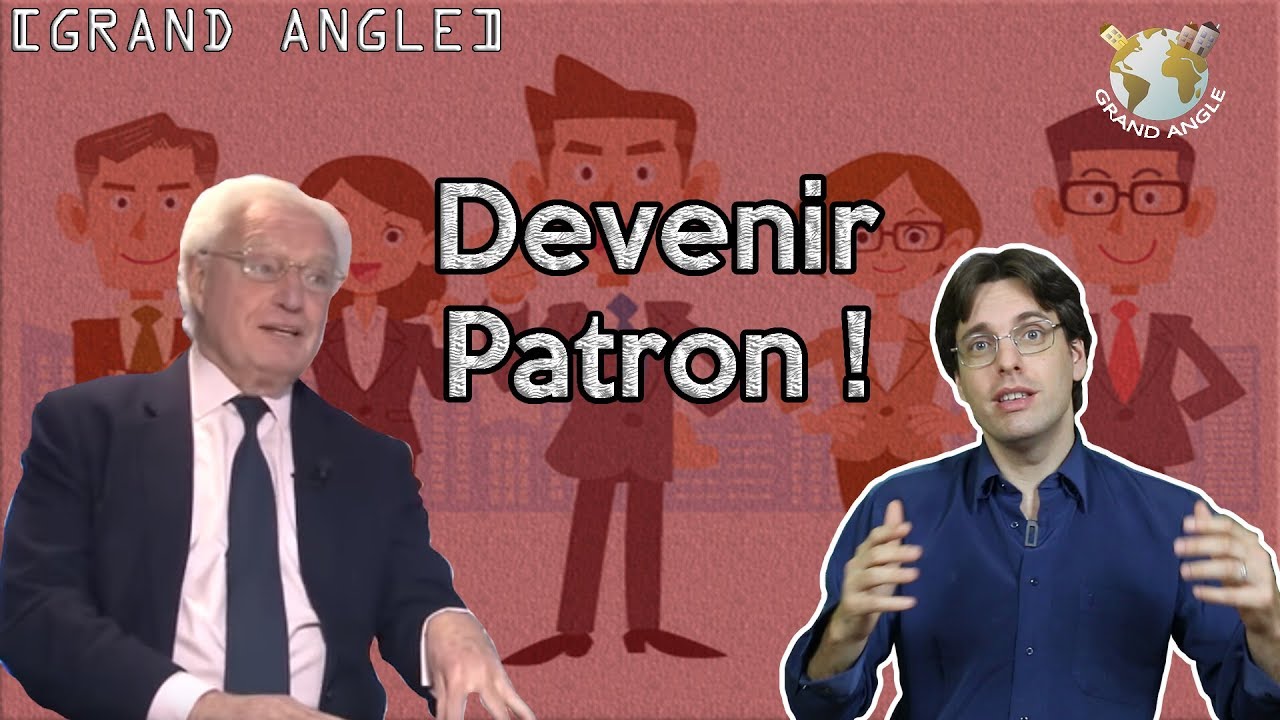
Charles GAVE : "Il faut être fou comme un lapin pour devenir patron !"
Keywords
Summary
128 words
Critical Evaluation
Value of the Information & Strength of the Argument
The video offers valuable insights from a seasoned entrepreneur, providing a realistic portrayal of the challenges and rewards of running a business. Gave’s arguments are coherent and grounded in his personal experience, though they are largely anecdotal. He effectively illustrates the emotional weight of responsibility and the systemic obstacles faced by small businesses. However, the lack of empirical evidence and reliance on personal anecdotes limits the strength of the argumentation.
Scientific Rigor, Source Quality, Title Accuracy
The video is an interview, not a scientific presentation, so the rigor is based on the speaker’s credibility. Gave references Schumpeter and Pope John Paul II, but no specific sources are cited. The title accurately captures the central theme. The content is opinion-driven, and while Gave’s expertise is evident, the lack of verifiable data reduces the scientific rigor.
143 words
Title / Content Match
The title accurately reflects the core message of the video, emphasizing the perceived madness required to become an entrepreneur.
Quality & Reliability
7/10
The video presents a personal and experienced perspective on entrepreneurship, with references to Schumpeter and Pope John Paul II, but lacks empirical data or citations. The speaker's authority is based on his career, and the content is opinion-oriented.
Key Moments
Markers derived by PSI from the transcript: the creator did not define chapters.
- Introduction: Charles Gave's definition of an entrepreneur as a creator.
- Discussion on creative destruction and the role of entrepreneurs in job creation.
- The burden of responsibility for employees and the anxiety it causes.
- Critique of administrative burdens and taxes on small businesses.
- Personal experience of guaranteeing salaries during the 2008 crisis.
- The importance of education and solidarity.
- The paradox of entrepreneurship: stress and satisfaction.
- Conclusion: entrepreneurs must be 'crazy' to succeed.
Cited Sources
- Joseph Schumpeter - Creative Destruction — Referenced by Charles Gave to explain the dual nature of capitalism.
- Pope John Paul II - 'Spark of divine creation' — Quoted by Gave to describe the entrepreneurial spirit.
Concurring Sources
- OECD - Entrepreneurship at a Glance — Provides data on SME job creation, supporting Gave's claims.
- World Bank - Doing Business — Indicates regulatory burdens affecting entrepreneurship, aligning with Gave's critique.
Dissenting Sources
- Krugman, P. - The Myth of the Entrepreneur — Some economists argue that large firms also create jobs, contrary to Gave's emphasis on small businesses.
Contribution & Novelties
The video provides a personal and passionate perspective on entrepreneurship, emphasizing the emotional and psychological challenges often overlooked in economic discussions. Gave’s insights on the responsibility towards employees and the systemic barriers for small businesses are valuable.
Pour aller plus loin :
- Creative destruction — Schumpeter’s concept central to Gave’s argument.
- Small and medium-sized enterprises — Context on the role of SMEs in job creation.
- Entrepreneurship — General overview of the field.
72 words
Radar Profile
The radar shows a balanced profile with high scores in information quantity and quality, moderate technical level, and slightly lower reliability due to the opinion-based nature. This reflects a video that is informative and engaging but not strictly scientific.
💬 Positive. Sur les 30 commentaires analysés, la majorité exprime une forte approbation et gratitude envers Charles Gave, soulignant la qualité et la pertinence de ses propos, bien que certains partagent des expériences personnelles difficiles.