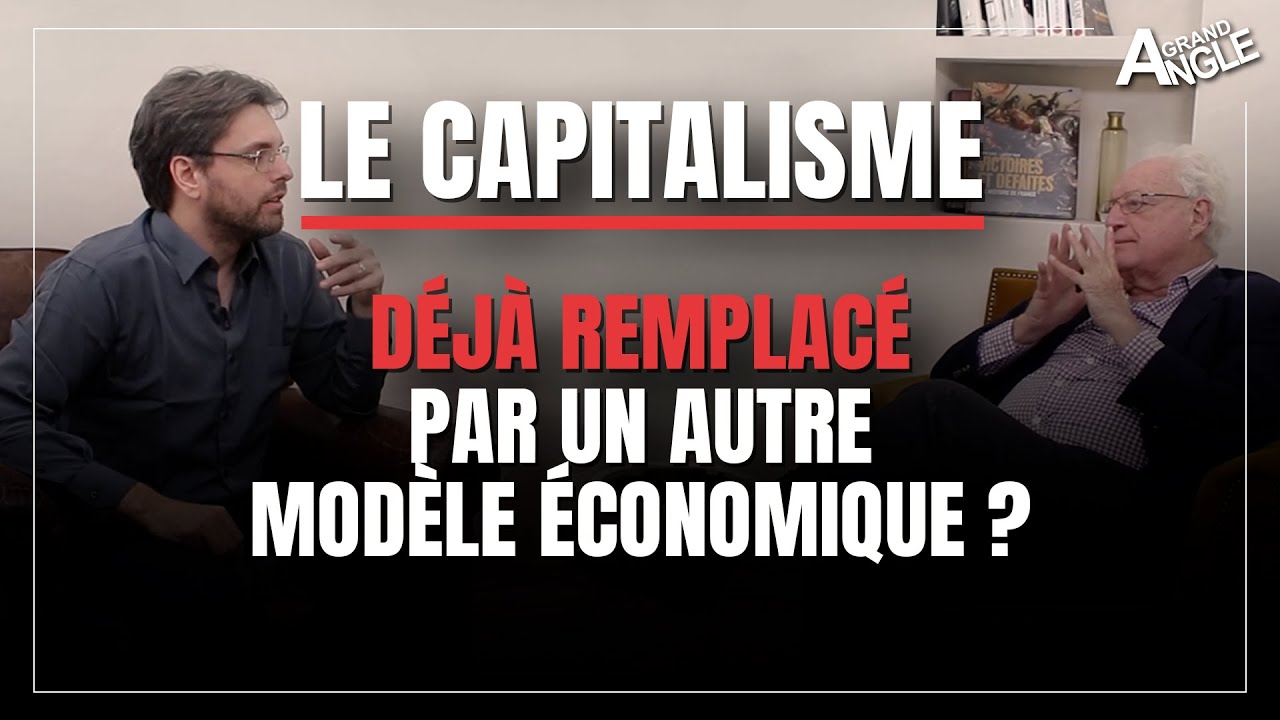
Le capitalisme a-t-il déjà disparu au profit d’un autre modèle économique ?
Keywords
Summary
128 words
Critical Evaluation
Value of the Information & Strength of the Argument
The video offers a provocative thesis that central bank policies have eroded capitalism, but the argument is largely based on rhetorical assertions and analogies rather than systematic evidence. Gave’s points about zombie companies and the potential for economic stagnation are plausible, yet they are presented without data or references to support them. The discussion lacks nuance, particularly in comparing Western economies to the Soviet Union, and fails to address counterarguments or alternative perspectives. The value lies in stimulating thought about the long-term consequences of monetary policy, but the argumentation is not rigorous enough to be considered a solid economic analysis.
Scientific Rigor, Source Quality, Title Accuracy
The video does not cite any specific sources or studies, relying instead on the personal authority of Charles Gave. The title is somewhat misleading as it suggests a balanced exploration of whether capitalism has disappeared, but the content is a one-sided critique of central bank policies. The lack of citations and the speculative nature of the claims significantly undermine the scientific rigor of the video. The description mentions Gavekal, but no direct references to publications or data are provided.
194 words
Title / Content Match
The title poses a provocative question that the video addresses directly, though the answer is more asserted than demonstrated.
Quality & Reliability
5/10
The video presents a highly opinionated and speculative analysis of economic policy, with no empirical data or citations. The argument relies on analogies and rhetorical assertions rather than rigorous evidence, limiting its reliability.
Key Moments
Markers derived by PSI from the transcript: the creator did not define chapters.
- Introduction: discussion on banks and central bank interventions.
- Gave explains how central banks have prevented bank failures, leading to 'sovietization'.
- Comparison to Mélenchon's program and the idea of financing states via central banks.
- Discussion on zombie companies and their impact on productivity and growth.
- Gave advises investing in Asia and well-managed companies to preserve wealth.
- Conclusion: call to action for viewers to adapt to the changing economic landscape.
Cited Sources
- Gavekal Research — Mentioned as the company founded by Charles Gave, providing economic research.
Concurring Sources
- Zombie companies and the economic impact — Provides a general overview of zombie companies, aligning with the video's discussion.
Dissenting Sources
- The case for quantitative easing — IMF working paper that presents arguments in favor of quantitative easing, contrasting with the video's critical stance.
Contribution & Novelties
The video contributes a provocative perspective on the long-term consequences of central bank policies, framing them as a shift away from capitalism. It introduces the concept of ‘zombie companies’ and ‘sovietization’ as a lens to understand economic stagnation. However, the novelty is limited as these ideas are not new in economic discourse, and the video does not provide empirical evidence or novel data.
Pour aller plus loin :
- Zombie company — Wikipedia article explaining the concept of zombie companies and their economic implications.
- Quantitative easing — Overview of the monetary policy tool discussed in the video.
- Soviet-type economic planning — Background on the economic system referenced in the video.
109 words
Radar Profile
The radar profile shows low scores across all dimensions, indicating a video with limited informational content, weak argumentation, and low reliability. The technical level is moderate, but the lack of sources and evidence drags down the overall quality.
💬 Sur les 30 commentaires analysés, le climat est mitigé, avec des critiques sur le niveau intellectuel et des débats sur les politiques économiques, mais aussi des remerciements et des questions sur les investissements.