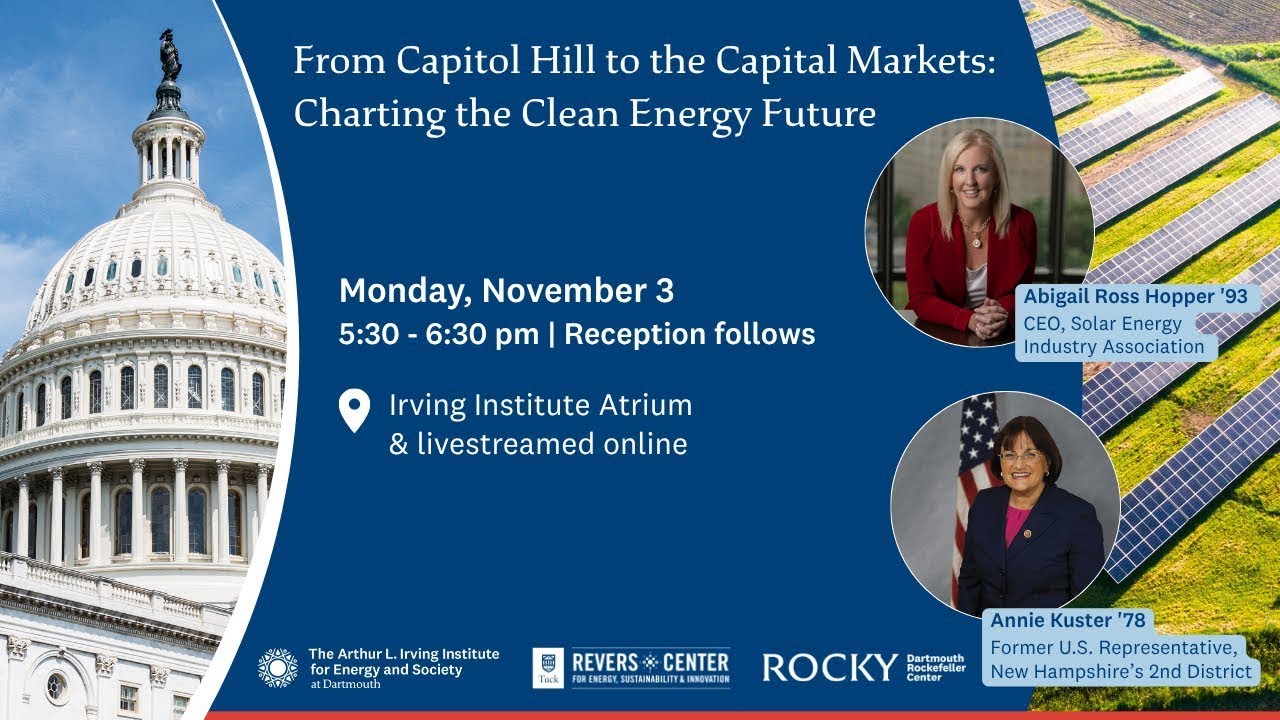
From Capitol Hill to the Capital Markets: Charting the Clean Energy Future
Keywords
Summary
155 words
Critical Evaluation
Value of the Information & Strength of the Argument
The value of the information is high, as the speakers provide insider perspectives on the clean energy industry and policy. Hopper offers concrete data on solar deployment growth (from 35 GW to 250 GW) and market share, while Kuster provides historical context and political insights. The argumentation is solid, grounded in real-world examples and references to specific policies and articles. However, the discussion is largely opinion-based, with limited critical examination of potential drawbacks or counterarguments. The speakers are clearly advocates for clean energy, which may introduce bias, but they acknowledge challenges and the need for bipartisan cooperation.
Scientific Rigor, Source Quality, Title Accuracy
The scientific rigor is moderate; the discussion is not a formal study but an expert panel. The speakers reference specific data and events, and Kuster mentions a Paul Krugman article, but no detailed citations are provided. The title accurately reflects the content, focusing on the intersection of policy and markets. The description lists the speakers and organizers, providing credibility. The conversation is well-structured and stays on topic, though it lacks deep technical detail, making it accessible to a general audience.
192 words
Title / Content Match
The title accurately reflects the content, which focuses on the intersection of federal policy and capital markets in shaping the clean energy future.
Quality & Reliability
8/10
The discussion features two highly experienced experts (a former congresswoman and the CEO of a major trade association) providing informed perspectives on policy and market dynamics. While it is an opinion-based panel rather than a peer-reviewed study, the speakers demonstrate deep domain knowledge and reference specific data and events. The conversation is balanced and nuanced, acknowledging bipartisan efforts and market realities.
Key Moments
Markers derived by PSI from the transcript: the creator did not define chapters.
- Introduction by moderator Jonathan Silverthorne, setting the context of the energy transition and rising electricity demand.
- Representative Kuster introduces herself, sharing her background in clean energy and her bipartisan efforts in Congress.
- Abigail Hopper introduces herself, describing her career path from state regulator to CEO of SEIA.
- Hopper discusses the growth of solar and storage, noting the increase from 35 GW to 250 GW and the cost reductions.
- Kuster emphasizes the need for a bipartisan approach and reframing renewables as 'infinite resources.'
- Discussion of recent policy changes, including the 'one big beautiful bill' and executive orders affecting permitting.
- Hopper explains SEIA's strategy to align with the administration's 'energy dominance' rhetoric.
- Discussion of rising electricity demand from AI and data centers, and the role of solar and storage in meeting it.
- Kuster discusses national security and competitiveness, citing a Paul Krugman article on China's clean energy leadership.
- Q&A session begins, with audience questions (not included in transcript).
Cited Sources
- Paul Krugman article on China and clean energy — Mentioned by Representative Kuster as a recent article discussing China's embrace of renewable energy and the implications for U.S. competitiveness.
Concurring Sources
- SEIA Solar Market Insight Report — Provides data on solar deployment and market trends, consistent with Hopper's claims about growth.
- U.S. Energy Information Administration - Electricity Data — Official data on electricity generation and demand, supporting the discussion on load growth.
Dissenting Sources
- Critics of renewable energy intermittency — Some critics argue that solar and storage cannot reliably meet baseload demand without significant backup, a point not fully addressed in the discussion.
Contribution & Novelties
The video provides an insider perspective on the clean energy industry’s response to recent policy shifts, offering strategic insights from a trade association CEO and a former congresswoman. It highlights the importance of framing renewables as part of ’energy dominance’ and the potential for bipartisan cooperation. The discussion also underscores the critical role of solar and storage in meeting surging electricity demand from AI and data centers.
Pour aller plus loin :
- Solar Energy Industries Association — Official website of the trade association led by Abigail Hopper, offering data and policy resources.
- Inflation Reduction Act — The landmark legislation that provided significant incentives for clean energy.
- U.S. Energy Information Administration — Authoritative source for energy statistics and forecasts, useful for verifying claims about electricity demand and generation mix.
128 words
Radar Profile
The radar profile shows high scores in information quantity, quality, and reliability, with a slightly lower technical level. This indicates a well-informed discussion that is accessible to a general audience, focusing on policy and market perspectives rather than deep technical details.
💬 No comments were provided for analysis.