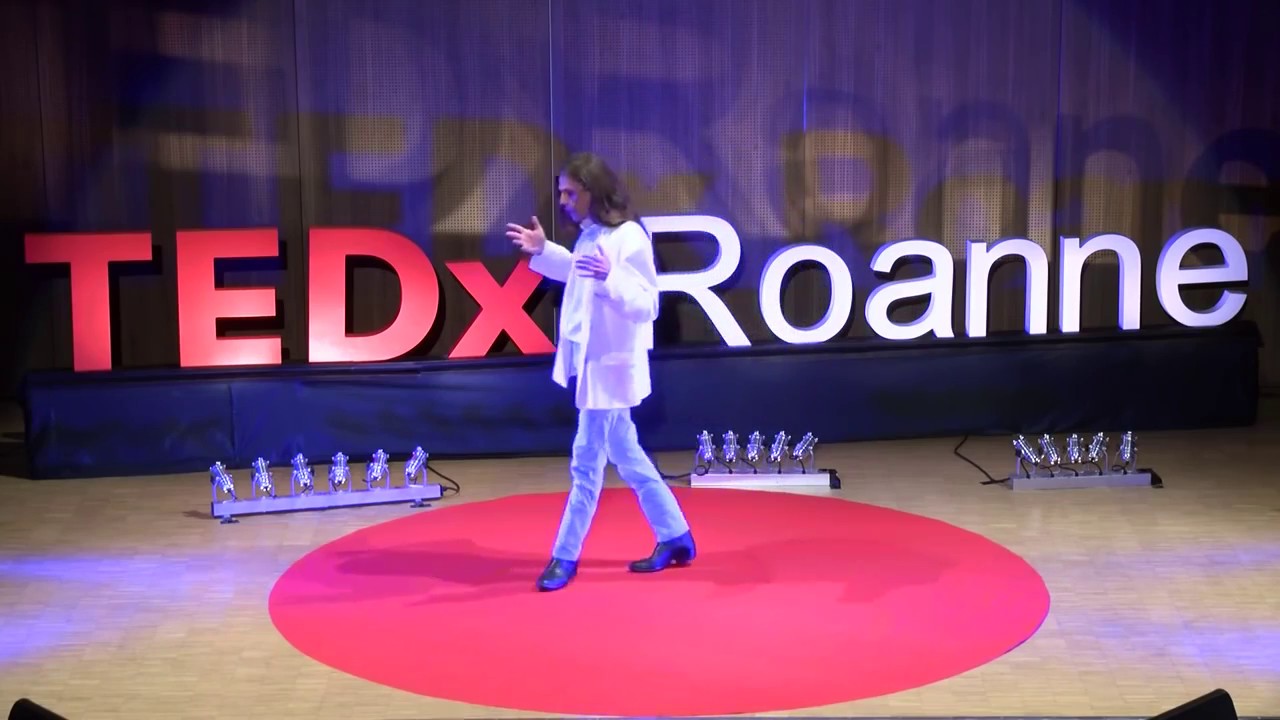
Aurélien BARRAU : L'Univers inévident, TEDx
Keywords
Summary
175 words
Critical Evaluation
The talk is intellectually stimulating, presenting a sophisticated blend of cosmology and philosophy. Barrau, a respected physicist, accurately explains complex scientific concepts in an accessible manner, making the content reliable from a scientific standpoint. His argument for a pluralistic view of reality is well-structured, drawing on philosophical traditions (Kant, Cassirer, Goodman) and literary references (Pasolini, Genet) to support his thesis. However, the philosophical interpretations are subjective and not empirically testable, which may be seen as a limitation for a scientific audience. The talk does not present new scientific findings but rather offers a reflective perspective on the nature of scientific knowledge. The sources cited are not explicitly mentioned, but the concepts are standard in physics and philosophy. The title accurately reflects the content, and the talk maintains a high level of intellectual rigor. The inclusion of literary quotes adds depth but may distract from the scientific core. Overall, the talk is valuable for its interdisciplinary approach and thought-provoking ideas, though it may not satisfy those seeking purely technical content.
169 words
Title / Content Match
The title 'L'Univers inévident' (The Inevident Universe) aptly reflects the talk's theme of questioning the obviousness of our conception of the universe, blending cosmology with philosophical and literary reflections.
Quality & Reliability
8/10
The speaker is a renowned astrophysicist, and the content is scientifically accurate, though presented in a philosophical and literary style. The talk references established physics (quantum mechanics, relativity) without technical errors, but the philosophical interpretations are subjective.
Key Moments
Markers derived by PSI from the transcript: the creator did not define chapters.
- Introduction with a quote from André Velter about Pasolini, setting the poetic and philosophical tone.
- Discussion on the plurality of worlds and the idea that reality is complex and multiple.
- Overview of quantum mechanics: indeterminacy, discreteness, and non-locality.
- Explanation of special relativity: space-time dilation, E=mc², and time travel.
- Introduction to general relativity: dynamic space-time and gravitational fields.
- Discussion of paradoxes: black holes, dark matter, cosmic acceleration, and matter-antimatter asymmetry.
- Philosophical turn: physics as a constructivist endeavor, referencing Kant, Cassirer, and Goodman.
- Conclusion with a quote from Jean Genet, advocating for humility and multiple perspectives.
Contribution & Novelties
The talk offers a unique interdisciplinary perspective, merging cosmology with literature and philosophy. It challenges the notion of a single objective reality, proposing that physics is one of many ways to construct a world. This constructivist view, inspired by Nelson Goodman, is not commonly presented in popular science talks. The talk also highlights unresolved paradoxes in modern physics, encouraging further exploration.
Pour aller plus loin :
- Nelson Goodman’s ‘Ways of Worldmaking’ — Relevant to the constructivist philosophy discussed.
- Quantum mechanics — Core physics concept covered.
- General relativity — Core physics concept covered.
- Black hole information paradox — One of the paradoxes mentioned.
- Dark matter — Another paradox mentioned.
108 words
Radar Profile
The radar profile shows high scores in quality of information and reliability, reflecting the speaker's expertise and accurate scientific content. The quantity of information is moderate, as the talk focuses on a few key concepts. The technical level is moderate, accessible to a general audience. Overall, the talk is well-balanced, with strengths in credibility and content quality.