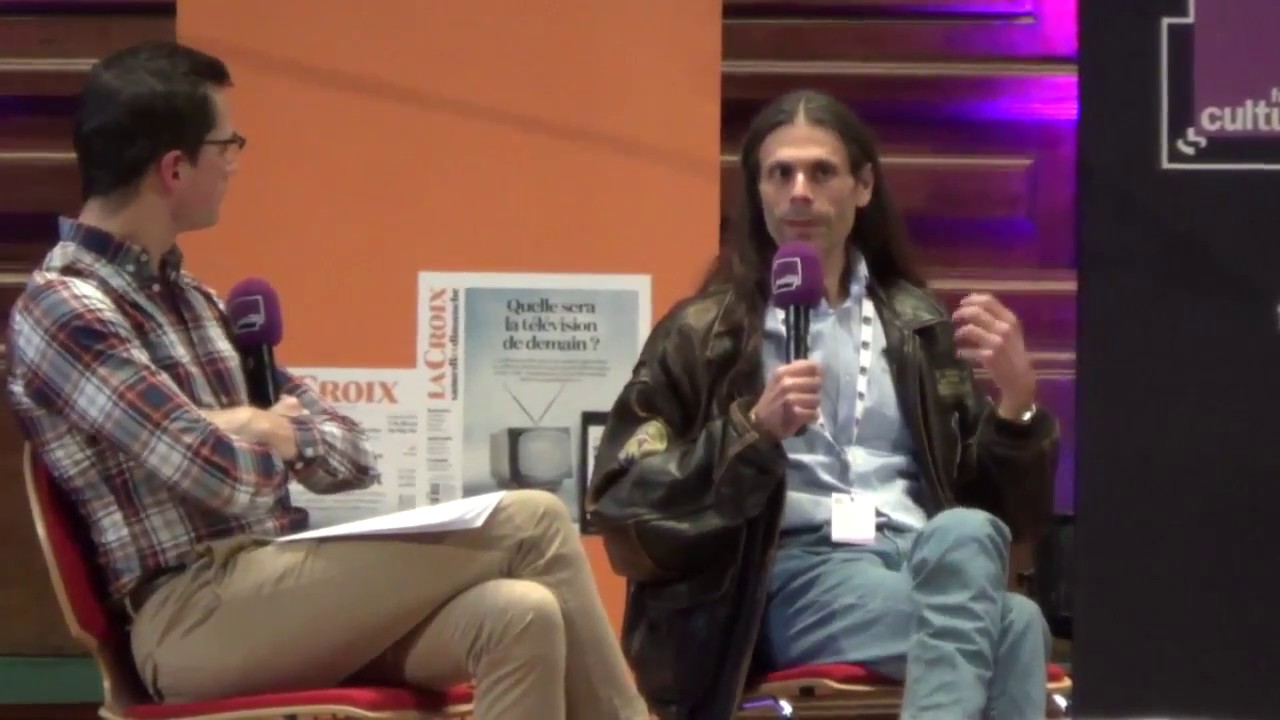
Emission sur l'eau dans le système solaire sur France Culture
Keywords
Summary
173 words
Critical Evaluation
The emission provides a rich, multi-perspective discussion on water in the solar system, featuring experts with deep knowledge in astrophysics and planetary science. The scientific content is accurate and up-to-date, referencing key missions like Viking, Curiosity, and upcoming Europa Clipper. The argumentation is solid, with experts presenting differing viewpoints on the priority of exploring Mars versus icy moons, which illustrates the dynamic nature of scientific debate. The discussion of the habitable zone and tidal heating is technically sound, and the philosophical reflections on the definition of life add depth. However, the conversational format lacks formal citations, and some speculative elements are inherent to the topic. The title accurately reflects the content, and the emission is well-structured, balancing technical details with broader implications. Overall, it is a high-quality, informative discussion suitable for an audience with some scientific background.
137 words
Title / Content Match
The title accurately reflects the content, which is a discussion about water in the solar system and its implications for life.
Quality & Reliability
8/10
The discussion features recognized experts in astrophysics and space exploration, providing accurate scientific context and referencing current missions. However, it is a conversational format without formal citations, and some speculative elements are inherent to the topic.
Key Moments
Markers derived by PSI from the transcript: the creator did not define chapters.
- Introduction and philosophical framing on the probability of life in the universe.
- Discussion on the vast number of planets and the 'indeterminate form' of life's probability.
- Focus on Mars: Viking missions and the debate over positive biological results.
- Curiosity's discovery of organic molecules and evidence of ancient lake conditions.
- Introduction of the habitable zone concept and its limitations.
- Discussion on Europa and Enceladus: subsurface oceans and tidal heating.
- Debate on the priority of exploring Mars versus icy moons for life detection.
- Details on Europa Clipper mission and the challenges of landing on Europa.
- Philosophical reflection on the definition of life and the need for a generic concept.
Cited Sources
- Viking missions — Mentioned as the first missions to search for life on Mars in 1976.
- Curiosity rover — Discussed for its discovery of organic molecules and evidence of ancient lake.
- Europa Clipper — Mentioned as a future NASA mission to study Europa's subsurface ocean.
- Enceladus — Discussed for its geysers and subsurface ocean, a target for life search.
Concurring Sources
- NASA Astrobiology — Supports the scientific basis for searching for life in the solar system.
- Europa Clipper mission — Confirms the planned mission to Europa, as discussed in the emission.
Dissenting Sources
- Viking biological experiments — The results of the Viking experiments are still debated, with some scientists interpreting them as positive for life, while others attribute them to non-biological chemistry.
Contribution & Novelties
The emission provides a comprehensive overview of current knowledge and debates on water in the solar system, emphasizing the shift from Mars to icy moons as prime targets for life detection. It highlights the concept of tidal heating as a mechanism for maintaining liquid water beyond the traditional habitable zone. The philosophical discussion on the definition of life adds a unique perspective, urging a more generic and less anthropocentric approach.
Pour aller plus loin :
- NASA Astrobiology — Official NASA resource on astrobiology and the search for life.
- Europa Clipper mission page — Official mission site with detailed information.
- Enceladus and the search for life — Wikipedia article on Enceladus’s potential habitability.
- Definition of life — Wikipedia article discussing various definitions of life.
123 words
Radar Profile
The radar profile shows high scores in information quantity, quality, and reliability, with a slightly lower technical level, indicating a balanced and accessible discussion for a broad audience.
💬 No comments were provided for analysis.