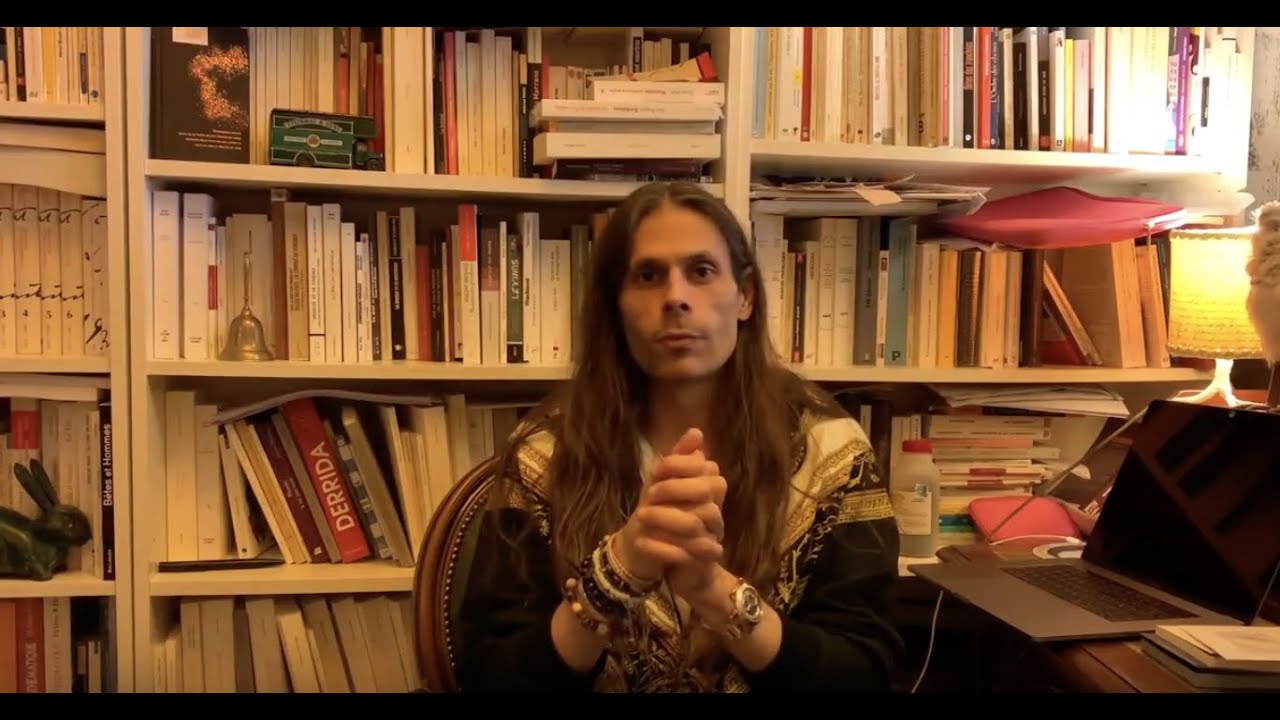
Autour de l'écologie, pour étudiants en philosophie.
Keywords
Summary
203 words
Critical Evaluation
Aurélien Barrau’s video is a compelling and rhetorically powerful piece of environmental philosophy. As an astrophysicist and philosopher, Barrau brings a unique interdisciplinary perspective, grounding his ethical arguments in scientific reality. The video’s strength lies in its clear articulation of the urgency and scale of the ecological crisis, effectively synthesizing climate change, pollution, and biodiversity loss into a coherent narrative of ‘zoocide’. His critique of binary metaphysical oppositions is philosophically astute, drawing on post-structuralist and process philosophy traditions to argue for a more porous and interconnected understanding of existence. The call for political action is well-argued, and he preemptively addresses common objections, such as the accusation of eco-fascism, by distinguishing between necessary legal constraints and totalitarianism. The discussion on meat consumption is particularly effective, combining ecological, ethical, and humanitarian arguments. However, the video is not without limitations. It is primarily an opinion piece, and while Barrau references scientific consensus, he does not provide specific data or citations, which may limit its utility for rigorous academic purposes. The argumentation, while passionate, sometimes relies on rhetorical flourishes rather than systematic analysis. For instance, the claim that the meat industry is ’the most polluting’ is a simplification, as the environmental impact of different industries is complex and context-dependent. Additionally, the video’s focus on individual dietary choices, while important, could be seen as overshadowing the need for broader systemic changes. The title accurately reflects the content, and the video is well-suited for its intended audience of philosophy students, offering a rich starting point for ethical and political reflection. Overall, the video is a valuable contribution to environmental discourse, effectively bridging scientific and philosophical perspectives, though it would benefit from more empirical grounding and a more nuanced treatment of certain claims.
286 words
Title / Content Match
The title accurately reflects the content: a philosophical discourse on ecology addressed to philosophy students.
Quality & Reliability
8/10
The speaker is an astrophysicist and philosopher, providing a well-argued ethical and philosophical perspective on ecological crisis. The content is consistent with scientific consensus on climate change and biodiversity loss, though it is primarily an opinion piece rather than a scientific study.
Key Moments
Markers derived by PSI from the transcript: the creator did not define chapters.
- Introduction: Barrau addresses philosophy students, framing the ecological crisis as the most important issue of our time.
- Overview of the crisis: climate change, pollution, and shrinking habitats, with mention of climate refugees and plastic pollution.
- Call for thought and action: emphasizes the need for political action and the inadequacy of individual goodwill alone.
- Critique of binary metaphysics: nature/culture, human/animal, and the need to deconstruct these oppositions.
- Discussion on meat consumption: environmental and ethical arguments for vegetarianism/veganism.
- Critique of intellectuals who resist change and dismiss calls for regulation as eco-fascism.
- Defense of degrowth as re-enchantment and reappropriation of freedom, linking ecological and social challenges.
- Conclusion: call for intellectuals to embrace disruptive change and accompany the vital transformation.
Contribution & Novelties
The video provides a philosophical and ethical framing of the ecological crisis, emphasizing the need to deconstruct binary oppositions and adopt a ‘rhizomatic’ thinking. It calls for political action and individual changes, particularly in diet, and critiques the role of intellectuals in resisting change.
Pour aller plus loin :
- Rhizome (philosophy) — Concept by Deleuze and Guattari, relevant to Barrau’s call for non-hierarchical thinking.
- Zoocide — Term used by Barrau to describe the destruction of life, though the Wikipedia page may be limited.
- Climate refugees — Discusses the phenomenon of displacement due to climate change, mentioned by Barrau.
- Environmental ethics — Philosophical field addressing the moral relationship between humans and the environment.
- L214 — Animal rights organization cited by Barrau for exposing conditions in slaughterhouses.
125 words
Radar Profile
The radar profile shows high scores in quality of information and reliability, reflecting the speaker's credibility and the consistency of the content with scientific consensus. The quantity of information is moderate, as the video is relatively short and focuses on key points. The technical level is moderate, as it is accessible to a general audience but includes some philosophical terminology.