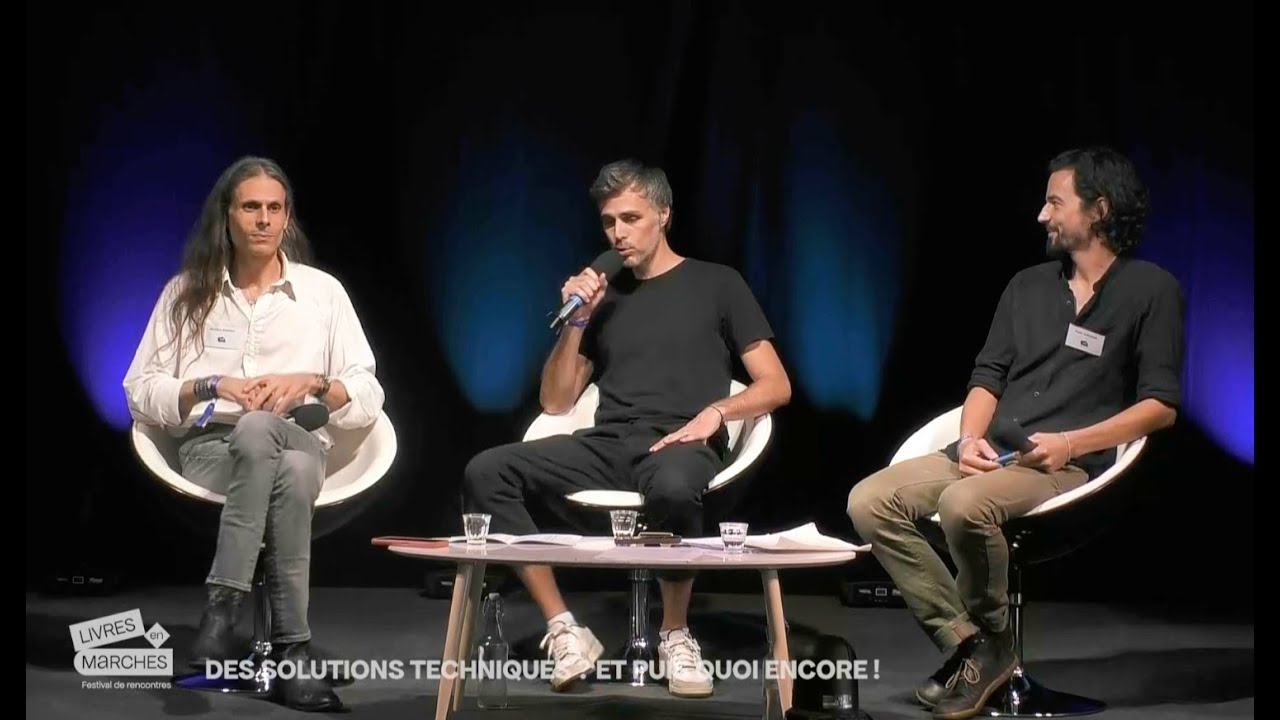
Pablo et Barrau sont dans un bateau ... : la technologie nous sauvera-t-elle ?
Keywords
Summary
187 words
Critical Evaluation
The video presents a thoughtful and critical examination of technosolutionism, a topic of growing relevance. The speakers, Aurélien Barrau and Pablo Servigne, are both credible figures: Barrau is an astrophysicist and philosopher, and Servigne is a researcher and author on ecological transitions. Their argumentation is grounded in philosophical concepts from thinkers like Ivan Illich, Martin Heidegger, and Günther Anders, which lends intellectual depth. They effectively deconstruct the idea that technology alone can solve ecological crises, highlighting the dangers of technological optimism as a form of denial. The discussion is well-structured, moving from a critique of AI-generated dialogue to broader reflections on the role of technology in society. However, the debate format sometimes leads to rhetorical flourishes and a lack of empirical data. For instance, they mention the ‘Promethean gap’ but do not provide concrete examples or evidence. The critique of AI is philosophically sound but could benefit from a more nuanced understanding of current AI capabilities. The speakers also touch on the paradox of technology being both ‘hors sol’ and deeply material, but this could be explored further. Overall, the video offers valuable insights and encourages critical thinking, but it is more of an opinion-based debate than a rigorous scientific analysis. The title accurately reflects the content, and the playful tone makes it engaging. The presence of a brief AI-generated text at the beginning serves as a practical illustration of their critique. The discussion is accessible to a general audience but does not shy away from complex ideas. The lack of citations to specific sources is a minor weakness, but the references to well-known thinkers provide a foundation. The video does not include any advertising sequences. The comments, if any, are not provided, so no analysis of public reception is included.
291 words
Title / Content Match
The title accurately reflects the playful yet serious debate between the two speakers on whether technology can save us.
Quality & Reliability
8/10
The discussion features two recognized experts in their fields (astrophysicist and ecologist), with a critical and nuanced approach to technosolutionism. They reference thinkers like Illich, Heidegger, Anders, and Damasio, grounding their arguments in established philosophical and ecological thought. However, the debate format allows for rhetorical flourishes and lacks empirical data or systematic review.
Key Moments
Markers derived by PSI from the transcript: the creator did not define chapters.
- Introduction and reading of a ChatGPT-generated dialogue between Barrau and Servigne, critiquing AI's lack of referentiality.
- Discussion on the historical context of technology and its role in civilization, referencing thinkers like Illich and Heidegger.
- Servigne introduces the concept of the 'technococon' and the 'Promethean gap' from Günther Anders, illustrating the disconnect between technological power and human emotional capacity.
- Barrau argues that technosolutionism is a form of denial that avoids addressing the root causes of ecological crisis.
- Discussion on the paradox of AI being both 'hors sol' and deeply embedded in material resource extraction.
- Exploration of the need to rethink our values and modes of living, and the subordination of technology to ethical frameworks.
- Q&A session with the audience, addressing questions on the role of technology and possible alternatives.
Cited Sources
- Ivan Illich - Tools for Conviviality — Referenced by Servigne to discuss the concept of conviviality and the threshold beyond which tools become alienating.
- Martin Heidegger - The Question Concerning Technology — Referenced by Barrau to discuss the essence of technology and its enframing of the world.
- Günther Anders - The Obsolescence of Human Beings — Referenced by Servigne to introduce the concept of the Promethean gap and the inadequacy of human emotional capacity.
- Alain Damasio - technococon concept — Referenced by Servigne to describe the modern human condition of being enclosed in a technological cocoon.
Concurring Sources
- IPCC Reports — Scientific consensus on climate change and the need for systemic changes beyond technological fixes.
- Limits to Growth — Classic study highlighting the finite nature of Earth's resources and the impossibility of infinite growth.
Dissenting Sources
Contribution & Novelties
The video provides a critical perspective on technosolutionism, emphasizing the need to address the root causes of ecological crisis rather than relying solely on technological fixes. It brings together philosophical concepts from Illich, Heidegger, and Anders to argue that technology can alienate and create a ‘Promethean gap’ between our capabilities and our emotional understanding. The discussion also critiques AI’s lack of referentiality and its potential to homogenize thought.
Pour aller plus loin :
- Ivan Illich - Tools for Conviviality — A foundational text on the concept of conviviality and the limits of tools.
- Günther Anders - The Obsolescence of Human Beings — Explores the Promethean gap and the ethical implications of technological power.
- Martin Heidegger - The Question Concerning Technology — A key philosophical essay on the essence of technology.
- Degrowth movement — An economic and social movement that advocates for reducing consumption and production to achieve sustainability.
148 words
Radar Profile
The radar profile shows high scores in quality of information and reliability, reflecting the expertise of the speakers and the philosophical grounding. The quantity of information is moderate, as the debate format limits the depth of each topic. The technical level is moderate, accessible to a general audience. Overall, the video is a balanced and thought-provoking discussion.