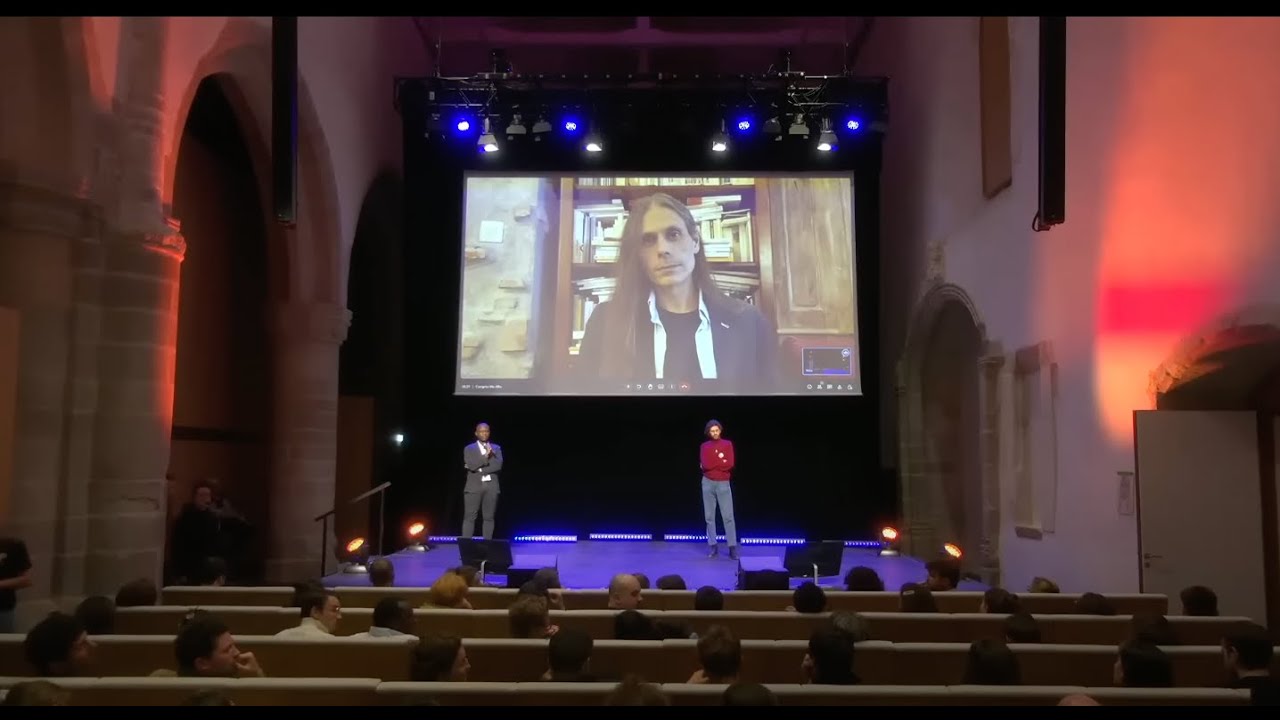
Aurélien Barrau aux internes en médecine de l'AJAR : Faut-il réanimer nos morts ?
Keywords
Summary
96 words
Critical Evaluation
The talk is a compelling and urgent call to action, blending scientific data with philosophical reflection. Barrau’s argumentation is persuasive, but it relies heavily on rhetorical devices and emotional appeal. While he cites reputable sources like IPCC reports and WWF, he does not provide specific references, making it difficult to verify claims. The ethical dilemma he poses is thought-provoking, but the practical implications for medical practice are not deeply explored. The talk is more of a philosophical manifesto than a scientific analysis, which may limit its applicability for medical professionals seeking concrete guidance. The title, while catchy, may mislead viewers expecting a discussion on resuscitation techniques. Overall, the talk is valuable for raising awareness and stimulating debate, but it lacks the rigor of a peer-reviewed analysis.
126 words
Title / Content Match
The title is provocative and captures the core ethical question posed to medical interns, though the talk is more about ecological urgency than literal resuscitation practices.
Quality & Reliability
7/10
The speaker is a renowned astrophysicist and philosopher, but the talk is an opinion piece with rhetorical elements. It cites scientific reports (IPCC, WWF) and studies, but lacks detailed references. The argumentation is coherent and well-structured, but the scientific claims are presented without full context or citations.
Key Moments
Markers derived by PSI from the transcript: the creator did not define chapters.
- Introduction by host, presenting Aurélien Barrau's background.
- Barrau begins his talk, expressing gratitude and setting the tone.
- Discussion on the state of the world: biodiversity loss, pollution, and climate change.
- Critique of healthcare's carbon footprint and the ethical dilemma of intensive care.
- Call for a shift from anthropocentric to ecocentric ethics.
- Emphasis on the urgency of action and the need for systemic change.
- Conclusion and Q&A session begins.
Cited Sources
- IPCC Reports — Referenced for climate change data and emission reduction targets.
- WWF Living Planet Report — Cited for statistics on vertebrate population decline.
- The Shift Project — Mentioned for healthcare sector emissions in France.
Concurring Sources
- IPCC Sixth Assessment Report — Supports claims on climate change impacts and urgency.
- The Lancet Countdown on Health and Climate Change — Aligns with the talk's emphasis on health impacts of climate change.
Dissenting Sources
- Critique of overpopulation claims — Some argue that population growth is not the main driver of environmental degradation, contrary to implied Malthusian concerns.
Contribution & Novelties
The talk provides a unique perspective by applying ecological ethics to medical practice, challenging the assumption that all life-saving measures are justified. It bridges the gap between climate science and healthcare, urging professionals to consider the environmental cost of their actions.
Pour aller plus loin :
- Biocentrism — Relevant to the ethical framework discussed.
- Ecocentrism — Another ethical perspective mentioned.
- Planetary Health — A field linking human health and environmental sustainability.
71 words
Radar Profile
The radar profile shows high scores in quantity of information and global reliability, reflecting the speaker's broad knowledge and use of credible sources. However, the level of technical detail is moderate, and the quality of information is slightly lower due to the lack of specific citations.
💬 Sur les 0 commentaires analysés, aucune tendance n'est disponible.