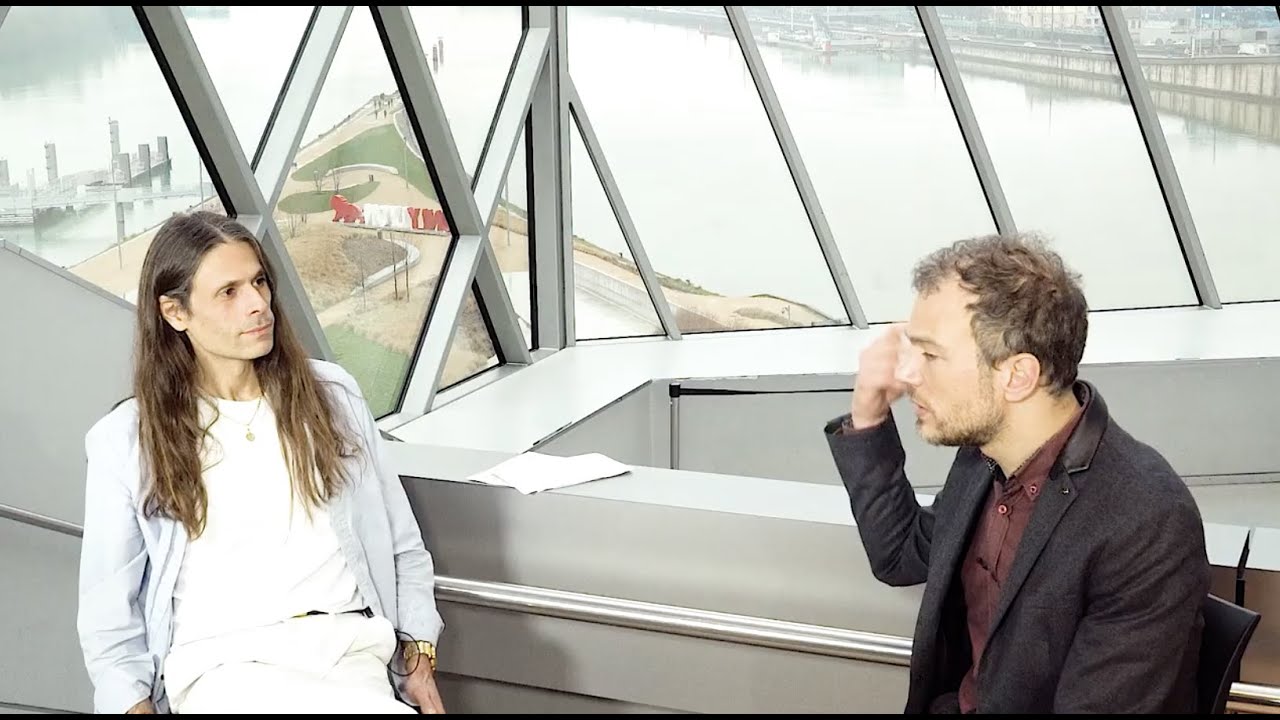
Aurélien Barrau et Vincent Message : Pour une pensée pirate, Episode 1
Keywords
Summary
137 words
Critical Evaluation
The video presents a stimulating intellectual conversation between two accomplished thinkers. The value of the information lies in its conceptual richness and the articulation of a compelling argument for interdisciplinary approaches. Barrau and Message draw on a wide range of references, from Foucault’s heterotopias to Musil’s ‘The Man Without Qualities’, to support their views. The argumentation is coherent and well-structured, moving from personal anecdotes to broader philosophical reflections. However, the discussion is largely opinion-based, with no empirical evidence or systematic analysis. The speakers do not cite specific studies or data, which limits the scientific rigor. The sources mentioned are primarily literary and philosophical, and while they are relevant, they are not presented with precise citations. The title accurately reflects the content, and the conversation stays on topic. The main strength is the depth of thought and the ability to connect disparate ideas. The main weakness is the lack of concrete examples or actionable insights. Overall, it is a high-quality discussion for those interested in epistemology and the philosophy of knowledge, but it is not a rigorous scientific analysis.
178 words
Title / Content Match
The title accurately reflects the content: a conversation about intellectual piracy and interdisciplinary thinking.
Quality & Reliability
7/10
The discussion is a thoughtful exchange between two intellectuals, but it is primarily opinion-based and lacks empirical evidence or citations. The arguments are coherent and well-articulated, but the reliability is limited by the absence of verifiable sources.
Key Moments
Markers derived by PSI from the transcript: the creator did not define chapters.
- Introduction and greeting, setting the stage for the discussion.
- Barrau recalls their first meeting and the concept of 'pirates'.
- Message discusses his academic background in comparative literature and his discomfort with disciplinary boundaries.
- Barrau explains his turn to philosophy and the need to go beyond physics.
- Discussion on the historical division of knowledge since Aristotle and the rise of specialization.
- Message references Robert Musil's 'The Man Without Qualities' and the crisis of knowledge.
- Barrau and Message discuss the multiplicity of reality and the limitations of categories.
- They explore the idea of following objects across disciplines and the importance of intellectual freedom.
Cited Sources
- Foucault, 'Des espaces autres' (Of Other Spaces) — Mentioned in relation to heterotopias and the idea of ships as places of adventure.
- Robert Musil, 'The Man Without Qualities' — Referenced to illustrate the crisis of knowledge and the impossibility of totalization.
- Henri Bergson, 'Introduction to Metaphysics' — Mentioned in the context of criticizing intellectualism and rigid categories.
Concurring Sources
- Edgar Morin, 'Introduction à la pensée complexe' — Mentioned in the video as an example of complex thought, aligning with the discussion's themes.
Contribution & Novelties
The video offers a nuanced discussion on the value of interdisciplinary thinking, drawing on personal experiences and philosophical references. It challenges the traditional academic structure and advocates for a more fluid approach to knowledge.
Pour aller plus loin :
- Interdisciplinarity — Provides an overview of interdisciplinary approaches in academia.
- Heterotopia (Foucault) — Explains Foucault’s concept of heterotopias, which is central to the discussion.
- The Man Without Qualities — Offers background on Musil’s novel and its themes of knowledge and society.
80 words
Radar Profile
The radar profile shows moderate scores across all dimensions, with slightly higher scores in quality of information and technical level, reflecting the intellectual depth of the discussion but limited by the lack of empirical evidence.