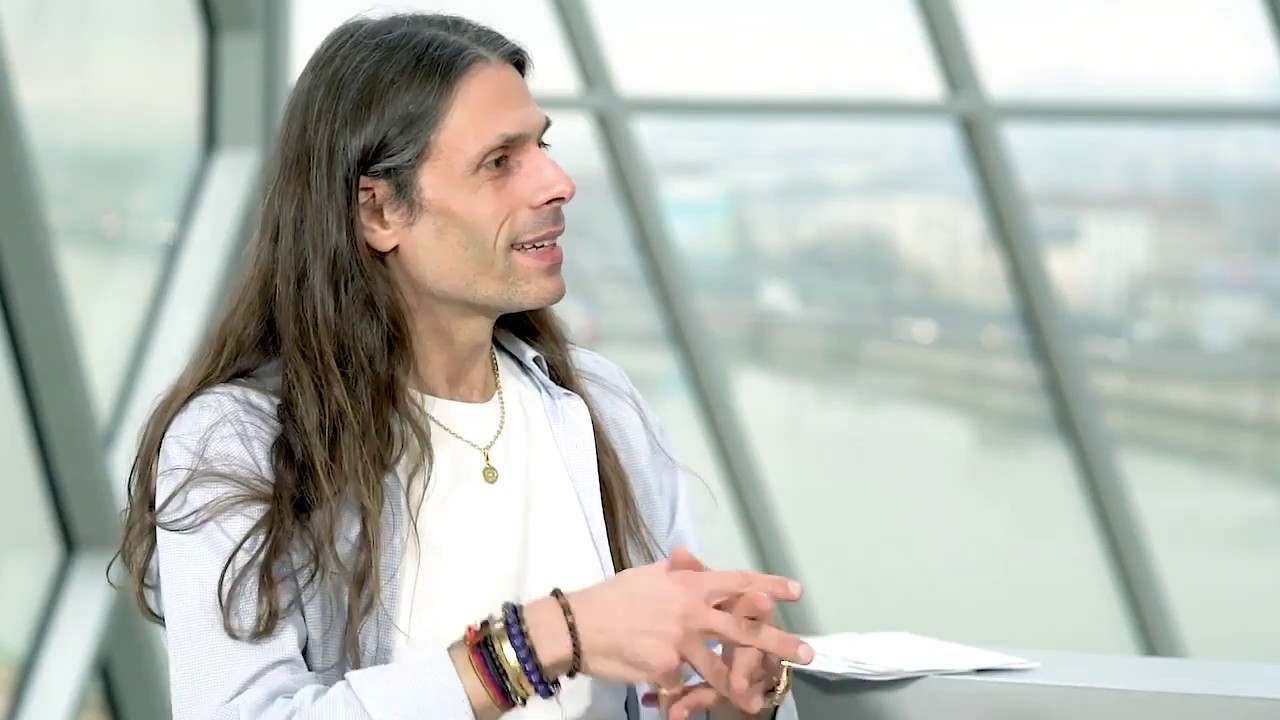
Aurélien Barrau et Vincent Message : Pour une pensée pirate Episode 3
Keywords
Summary
174 words
Critical Evaluation
The video presents a thoughtful and intellectually stimulating discussion between two experts from different fields (astrophysics and literature), offering a rich interdisciplinary perspective on the ecological crisis. The arguments are well-structured and grounded in scientific facts, such as the exponential nature of growth and its inherent instability, as well as philosophical concepts like Hume’s guillotine and Leopold’s land ethic. The speakers effectively challenge common assumptions, such as the idea that all humans are equally responsible for pollution, and they emphasize the need for a paradigm shift in values and ethics.
The scientific rigor is high: Barrau, as a scientist, provides accurate descriptions of exponential growth and its consequences, and both speakers reference credible sources and concepts. However, the format is a conversational debate, so there are no formal citations or references to specific studies, which limits the verifiability of some claims. The discussion is more philosophical than empirical, focusing on ethical and cultural dimensions rather than presenting new data.
The argumentation is coherent and persuasive, but it remains at a relatively high level of abstraction, without delving into concrete solutions or policy recommendations. The speakers acknowledge the complexity of the problem and the difficulty of generating action, which is honest but may leave the audience wanting more practical guidance.
The title accurately reflects the content, and the video is well-produced with clear audio and visuals. The presence of a brief musical intro and applause suggests a live event, but this does not detract from the content.
Overall, this is a high-quality discussion that offers valuable insights into the philosophical and ethical dimensions of the ecological crisis. It is particularly strong in its critique of economic growth and its call for a broader ethical responsibility towards non-human life. The main weakness is the lack of concrete proposals and the reliance on generalities, but as a thought-provoking conversation, it succeeds admirably.
309 words
Title / Content Match
The title accurately reflects the content: a philosophical discussion between Aurélien Barrau and Vincent Message, part of a series.
Quality & Reliability
8/10
The discussion is grounded in scientific consensus on ecological crisis and philosophical arguments, with references to credible concepts and authors. However, it is a conversational debate without formal citations or peer-reviewed sources.
Key Moments
Markers derived by PSI from the transcript: the creator did not define chapters.
- Introduction and opening remarks about the ecological crisis.
- Discussion on exponential growth and its unsustainable nature.
- Mention of Hume's guillotine and the gap between knowledge and action.
- Critique of the concept of 'man' as a homogeneous polluter and emphasis on inequalities.
- Introduction of Aldo Leopold's land ethic and the question of sustainable behavior.
- Discussion on animal ethics and the intrinsic value of non-human life.
- Reflection on the Anthropocene and humans as 'world-makers'.
- Critique of the curiosity for extraterrestrial life while neglecting terrestrial biodiversity.
- Concluding thoughts on human incoherence and the urgency of change.
Cited Sources
- A Sand County Almanac — Reference to Aldo Leopold's book and the concept of land ethic.
- Cosmic Calendar — Mentioned by Barrau as a tool to illustrate the brevity of human existence.
Concurring Sources
- IPCC Special Report on Global Warming of 1.5°C — Scientific consensus on the severity of climate change, aligning with the video's claims.
- The Sixth Extinction by Elizabeth Kolbert — Discusses the ongoing mass extinction, supporting the video's concerns about biodiversity loss.
Dissenting Sources
Contribution & Novelties
This video offers a unique interdisciplinary dialogue between an astrophysicist and a novelist, bridging scientific and literary perspectives on the ecological crisis. It emphasizes the need to extend ethical consideration to non-human beings and to question the dominant economic paradigm of growth. The discussion provides a philosophical framework for understanding the psychological and cultural barriers to environmental action.
Pour aller plus loin :
- Anthropocene — The concept of the current geological epoch shaped by human activity, central to the discussion.
- Land ethic — Aldo Leopold’s ethical framework, directly referenced in the video.
- Hume’s guillotine — The philosophical principle that ‘is’ does not imply ‘ought’, used to explain the gap between knowledge and action.
113 words
Radar Profile
The radar profile shows high scores in information quantity and quality, reflecting the dense and substantive discussion. The technical level is moderate, making it accessible to a broad audience while still offering depth. The overall reliability is high due to the scientific background of the speakers and the use of established concepts.