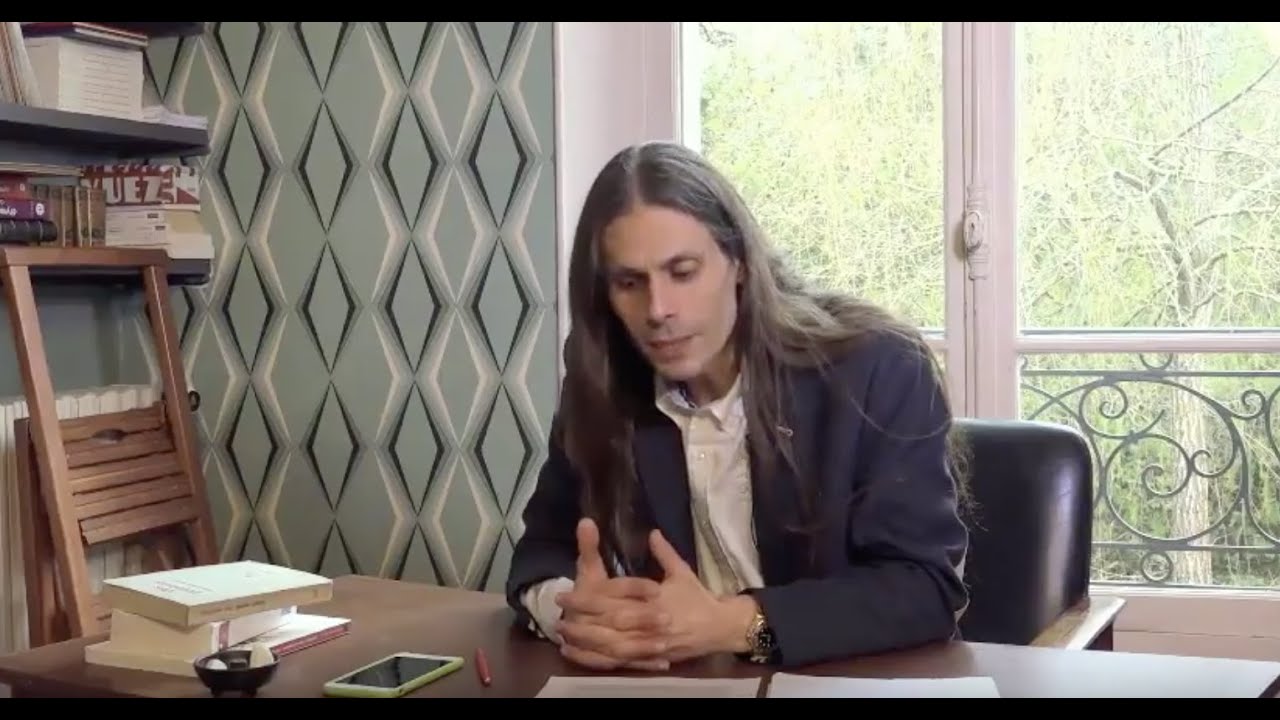
Aurélien Barrau : La Vérité dans les Sciences 2/2
Keywords
Summary
158 words
Critical Evaluation
The lecture offers a sophisticated and nuanced exploration of the concept of truth in science, drawing on a wide range of philosophical sources. Barrau’s argument is well-structured and intellectually stimulating, effectively challenging naive realist views. He successfully demonstrates that truth is not a monolithic concept but is multifaceted and context-dependent. The use of examples, such as the prisoner and the sun, helps to clarify abstract ideas. However, the lecture is primarily an opinion piece, and while it references philosophers like Nietzsche and Goodman, it does not engage deeply with counterarguments or provide empirical evidence. The argument could be seen as leaning towards relativism, though Barrau carefully avoids nihilism by emphasizing constraints and responsibility. The discussion is accessible to a general audience but assumes some familiarity with philosophical terminology. Overall, the content is valuable for those interested in epistemology and the philosophy of science, offering a thoughtful perspective that encourages critical reflection. The title accurately reflects the content, and the lecture is well-delivered with clarity and passion.
166 words
Title / Content Match
The title accurately reflects the content, which is the second part of a lecture on truth in science.
Quality & Reliability
8/10
The speaker is a renowned astrophysicist and philosopher, providing a well-structured philosophical argument. The content is based on established philosophical concepts and references, though it is an opinion piece rather than a peer-reviewed study.
Key Moments
Markers derived by PSI from the transcript: the creator did not define chapters.
- Introduction: Recap of previous lecture on defining science, and introduction to the topic of truth.
- Discussion on the multiple meanings of truth: positivist, idealist, pragmatist, and the Stoic distinction between truth and the true.
- Nietzsche's critique of truth as illusions and metaphors.
- Thomas Aquinas's definition of truth as adéquation, and the debate between ontological and logical truth.
- The ethical dimension of truth: truth as a limit and the danger of compromise.
- Examples showing that truth is context-dependent: the phone and the sun examples.
- Nelson Goodman's example of the prisoner to illustrate the need for interpretation.
- Science as a mode of engaging with reality, not touching reality itself; the idea that reality may not exist independently.
- Goodman's constructivism: science as a way of making worlds, not discovering them.
- The importance of responsibility in world-making; truth is not the only criterion; adequacy and coherence.
- The objection that science will outlast art; Barrau's response: our descriptions are not eternal.
- Conclusion: Truth is essential but must be critically examined; science is one symbolic system among others.
Cited Sources
- Nelson Goodman - Ways of Worldmaking — Barrau references Goodman's constructivist philosophy, where science is seen as a way of making worlds.
- Nietzsche - On Truth and Lies in a Nonmoral Sense — Barrau quotes Nietzsche's view of truth as a mobile army of metaphors.
- Thomas Aquinas - Truth as adéquation — Barrau mentions Aquinas's definition of truth as adéquation of thought and things.
Concurring Sources
- Nelson Goodman - Ways of Worldmaking — Supports the constructivist view that science makes worlds.
- Nietzsche - On Truth and Lies in a Nonmoral Sense — Supports the critique of truth as metaphorical.
Dissenting Sources
- Correspondence theory of truth — The traditional view that truth is correspondence with reality, which Barrau critiques.
Contribution & Novelties
This lecture provides a clear and engaging synthesis of philosophical perspectives on truth, emphasizing the constructivist view of Nelson Goodman. It challenges the naive correspondence theory and highlights the ethical responsibility in knowledge creation. The lecture is valuable for its accessible presentation of complex ideas.
Pour aller plus loin :
- Nelson Goodman - Ways of Worldmaking — A key text for understanding constructivism.
- Correspondence theory of truth — Background on the traditional view.
- Pragmatic theory of truth — Related to the pragmatist perspective mentioned.
84 words
Radar Profile
The radar profile shows high scores in quality of information and fiabilité, reflecting the speaker's expertise and the well-referenced philosophical content. The quantity of information is also high, but the technical level is moderate, making it accessible to a broad audience.
💬 Sur les 0 commentaires analysés, aucune tendance n'est disponible.