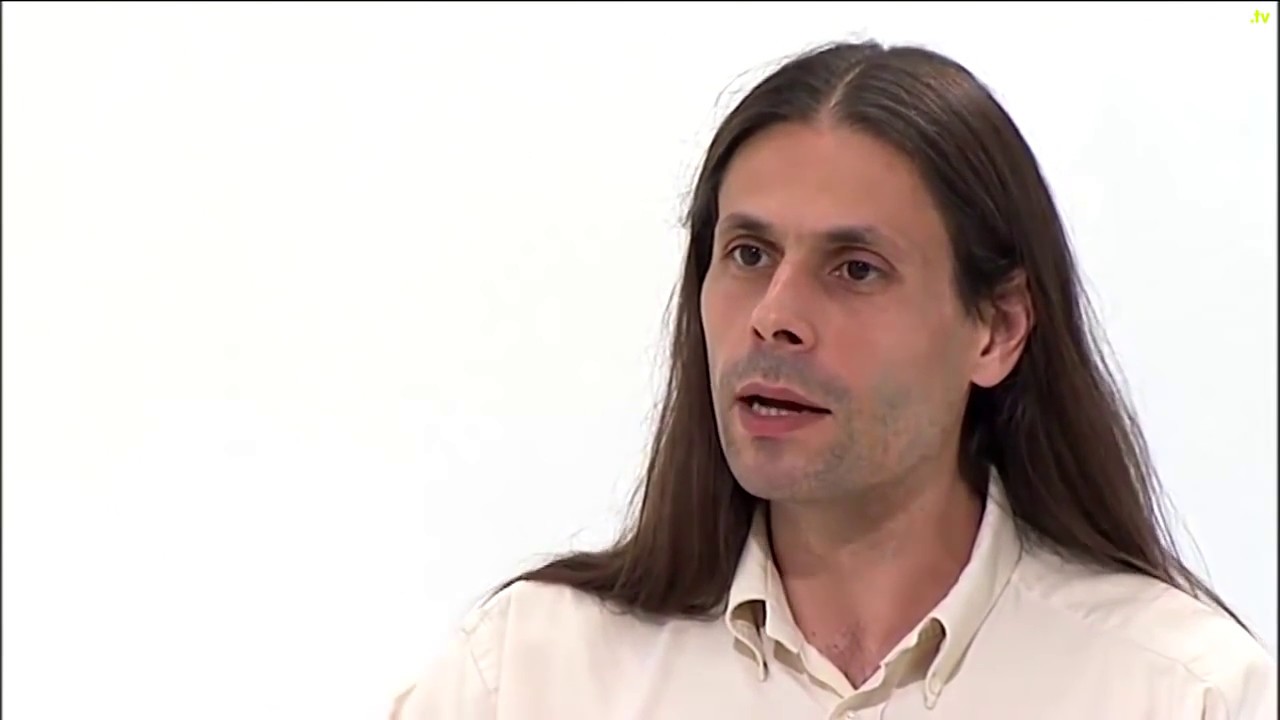
L'univers est il fini ou infini : Aurélien Barrau et Patrick Peter
Keywords
Summary
148 words
Critical Evaluation
The debate provides a high-quality, scientifically accurate overview of modern cosmology, presented by two experts. The discussion is well-structured, moving from the philosophical framing of the question to concrete scientific evidence. The speakers demonstrate deep knowledge and appropriately acknowledge uncertainties, such as the unknown nature of dark matter and dark energy. They correctly describe the Big Bang model’s successes and limitations, and they explain complex concepts like inflation and CMB fluctuations in an accessible yet rigorous manner. The argumentation is solid, relying on observational evidence and theoretical predictions. The sources cited are primarily the Planck satellite mission and general cosmological research, which are credible. The title accurately reflects the central question, though the debate broadens to related topics. Overall, the content is reliable and valuable for a general audience interested in cosmology, though it does not present new research.
139 words
Title / Content Match
The title accurately reflects the central question debated, though the discussion extends beyond it to broader cosmology.
Quality & Reliability
8/10
The discussion features two established cosmologists (CNRS researchers) presenting current cosmological models and observations. They accurately describe the Big Bang model, cosmic microwave background, and inflation, while acknowledging uncertainties. The content is scientifically sound, though presented at a popular level.
Key Moments
Markers derived by PSI from the transcript: the creator did not define chapters.
- Introduction of the debate and participants.
- Discussion on whether the universe has limits; philosophical framing.
- Overview of the Big Bang model and its supporting evidence.
- Explanation of the cosmic microwave background and Planck satellite.
- Discussion on inflation and its predictions.
- Connection between cosmology and particle physics; string theory.
- Acknowledgment of open problems: dark matter, dark energy, initial singularity.
- Conclusion and final remarks on the state of cosmology.
Cited Sources
- Planck satellite mission — Mentioned as the European satellite currently taking data to observe the first light of the universe.
Concurring Sources
- Planck Collaboration — The Planck satellite results are consistent with the inflationary model and standard cosmology.
Dissenting Sources
- Alternative theories to inflation — Some cosmologists propose alternatives to inflation, such as cyclic models or string gas cosmology, which are not discussed in the debate.
Contribution & Novelties
The debate offers a clear synthesis of current cosmological knowledge, emphasizing the role of precision measurements from the Planck satellite in testing inflationary models and potentially probing quantum gravity. It highlights the interdisciplinary connection between particle physics and cosmology.
Pour aller plus loin :
- Big Bang nucleosynthesis — Relevant to the discussion of primordial element abundances.
- Cosmic microwave background — Central to the Planck satellite observations discussed.
- Inflation (cosmology) — Key paradigm mentioned for early universe expansion.
- String theory — Theoretical framework referenced in the debate.
86 words
Radar Profile
The profile shows high scores in information quality and reliability, reflecting the expertise of the speakers. The quantity of information is moderate, and the technical level is accessible, making it suitable for a general audience.