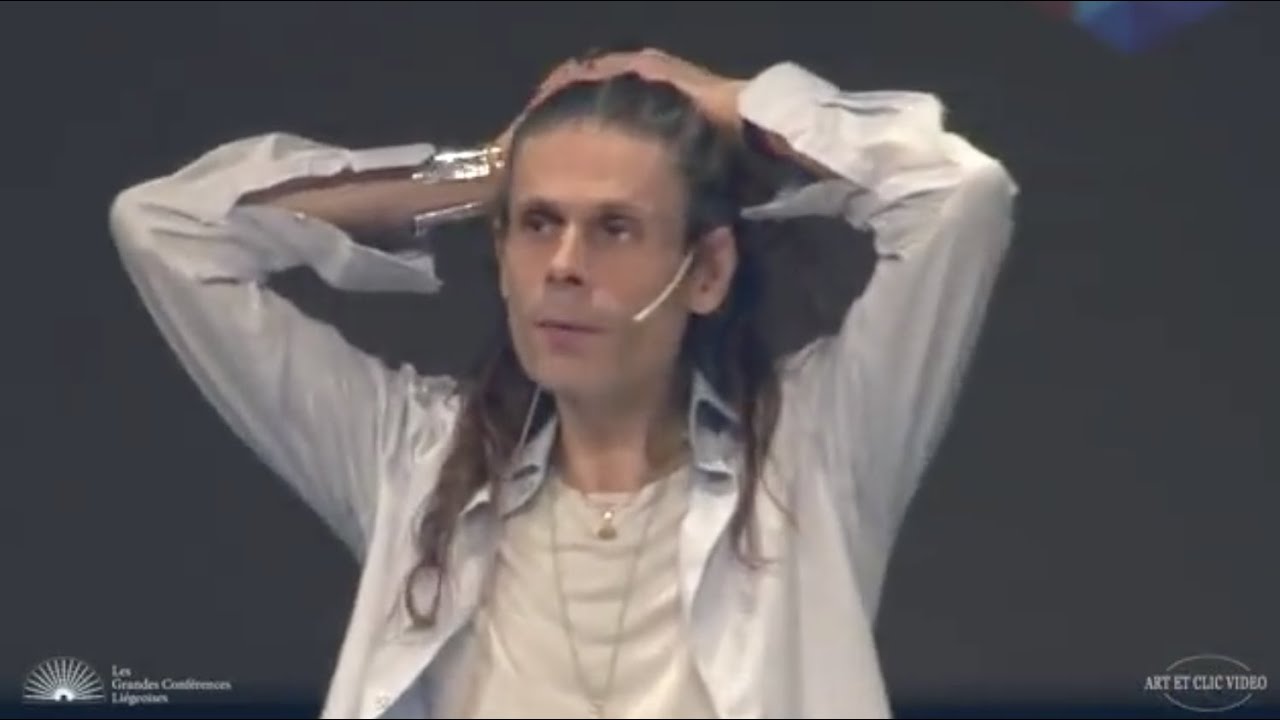
Aurelien Barrau : Comment habiter maintenant la Terre. Grandes Conferences Liegeoises
Keywords
Summary
172 words
Critical Evaluation
Aurélien Barrau’s lecture is a powerful and eloquent synthesis of the current ecological crisis, drawing on a wide range of scientific data and philosophical reflections. His argumentation is solid, rooted in established scientific consensus (IPBES, IPCC, WWF reports), and he effectively communicates the urgency and severity of the situation. He avoids the common pitfall of focusing solely on climate change, instead highlighting biodiversity loss, habitat destruction, and overexploitation as equally critical factors. The strength of the talk lies in its ability to connect scientific facts with ethical and philosophical considerations, urging a profound transformation of our relationship with nature. However, the lecture is not without weaknesses. Barrau’s tone is often apocalyptic and alarmist, which, while justified by the data, may risk alienating some audiences. He also makes some sweeping statements that could benefit from more nuance, such as his characterization of the media and his critique of certain political systems. Additionally, while he cites numerous studies, he does not always provide specific references, making it difficult for viewers to verify his claims. The talk is more of an opinionated expert commentary than a balanced scientific review, but it serves its purpose as a call to action. The title accurately reflects the content, and the lecture is well-structured, moving from a diagnosis of the crisis to a proposal for a new way of inhabiting the Earth. Overall, it is a valuable and thought-provoking contribution to the environmental discourse, though it should be complemented with more detailed and technical sources for a comprehensive understanding.
252 words
Title / Content Match
The title accurately reflects the content: a lecture on how to inhabit Earth now, addressing ecological collapse and proposing a paradigm shift.
Quality & Reliability
8/10
Aurélien Barrau, astrophysicist and professor, presents a well-structured argument supported by numerous scientific studies and reports (IPBES, IPCC, WWF). He cites specific data and acknowledges uncertainties, but the talk is primarily an opinion/expert commentary rather than a peer-reviewed analysis.
Key Moments
Markers derived by PSI from the transcript: the creator did not define chapters.
- Introduction: Barrau sets the tone, stating that we are facing the first deliberate extermination of life on Earth.
- Alarming statistics: 67% decline in wildlife populations in one decade, 80% decline in flying insects in Germany.
- Discussion on the causes: hyper-colonialism, overexploitation, and industrial agriculture as primary drivers of biodiversity loss.
- Critique of media and denialism: Barrau denounces the backlash against environmental activists and the focus on climate change alone.
- Call for a paradigm shift: moving away from growth and consumerism towards a poetic and ethical relationship with the world.
- Proposal for political and economic transformation: degrowth, conviviality, and re-enchantment of nature.
- Conclusion: emphasis on individual and collective responsibility, and the need for immediate action.
Cited Sources
- IPBES Global Assessment Report on Biodiversity and Ecosystem Services — Cited for the 1 million species threatened with extinction.
- WWF Living Planet Report — Cited for the 67% decline in wildlife populations.
- IPCC Special Report on Global Warming of 1.5°C — Cited for climate change projections and urgency.
- Limits to Growth (Meadows et al.) — Referenced for the prediction of collapse.
Concurring Sources
- IPBES Global Assessment — Confirms the 1 million species threatened and the decline of biodiversity.
- WWF Living Planet Report — Confirms the 67% decline in wildlife populations.
- IPCC Special Report on Global Warming of 1.5°C — Confirms the urgency of climate change and its impacts.
Dissenting Sources
- Climate change is not the only problem — Some critics argue that Barrau downplays the role of climate change, but he actually emphasizes that it is one of many factors.
Contribution & Novelties
The lecture’s original contribution lies in its framing of the ecological crisis as a deliberate extermination of life, rather than a mere climate problem. Barrau integrates scientific data with philosophical and ethical reflections, advocating for a radical paradigm shift towards degrowth and a poetic relationship with nature. He emphasizes the importance of biodiversity loss and habitat destruction as primary drivers, often overshadowed by climate change discussions.
Pour aller plus loin :
- IPBES Global Assessment — The most comprehensive assessment of biodiversity, directly supporting Barrau’s claims.
- The Limits to Growth — The 1972 report that predicted the current crisis, referenced by Barrau.
- Concept of Anthropocene — The geological epoch defined by human impact, central to Barrau’s argument.
- Degrowth movement — A political and economic movement advocating for reduced consumption, aligned with Barrau’s proposals.
132 words
Radar Profile
The radar profile shows high scores in quantity and quality of information, reflecting the dense and well-supported content. The technical level is moderate, making it accessible to a general audience. The overall reliability is high due to the use of reputable sources, though the opinionated nature slightly lowers it.
💬 Sur les 0 commentaires analysés, aucune tendance n'est disponible.