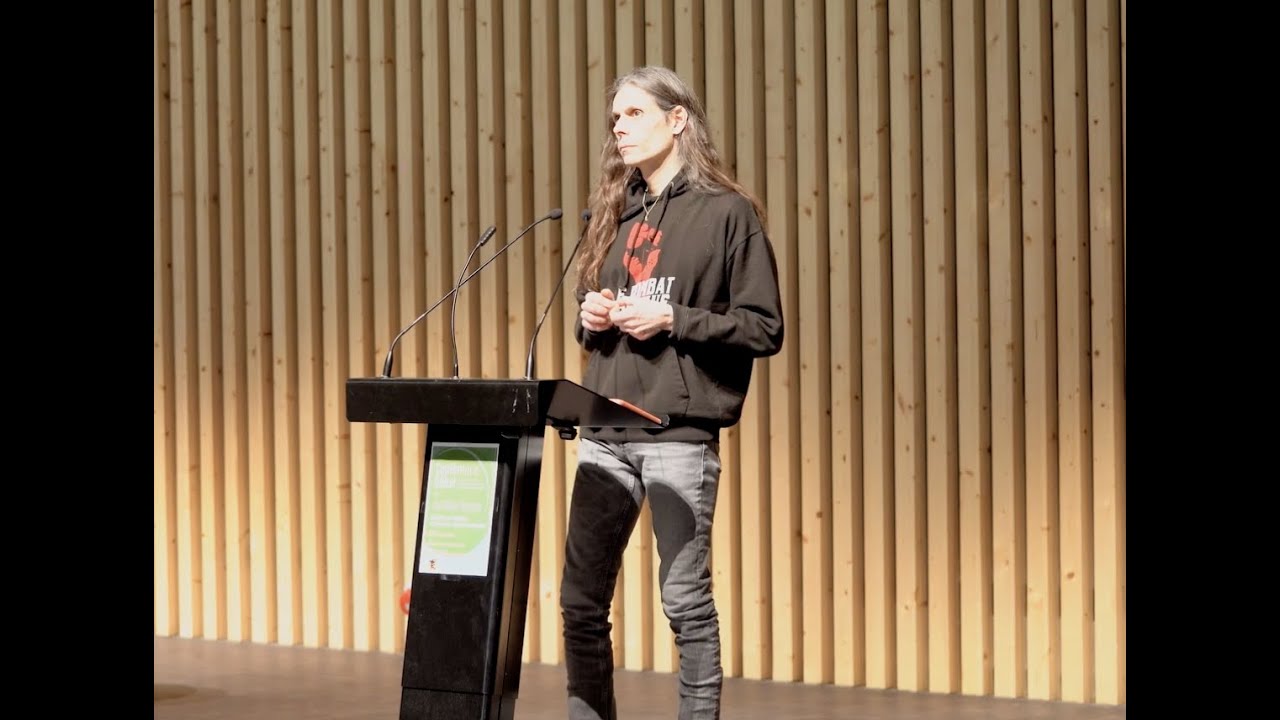
Être ingénieur au temps des catastrophes (conférence Aurélien Barrau à Phelma INP)
Keywords
Summary
143 words
Critical Evaluation
Aurélien Barrau’s conference is a compelling and thought-provoking critique of the role of engineering in the face of ecological catastrophe. The talk is well-structured, with three clear arguments: the non-uniqueness of our civilization, the unsustainability of our trajectory, and the undesirability of our technological path. Barrau’s rhetorical skills are evident, and he effectively engages the audience with a mix of scientific facts, philosophical reflections, and provocative statements.
From a scientific perspective, the talk is not a rigorous academic presentation but rather an opinion piece based on well-established scientific consensus on climate change and resource depletion. Barrau references the concept of planetary boundaries and the overexploitation of resources, which are supported by scientific literature. However, he does not provide specific data or citations during the talk, which limits the verifiability of his claims. The mention of Chomsky’s quote on Western colonialism adds a historical dimension but is not directly related to the core argument.
The argumentation is solid in its logical structure, but it relies heavily on rhetorical appeals and philosophical reasoning rather than empirical evidence. Barrau’s call for a ‘revolution’ is more of a philosophical stance than a practical proposal, which may leave engineers wondering about concrete actions they can take. Nevertheless, the talk succeeds in challenging the audience to rethink their role and the broader societal context.
The title accurately reflects the content, and the talk is well-delivered. The main weakness is the lack of concrete examples or case studies that could illustrate how engineers can contribute to a more sustainable future. Overall, the conference is valuable for its critical perspective and its ability to provoke reflection, but it is not a comprehensive guide for action.
277 words
Title / Content Match
The title accurately reflects the content: a conference addressing the role of engineers in the context of ecological catastrophe.
Quality & Reliability
8/10
Aurélien Barrau is a renowned astrophysicist and philosopher, known for his expertise in cosmology and his public engagement on ecological issues. The conference is a well-structured argumentation, but it is an opinion-based talk rather than a peer-reviewed scientific presentation. The speaker cites Chomsky and refers to scientific consensus on climate change, but the talk is more philosophical than empirical.
Key Moments
Markers derived by PSI from the transcript: the creator did not define chapters.
- Introduction: Barrau thanks the organizers and begins his talk, addressing the engineering students.
- First argument: The non-uniqueness of our civilization. Barrau discusses the diversity of other cultures and their ways of inhabiting the world.
- Second argument: The unsustainability of our trajectory. Barrau explains the overexploitation of resources and the crossing of planetary boundaries.
- Third argument: The undesirability of our technological path. Barrau critiques the development of smartphones and 5G as examples of 'mediocrity'.
- Barrau discusses the possibility of a new energy source like fusion, and argues that it would not solve the problem but worsen it.
- Barrau calls for a political and philosophical revolution, urging engineers to use their skills to deconstruct the system.
- Conclusion: Barrau summarizes his arguments and opens the floor to questions.
Cited Sources
- Noam Chomsky on Western colonialism — Barrau quotes Chomsky on the death toll caused by Western colonialism and neocolonialism since WWII.
Concurring Sources
- IPCC Reports — The IPCC reports provide scientific evidence on climate change and its impacts, supporting Barrau's claims about the unsustainability of current trajectories.
Dissenting Sources
- Techno-optimism — Some argue that technological innovation, such as renewable energy and carbon capture, can solve the ecological crisis without radical societal change, contrasting with Barrau's call for revolution.
Contribution & Novelties
The conference offers a unique perspective on the role of engineers in the ecological crisis, emphasizing the need for a philosophical and political shift rather than just technological solutions. Barrau’s argument that even ‘clean’ energy would not solve the problem if our desires and fantasies remain unchanged is a novel contribution to the discourse.
Pour aller plus loin :
- Décroissance — Concept central to Barrau’s argument, advocating for a reduction in production and consumption.
- Limites planétaires — Scientific framework for planetary boundaries, relevant to the unsustainability argument.
- Effet rebond — Phenomenon where efficiency gains are offset by increased consumption, mentioned by Barrau.
102 words
Radar Profile
The radar profile shows high scores in quality of information and reliability, reflecting Barrau's expertise and the scientific basis of his arguments. The lower score in technical level indicates that the talk is accessible to a general audience, while the quantity of information is moderate, as the talk focuses on a few key points rather than a comprehensive overview.
💬 Sur les 37 commentaires analysés, les spectateurs expriment majoritairement leur admiration pour la clarté et la profondeur de l'argumentation de Barrau, certains soulignant l'impact émotionnel de la conférence.