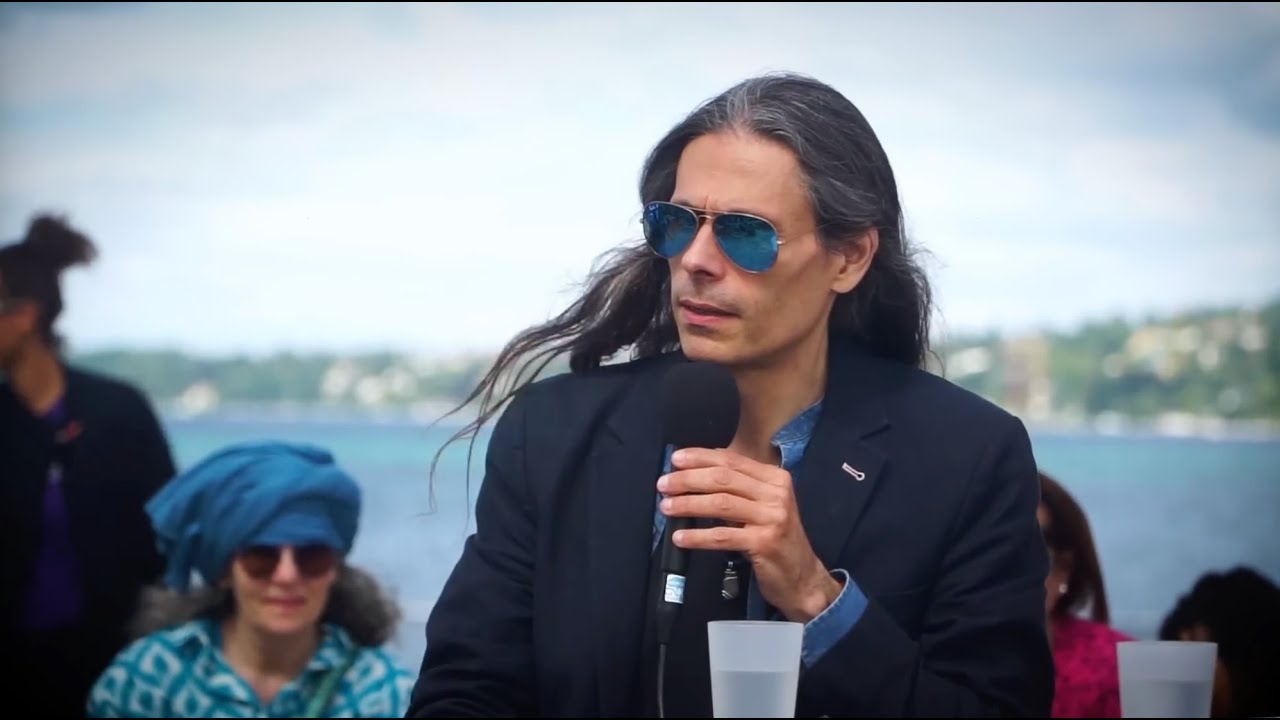
Crise écologique : quelle solution ? À propos du livre "l'Hypothèse K".
Keywords
Summary
217 words
Critical Evaluation
The video presents a thought-provoking and eloquent critique of the current ecological crisis, framed as a civilizational crisis rather than merely a technical problem. Aurélien Barrau, an astrophysicist and philosopher, brings a unique perspective that blends scientific rigor with philosophical depth. His argument that focusing on climate change alone is a way to avoid more fundamental questions about the desirability of our way of life is compelling and well-articulated. He challenges the notion of sustainability, pointing out that durability does not equate to desirability, and that many of our activities do not contribute to our happiness. This is a valuable contribution to the discourse, as it pushes beyond the usual technical solutions and calls for a deeper reflection on values and meaning.
However, the talk is primarily an opinion piece, and Barrau himself acknowledges that he is not an expert in ecology. While his reasoning is coherent and persuasive, it lacks empirical data and specific references to scientific studies. The arguments are largely philosophical and ethical, which may not satisfy viewers seeking concrete data or actionable solutions. The lack of citations and the subjective nature of some claims reduce the overall reliability. Additionally, the talk is quite long (1h30) and at times repetitive, which might dilute the impact of the key messages.
The title accurately reflects the content, and the discussion is well-structured, moving from a diagnosis of the crisis to a critique of current responses and a call for a paradigm shift. The speaker’s charisma and rhetorical skills make the talk engaging, but the absence of a clear, actionable plan may leave some viewers wanting more. Overall, this is a valuable and thought-provoking talk that contributes to the philosophical and ethical dimensions of the ecological crisis, but it is not a comprehensive scientific analysis.
295 words
Title / Content Match
The title accurately reflects the content: a discussion about the ecological crisis and the book 'l'Hypothèse K'.
Quality & Reliability
7/10
The speaker is a renowned astrophysicist and philosopher, but the content is an opinion-based discussion on ecological crisis and civilization, with no empirical data or specific sources cited. The reasoning is coherent and well-articulated, but the lack of verifiable references and the subjective nature of the claims lower the reliability score.
Key Moments
Markers derived by PSI from the transcript: the creator did not define chapters.
- Introduction and presentation of Aurélien Barrau
- Discussion on what has changed in the last four years
- Barrau explains the concept of 'catastrophe civilisationnelle' and loss of meaning
- Critique of focusing solely on climate change
- Discussion on the desirability of our current way of life
- Barrau talks about the role of science and his own complicity
- Call for a paradigm shift and alternative paths
- Discussion on the need for a poetic and philosophical approach
Cited Sources
- l'Hypothèse K — The book discussed in the video, written by Aurélien Barrau.
Concurring Sources
- IPCC Reports — Scientific consensus on climate change, supporting the urgency of the crisis.
- IPBES Global Assessment — Report on biodiversity loss, aligning with Barrau's emphasis on the collapse of life.
Dissenting Sources
- Climate change is not the only problem — Some critics argue that focusing on climate change is essential and that other issues are secondary, whereas Barrau suggests that climate is just one aspect of a broader crisis.
Contribution & Novelties
The video offers a unique perspective by framing the ecological crisis as a civilizational crisis, emphasizing the loss of meaning and the need to question the desirability of our current trajectory. Barrau’s critique of the focus on climate change as a technical problem is a novel contribution to the debate.
Pour aller plus loin :
- L’Hypothèse K — The book by Aurélien Barrau, central to the discussion.
- Effondrement de la biodiversité — Relevant to the discussion on biodiversity loss.
- Décroissance — A concept related to the need to question growth.
- Limites planétaires — Framework for understanding planetary boundaries.
98 words
Radar Profile
The radar profile shows high scores in information quantity and quality, reflecting the depth of the discussion, but lower scores in technical level and reliability due to the lack of empirical data and citations. The talk is more philosophical than scientific, which is reflected in the profile.