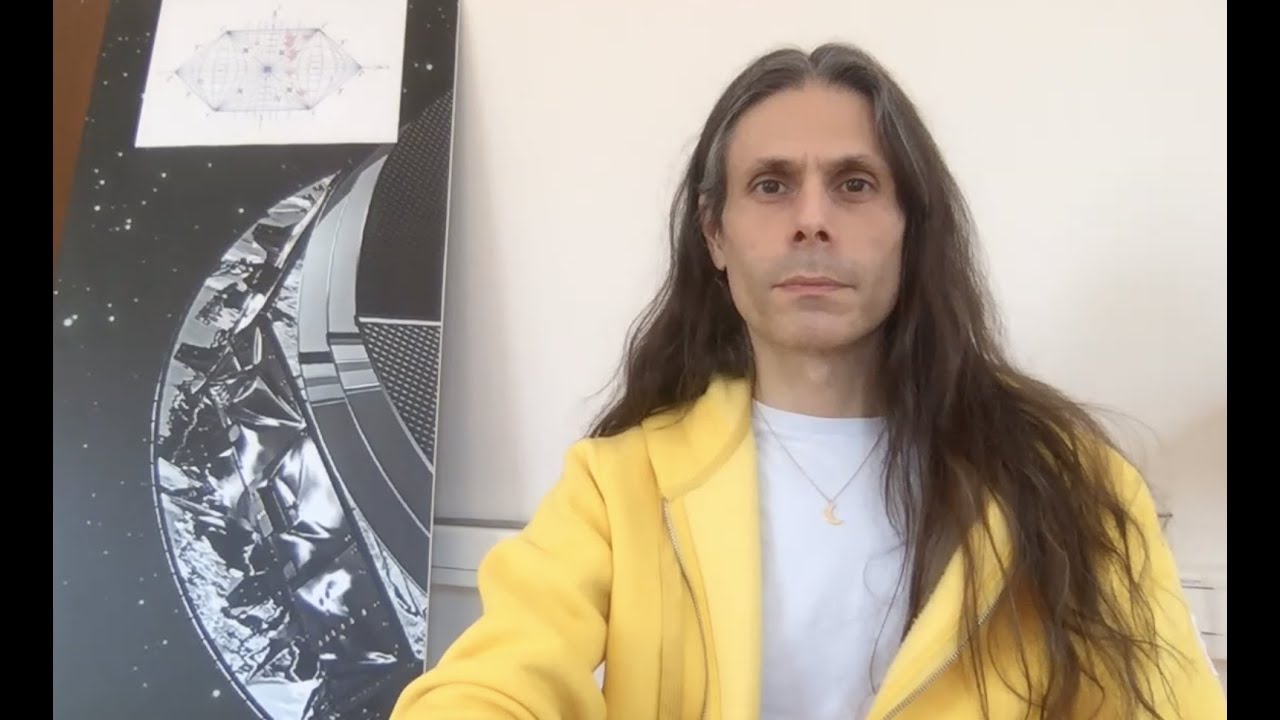
Sur l'exemplarité du monde académique face à la catastrophe écologique.
Keywords
Summary
226 words
Critical Evaluation
Aurélien Barrau delivers a compelling and urgent critique of the academic world’s response to ecological catastrophe. His argument is built on a solid foundation of scientific data, including IPCC reports and studies on biodiversity loss, which he presents clearly and forcefully. He effectively dismantles common misconceptions, such as the idea that the crisis is only a future threat or that technological fixes alone can solve it. His call for a radical shift in perspective, moving beyond technical solutions to address the underlying ethical and existential questions, is both timely and profound.
However, the talk is primarily an opinion piece, and while Barrau cites various scientific findings, he does not provide specific references for all of them, which may limit the ability to verify every claim. His critique of the academic world, while incisive, is somewhat general and could benefit from concrete examples or case studies. Additionally, his dismissal of technical approaches might be seen as overly pessimistic, as some technological innovations could play a role in mitigation.
The title accurately reflects the content, and the talk is well-structured, moving from a broad overview of the crisis to a focused discussion on academia’s role. The speaker’s credibility as a scientist and philosopher adds weight to his arguments, and his passion is evident. The talk is likely to resonate with those already concerned about ecological issues, but it may not convince skeptics due to its strong normative stance.
Overall, the lecture is intellectually stimulating and ethically charged, offering a valuable perspective on the responsibilities of the academic community. It is a call to action that challenges the status quo and encourages deeper reflection on the role of knowledge and expertise in addressing global crises.
282 words
Title / Content Match
The title accurately reflects the content: the talk focuses on the role and responsibility of the academic world in the face of ecological catastrophe.
Quality & Reliability
8/10
The speaker is a renowned astrophysicist and philosopher, known for his expertise in cosmology and his engagement with ecological issues. The talk is well-structured, references recent scientific reports (IPCC, etc.) and data, and presents a coherent argument. However, it is an opinion-based lecture, not a peer-reviewed study, and some claims are presented without specific citations.
Key Moments
Markers derived by PSI from the transcript: the creator did not define chapters.
- Introduction: Barrau mentions the war in Ukraine and Wittgenstein's quote, then begins his overview of recent ecological news.
- Recap of key figures: two-thirds of insects, mammals, and fish destroyed in decades/millennia.
- Discussion on misconceptions: the crisis is present, not future; degrowth is inevitable; the system is not sustainable.
- Critique of focusing solely on climate; biodiversity loss is equally important.
- Argument against decoupling GDP growth from environmental impact.
- Transition to the main theme: exemplarity of the academic world. Questioning whether academics truly hold the knowledge.
- Critique of scientists' tendency to reduce complex problems to technical solutions.
- Call for a radical change in the questions we ask; academia must set an example.
- Discussion on the role of academia in perpetuating the system; need for a revolution.
- Conclusion: emphasis on the urgency and the need for academia to lead by example.
Cited Sources
- IPCC Sixth Assessment Report — Referenced for scientific basis on climate change and its impacts.
- IPCC Sixth Assessment Report, Working Group II — Referenced for impacts, adaptation, and vulnerability.
Concurring Sources
- IPCC Sixth Assessment Report — Supports the claim of human responsibility for climate change.
- IPCC Sixth Assessment Report, Working Group II — Supports the claim of severe impacts on human populations.
Dissenting Sources
- No specific discordant sources mentioned — The talk does not present opposing views, but it critiques the idea of decoupling and technical solutions, which are often promoted by some economists and technologists.
Contribution & Novelties
This talk contributes a critical perspective on the role of academia in the ecological crisis, arguing that the academic world must not only provide knowledge but also exemplify a radical change in values and practices. It challenges the reductionist approach of technical solutions and calls for a broader, more ethical engagement.
Pour aller plus loin :
- IPCC Sixth Assessment Report — The latest climate science, referenced in the talk.
- Club of Rome — The think tank that published ‘The Limits to Growth’, relevant to the discussion on limits.
- Sixth Extinction — Wikipedia article on the ongoing mass extinction, related to the biodiversity loss mentioned.
- Decoupling (ecology) — Concept of decoupling economic growth from environmental impact, which Barrau critiques.
118 words
Radar Profile
The radar profile shows high scores in quantity and quality of information, reflecting the speaker's expertise and the depth of the content. The technical level is moderate, as the talk is accessible but still requires some background. The overall reliability is high due to the use of scientific data, though the opinion-based nature slightly lowers it.