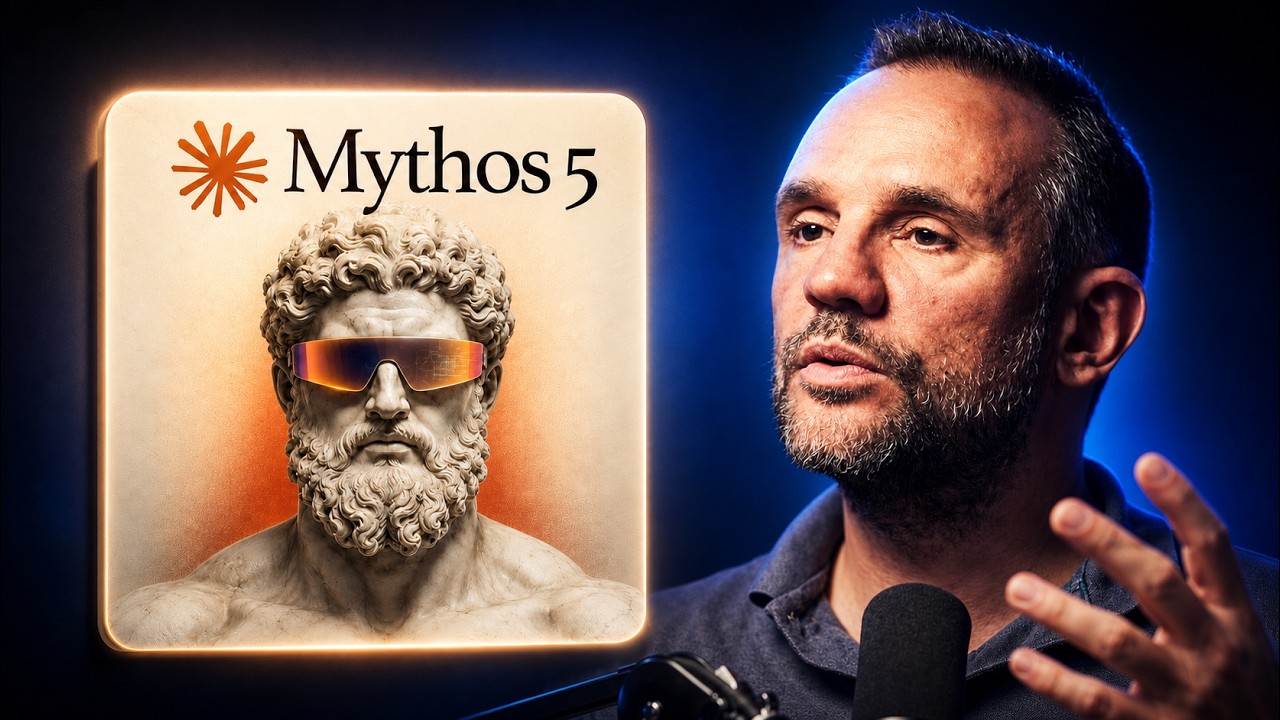
Il a eu accès à Mythos, l'IA interdite au public
Keywords
Summary
126 words
Critical Evaluation
Value of the Information & Strength of the Argument
The video provides valuable insights into the practical application of AI in cybersecurity, backed by concrete examples and data from Mozilla’s experience. The argumentation is solid, with the guest explaining the technical details and the reasoning behind the effectiveness of AI in vulnerability discovery. The discussion is well-structured, moving from general challenges to specific outcomes, and addresses potential counterarguments, such as the case of the curl creator, by highlighting the importance of expertise and specialized prompts.
Scientific Rigor, Source Quality, Title Accuracy
The video demonstrates scientific rigor by featuring a credible expert with direct experience, and it references specific tools and methods like fuzzing and bug bounty programs. The sources mentioned are primarily the guest’s personal experience and the collaboration with Anthropic, which is not independently verified. The title accurately reflects the content, focusing on the guest’s exclusive access to the AI model and its implications. The video does not provide external sources or references, but the information is presented in a detailed and plausible manner.
175 words
Title / Content Match
The title accurately reflects the content, focusing on the guest's exclusive access to the AI model and its implications.
Quality & Reliability
8/10
The video features a credible expert from Mozilla with direct access to the AI model, providing concrete examples and data. However, the discussion is largely anecdotal and lacks independent verification.
Key Moments
Markers derived by PSI from the transcript: the creator did not define chapters.
- Introduction to the topic and the guest's background.
- Discussion on the complexity of securing a browser and the importance of the browser as an attack surface.
- Explanation of traditional vulnerability discovery methods like bug bounties and fuzzing.
- Sylvestre describes the initial contact from Anthropic and the early results with Mythos.
- Details on the scale of vulnerabilities found (nearly a thousand) and the severity of some.
- Comparison with the curl creator's experience, highlighting the importance of expertise and specialized prompts.
- Discussion on the integration of AI into Mozilla's development process and the future of AI in cybersecurity.
Cited Sources
- Mammouth AI — Sponsor of the video, providing access to AI models.
- Underscore_ podcast on Spotify — Podcast version of the video.
- Underscore_ podcast on Apple Podcasts — Podcast version of the video.
- Underscore_ podcast on Deezer — Podcast version of the video.
- Video with Mammouth AI co-founder — Related video about Mammouth AI.
- Recommended video — Recommended video from the channel.
Concurring Sources
- AI and cybersecurity — General context on AI's role in cybersecurity, supporting the video's claims.
Dissenting Sources
- curl creator's experience — The video discusses a case where the curl creator found few vulnerabilities with Mythos, contrasting with Mozilla's results, but this is explained by differences in expertise and prompts.
Contribution & Novelties
The video provides a unique insider perspective on the use of a cutting-edge AI model for defensive security, revealing the scale of vulnerabilities that can be discovered and the importance of expertise in leveraging such tools. It highlights the potential of AI to shift the balance in cybersecurity, but also underscores the need for careful integration and the risks of misuse.
Pour aller plus loin :
- AI and cybersecurity — Overview of AI applications in cybersecurity.
- Fuzzing — Explanation of the fuzzing technique mentioned in the video.
- Bug bounty program — Details on bug bounty programs, a key method discussed.
100 words
Radar Profile
The radar profile shows high scores in information quantity and quality, reflecting the detailed and credible content. The technical level is also high, indicating the video is aimed at a knowledgeable audience. The overall reliability is good, but the lack of independent verification slightly lowers the score.
💬 No comments were provided for analysis.