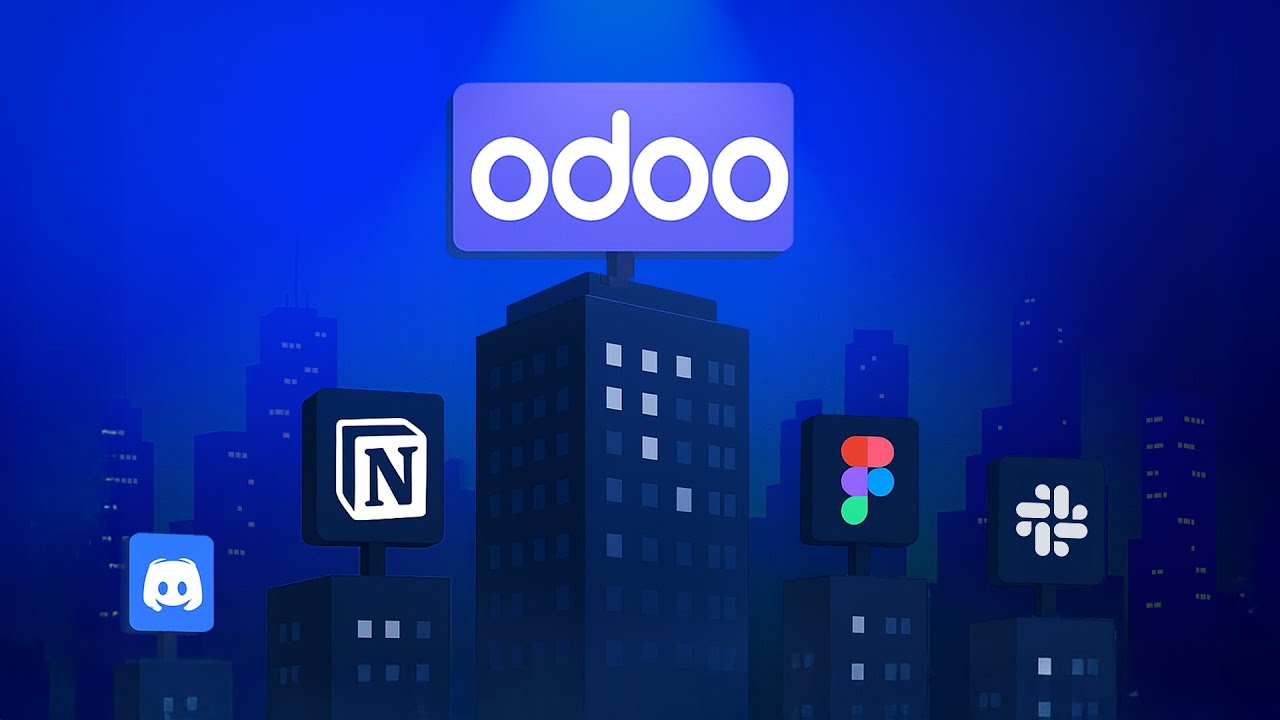
Odoo: le géant à 12 millions d'utilisateurs que personne ne connait
Keywords
Summary
167 words
Critical Evaluation
The video offers a compelling narrative of Odoo’s growth, with Fabien Pinckaers providing detailed explanations of the technical architecture and business model. The discussion on modularity and dependency management is particularly insightful, as it addresses a common challenge in large software systems. Pinckaers’ emphasis on the open-core model and its impact on sustainability and community engagement is well-articulated, though it may be seen as self-serving. The interview is largely uncritical, with the hosts showing admiration for Pinckaers and his achievements, which could be seen as a promotional piece rather than an objective analysis. The technical depth is moderate, suitable for a general audience but not for experts seeking deep technical details. The sources cited are limited to Odoo’s own website and podcast platforms, lacking independent references. The title accurately reflects the content, and the video is well-produced with clear explanations. However, the lack of critical perspective and the promotional tone reduce its overall reliability. The comments section shows a mix of admiration and criticism, with some viewers praising the interview and others questioning Odoo’s usability. Overall, the video provides valuable insights into Odoo’s success but should be viewed with a critical eye.
192 words
Title / Content Match
The title accurately reflects the content, which focuses on Odoo's rise to 12 million users and its relatively low public profile.
Quality & Reliability
7/10
The video features an in-depth interview with Odoo's founder, providing first-hand insights into the company's architecture and business model. However, it is largely promotional and lacks independent verification or critical analysis.
Key Moments
Markers derived by PSI from the transcript: the creator did not define chapters.
- Introduction to Odoo and its 12 million users.
- Fabien Pinckaers explains the modular architecture and the importance of avoiding dependency cycles.
- Discussion on the open-core business model and its impact on sustainability.
- Explanation of multi-tenancy and how Odoo can host thousands of clients on a single server.
- Comparison with competitors and the strategy of offering a low-cost all-in-one solution.
- Discussion on community contributions and the app store model.
- Final thoughts on the future of Odoo and its impact on businesses.
Cited Sources
- Odoo Experience registration — Mentioned as a free event for those interested in Odoo.
- Odoo trial — Link to test Odoo.
- Underscore_ podcast on Spotify — Podcast version of the video.
- Underscore_ podcast on Apple Podcasts — Podcast version of the video.
- Underscore_ podcast on Deezer — Podcast version of the video.
Concurring Sources
- Odoo official website — Official site providing information about Odoo's features and pricing.
Dissenting Sources
- User reviews on G2
Contribution & Novelties
The video provides an insider’s perspective on the technical and business decisions behind Odoo’s success, particularly the modular architecture and open-core model. It offers practical insights for entrepreneurs and developers interested in building scalable software platforms.
Pour aller plus loin :
- Open-core model — Explains the open-core business model, which is central to Odoo’s strategy.
- Modular programming — Discusses the principles of modularity in software design, relevant to Odoo’s architecture.
- Multi-tenancy — Describes the multi-tenant architecture that allows Odoo to serve many clients efficiently.
84 words
Radar Profile
The radar profile shows high scores in quantity of information and technical level, but lower scores in reliability and quality of information, reflecting the promotional nature of the content and lack of independent sources.
💬 Positif. Sur les 30 commentaires analysés, la majorité exprime de l'admiration pour l'interview et le succès d'Odoo, bien que quelques critiques pointent le caractère promotionnel de la vidéo et des problèmes d'ergonomie.