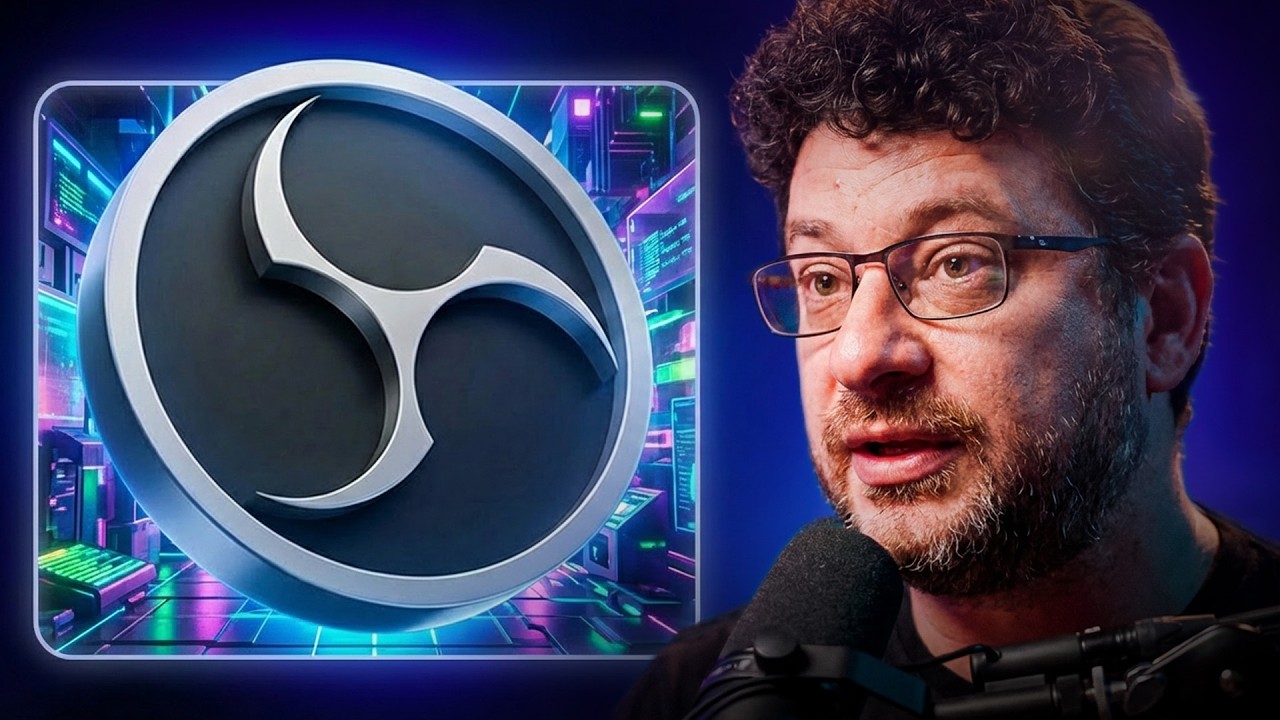
Ce logiciel devrait être payant (tellement c'est un bijou)
Keywords
Summary
143 words
Critical Evaluation
The video is a well-crafted documentary that combines historical narrative with technical depth. The presence of Jean-Baptiste Kempf, a key figure in the open-source video community, lends credibility and provides insider perspectives. The explanations of GPU vs CPU, hardware encoding, and the Chromium Embedded Framework are accurate and accessible, making complex topics understandable without oversimplification. The argumentation is solid, tracing OBS’s rise from a hobby project to a global standard, and it correctly attributes its success to technical innovation and favorable timing. The sources cited are primarily the software itself and related open-source projects, which are appropriate. The title is slightly clickbait but the content delivers on its promise. The only minor issue is the sponsor segment, which is clearly disclosed and does not detract from the content. Overall, the video is informative, engaging, and technically sound, suitable for both enthusiasts and professionals.
143 words
Title / Content Match
The title is catchy and slightly exaggerated, but the content indeed highlights OBS as a remarkable free software, matching the title's promise.
Quality & Reliability
8/10
The video features an expert (Jean-Baptiste Kempf, co-founder of VideoLAN) providing detailed technical explanations about OBS, its history, and its technical innovations. The information is accurate and well-contextualized, with references to real technologies (e.g., GPU encoding, Chromium Embedded Framework). The presence of a sponsor segment is clearly disclosed and does not affect the content's reliability.
Key Moments
Markers derived by PSI from the transcript: the creator did not define chapters.
- Introduction: The video sets the stage about how live sports broadcasts are orchestrated and introduces OBS as a free software that revolutionized streaming.
- The story begins: Jim, a Starcraft player, creates OBS out of dissatisfaction with existing tools like XSplit.
- Explanation of traditional TV broadcasting hardware and the shift to software-based mixing.
- Technical deep dive: GPU vs CPU, hardware encoding, and how OBS leverages GPU for efficient screen capture.
- The importance of timing: OBS arrives at the right moment with the rise of Twitch and mature encoding technologies.
- OBS's early innovations: screen capture without copying frames, using GPU encoding to minimize performance impact.
- The evolution of overlays: from hardware mixers to software-based flexible overlays, including the use of Chromium Embedded Framework.
- The role of plugins and the browser source, enabling web technologies for custom graphics.
- Discussion of the open-source community and the drama with Streamlabs, which never contributed to OBS.
- Conclusion: OBS's impact on streaming and its status as a free, powerful tool.
Cited Sources
- Incogni (sponsor) — Sponsor segment at the beginning of the video.
- Recommended video — Recommended video in the description.
- Podcast on Spotify — Podcast version of the video.
- Podcast on Apple Podcasts — Podcast version of the video.
- Podcast on Deezer — Podcast version of the video.
Concurring Sources
- OBS Project — Official OBS website, confirming the software's features and open-source nature.
- FFmpeg — FFmpeg is a core component used by OBS for video processing, as mentioned in the video.
Dissenting Sources
Contribution & Novelties
The video provides a comprehensive and accessible history of OBS, highlighting its technical innovations and the ecosystem around it. It offers insights from an expert (Jean-Baptiste Kempf) that are not commonly known, such as the role of GPU encoding and the Chromium Embedded Framework. The video also touches on the open-source community dynamics and the drama with Streamlabs, adding a human element.
Pour aller plus loin :
- OBS Project — Official website of OBS, where you can download and learn more about the software.
- FFmpeg — A key multimedia framework used by OBS for encoding and processing.
- Chromium Embedded Framework — The framework that allows embedding Chrome in applications, used by OBS for browser sources.
- VideoLAN — The organization behind VLC, co-founded by Jean-Baptiste Kempf, which is related to the open-source video ecosystem.
133 words
Radar Profile
The radar profile shows high scores in information quality and reliability, reflecting the expert input and accurate technical details. The quantity of information is also high, but the technical level is moderate, making it accessible to a broad audience. Overall, the video is well-balanced and informative.
💬 Très positif. Sur les 30 commentaires analysés, la grande majorité exprime une admiration pour Jean-Baptiste Kempf et la qualité de l'explication, avec quelques suggestions de sujets et des anecdotes partagées.