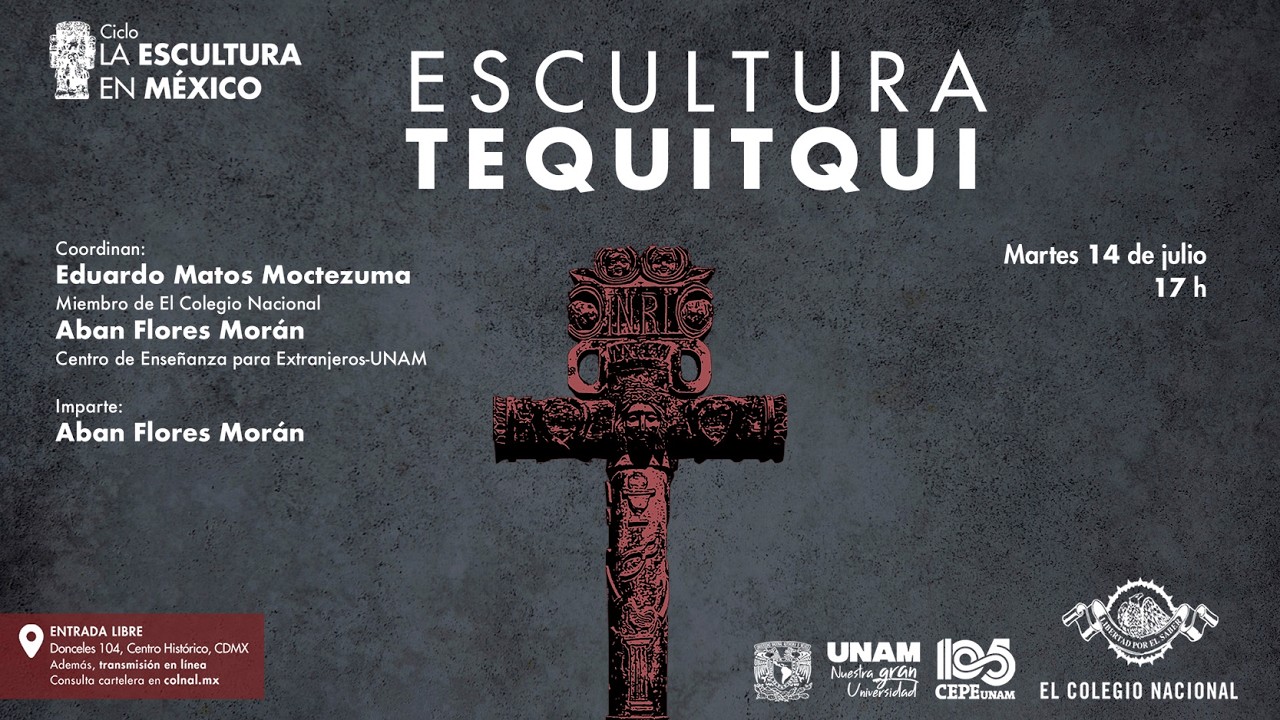
Escultura tequitqui | La escultura en México
Keywords
Summary
196 words
Critical Evaluation
The lecture provides a thorough and well-organized introduction to the concept of tequitqui sculpture, a term that is often misunderstood or overlooked in art history. The speaker, Aban Flores Morán, is clearly an expert in the field, with a strong command of the historical and cultural context. He effectively explains the origin of the term, crediting José Moreno Villa, and draws insightful parallels with the Spanish Mudejar art, which helps to contextualize the phenomenon. The argument that tequitqui is not a failed imitation but a creative synthesis is well-supported with examples and historical evidence. The lecture also highlights the tributary nature of the art, linking it to the massive labor required for the construction of convents, which adds a socio-economic dimension to the analysis. However, the lecture is primarily descriptive and does not engage deeply with critical debates or alternative interpretations. It also tends to focus on the 16th century, with less attention to later developments or regional variations. The sources cited are not explicitly mentioned in the video, but the speaker’s academic background and the institutional setting lend credibility. The title accurately reflects the content, and the lecture is accessible to a general audience while still offering depth for those familiar with the topic. Overall, it is a valuable resource for understanding this unique artistic tradition, though it could benefit from more critical analysis and a broader scope.
229 words
Title / Content Match
The title accurately reflects the content, which focuses on the tequitqui sculpture in Mexico.
Quality & Reliability
8/10
The lecture is given by a specialist (art historian) and is part of an academic cycle at El Colegio Nacional, with institutional backing. The content is well-structured and historically grounded, though it is a single perspective and not peer-reviewed.
Key Moments
Markers derived by PSI from the transcript: the creator did not define chapters.
- Introduction to the lecture and the cycle on sculpture in Mexico.
- Definition of tequitqui and its Nahuatl origin.
- Biography of José Moreno Villa and his arrival in Mexico.
- Moreno Villa's observations of Mexican churches and his interpretation of tequitqui.
- Comparison with Mudejar art and the creation of the term.
- Characteristics of tequitqui sculpture: tributary nature and fusion of traditions.
- The context of convent construction and indigenous labor.
- Tequitqui within the broader Indo-Christian culture.
- Conclusion and transition to the next lecture.
Cited Sources
- José Moreno Villa — Biographical information about the creator of the term tequitqui.
- Mudejar — Comparison with the Mudejar art that inspired the term.
- Tequitqui — General reference to the term and its definition.
Concurring Sources
- Tequitqui — Wikipedia article aligns with the lecture's definition and characteristics.
Contribution & Novelties
The lecture provides a comprehensive overview of the tequitqui sculpture, clarifying its definition and historical context. It emphasizes the creative agency of indigenous artists, challenging earlier dismissive interpretations. The comparison with Mudejar art offers a useful framework for understanding cultural synthesis.
Pour aller plus loin :
- Indo-Christian art — Related concept of cultural fusion in art.
- José Moreno Villa — More on the scholar who coined the term.
- Mudejar art — The Spanish parallel that influenced the term.
78 words
Radar Profile
The radar profile shows high scores in quantity and quality of information, with a moderate technical level, indicating a well-balanced lecture that is both informative and accessible.