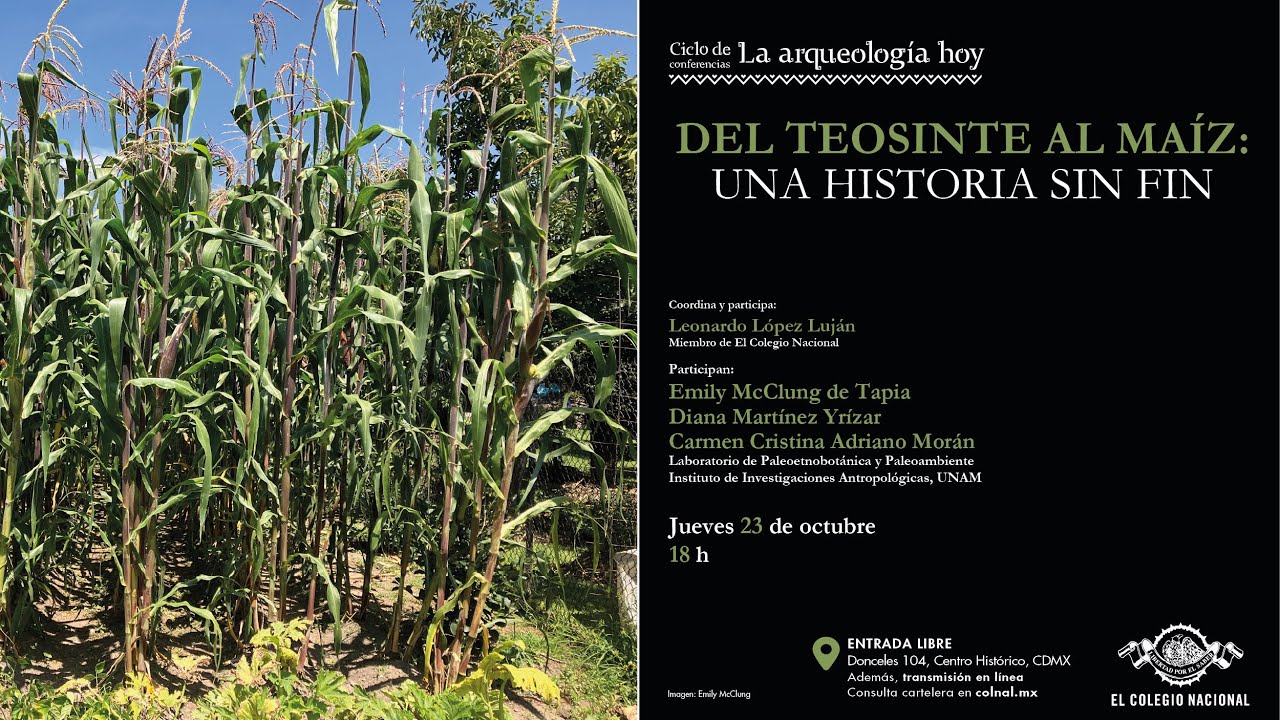
Del teosinte al maíz: una historia sin fin
Keywords
Summary
161 words
Critical Evaluation
The lecture provides a comprehensive overview of the current state of research on maize domestication, presented by experts in the field. The speakers successfully integrate archaeological, botanical, and genetic evidence to explain the complex history of maize. The argumentation is solid, relying on established scientific methods and recent discoveries. The presentation is well-structured, moving from the introduction of the laboratory’s work to the specific case of maize, and finally to broader implications. The speakers acknowledge the limitations of archaeological evidence and the need for cautious interpretation. The use of visual aids, such as images of archaeological artifacts and historical documents, enhances the clarity of the presentation. However, the lecture is primarily aimed at a general audience, and some technical details are simplified. The lack of explicit citations in the transcript makes it difficult to verify specific claims, but the speakers’ credentials and the institutional context lend credibility. The title accurately reflects the content, and the lecture successfully conveys the ongoing nature of scientific inquiry. Overall, the lecture is informative and engaging, offering valuable insights into the origins of one of the world’s most important crops.
185 words
Title / Content Match
The title accurately reflects the content, which traces the evolutionary and cultural history of maize from its wild ancestor teosinte to its global importance.
Quality & Reliability
8/10
The lecture is given by established researchers from UNAM's Paleoethnobotany and Paleoenvironment Laboratory, with a focus on archaeological evidence. The content is well-structured, referencing current scientific debates and methods. However, specific citations are not provided in the transcript, and the lecture is aimed at a general audience, which may simplify complex topics.
Key Moments
Markers derived by PSI from the transcript: the creator did not define chapters.
- Introduction by Leonardo López Luján, welcoming attendees and presenting the speakers.
- Emily McClung de Tapia introduces the laboratory and its focus on paleoethnobotany and paleoenvironment.
- Discussion on the importance of maize in Mesoamerican cultures, with examples from art and history.
- Explanation of the challenges in dating early maize remains and the question of its presence in South America.
- Overview of current research methods, including genetic analysis and archaeological excavations.
- Discussion on the process of nixtamalization and its nutritional implications.
- Future research directions and the importance of interdisciplinary collaboration.
- Q&A session with the audience, addressing specific questions about maize domestication.
- Concluding remarks and thanks to the audience.
Cited Sources
- Arqueología Mexicana (journal) — Mentioned as a publication where the speakers have contributed articles on maize.
Concurring Sources
- Staller, J. E., & Carrasco, M. (2010). Pre-Columbian Foodways: Interdisciplinary Approaches to Food, Culture, and Markets in Ancient Mesoamerica. — Provides interdisciplinary perspectives on ancient foodways, including maize, aligning with the lecture's approach.
Dissenting Sources
- Piperno, D. R., & Flannery, K. V. (2001). The earliest archaeological maize (Zea mays L.) from highland Mexico: New accelerator mass spectrometry dates and their implications. — This study suggests an earlier date for maize domestication in highland Mexico, which may contrast with some interpretations presented in the lecture.
Contribution & Novelties
The lecture provides an updated synthesis of maize domestication research, emphasizing the role of archaeological evidence and the integration of multiple disciplines. It addresses the common question of why early maize appears in South America, offering a nuanced explanation based on recent findings.
Pour aller plus loin :
- Teosinte — The wild ancestor of maize, central to understanding domestication.
- Maize domestication — Overview of the history and genetic evidence.
- Paleoethnobotany — The study of plant remains from archaeological sites, key to the lecture’s methodology.
84 words
Radar Profile
The radar profile shows high scores in quantity and quality of information, reflecting the comprehensive and well-researched content. The technical level is moderate, suitable for a general audience, while reliability is high due to the speakers' expertise.