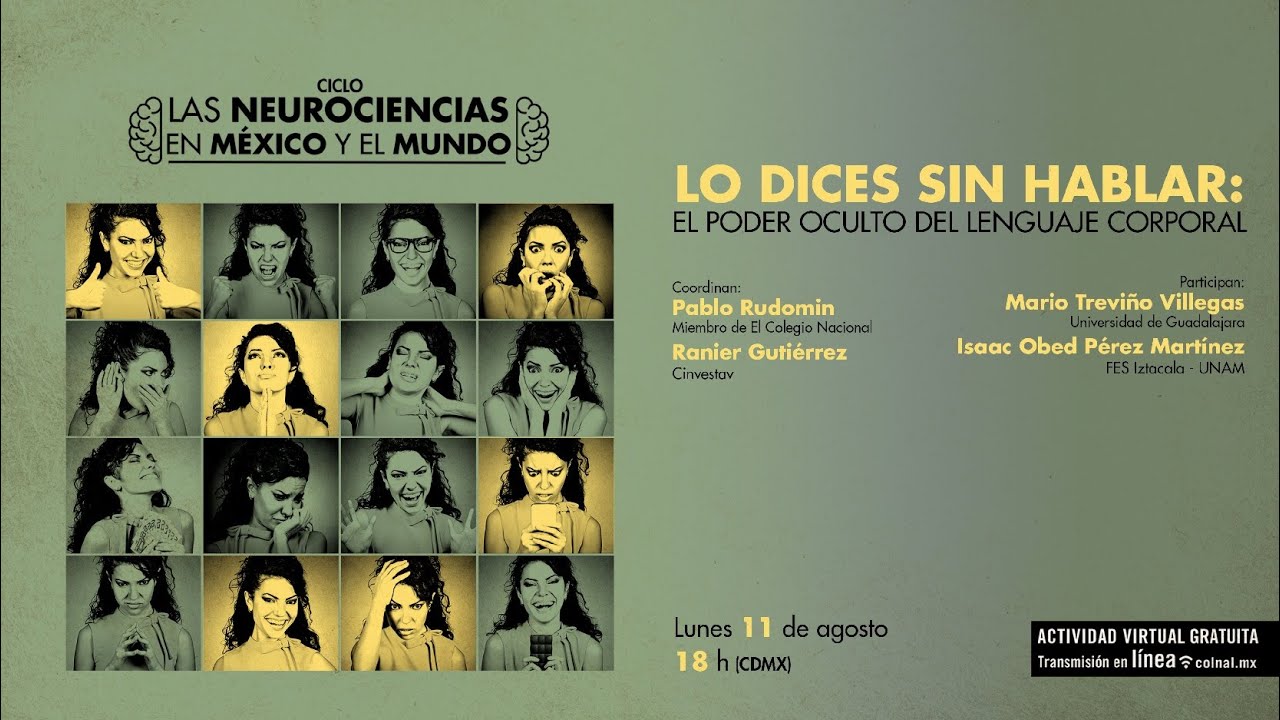
Lo dices sin hablar: el poder oculto del lenguaje corporal
Keywords
Summary
165 words
Critical Evaluation
The video provides a valuable overview of current research in behavioral neuroscience, presented by experts in the field. Dr. Treviño’s talk is well-structured, starting with a critique of traditional paradigms and then offering a framework that emphasizes active perception and the integration of body and environment. He supports his arguments with examples from his laboratory, including studies on mice and collaborations with other institutions. The content is scientifically rigorous, with references to established concepts like hierarchical organization of behavior and the importance of life history. However, the presentation is somewhat general and lacks detailed data or specific experimental results, which might limit its depth for a specialized audience. The title’s focus on body language is not fully addressed; the talk is more about the neurobiological bases of behavior in general. The inclusion of Dr. Pérez’s talk, which is not fully transcribed, suggests a complementary perspective on sensorimotor integration, but the available content is insufficient to evaluate it thoroughly. The Q&A session, though not transcribed, likely adds value by addressing audience questions. Overall, the video is informative and credible, but it could benefit from more concrete examples and a clearer connection to the advertised topic of body language. The presence of a brief musical intro and outro does not detract from the content. The video does not contain any advertising sequences.
220 words
Title / Content Match
The title focuses on body language, but the content covers broader neurobiological bases of behavior, including active perception and sensorimotor integration. The connection to body language is present but not the central theme.
Quality & Reliability
8/10
The video features two established neuroscientists from Mexican institutions, presenting their research and discussing the neurobiological bases of behavior. The content is grounded in scientific methodology and peer-reviewed work, though it is presented as a lecture rather than a formal review. The presence of a Q&A session and the institutional context (El Colegio Nacional) add credibility.
Key Moments
Markers derived by PSI from the transcript: the creator did not define chapters.
- Introduction by Dr. Pablo Rudomin, welcoming participants and introducing the series.
- Dr. Mario Treviño begins his talk on the neurobiological bases of behavior.
- Discussion of the reductionist paradigm and the need to consider the organism as an active agent.
- Explanation of hierarchical organization of behavior and examples from animal models.
- Presentation of laboratory research on learning and memory, with emphasis on active perception.
- Dr. Isaac Obed Pérez begins his talk on sensorimotor integration in oral movements.
- Discussion of the role of artificial intelligence in analyzing body language and non-verbal communication.
- Q&A session with the audience, addressing questions about the research and its applications.
Contribution & Novelties
The video offers a synthesis of current research in behavioral neuroscience, emphasizing the importance of active perception and the integration of body and environment. It provides a framework for understanding behavior beyond simple stimulus-response, which is a valuable contribution to the field. The inclusion of two researchers with complementary expertise (cortical plasticity and sensorimotor integration) enriches the discussion.
Pour aller plus loin :
- Active perception — Wikipedia article on active perception, a key concept discussed.
- Sensorimotor integration — Wikipedia article on sensorimotor integration, relevant to Dr. Pérez’s work.
- Neuroplasticity — Wikipedia article on neuroplasticity, foundational to Dr. Treviño’s research.
99 words
Radar Profile
The radar profile shows high scores in information quantity, quality, and reliability, with a slightly lower but still solid technical level. This indicates a well-rounded, informative presentation suitable for a general scientific audience.