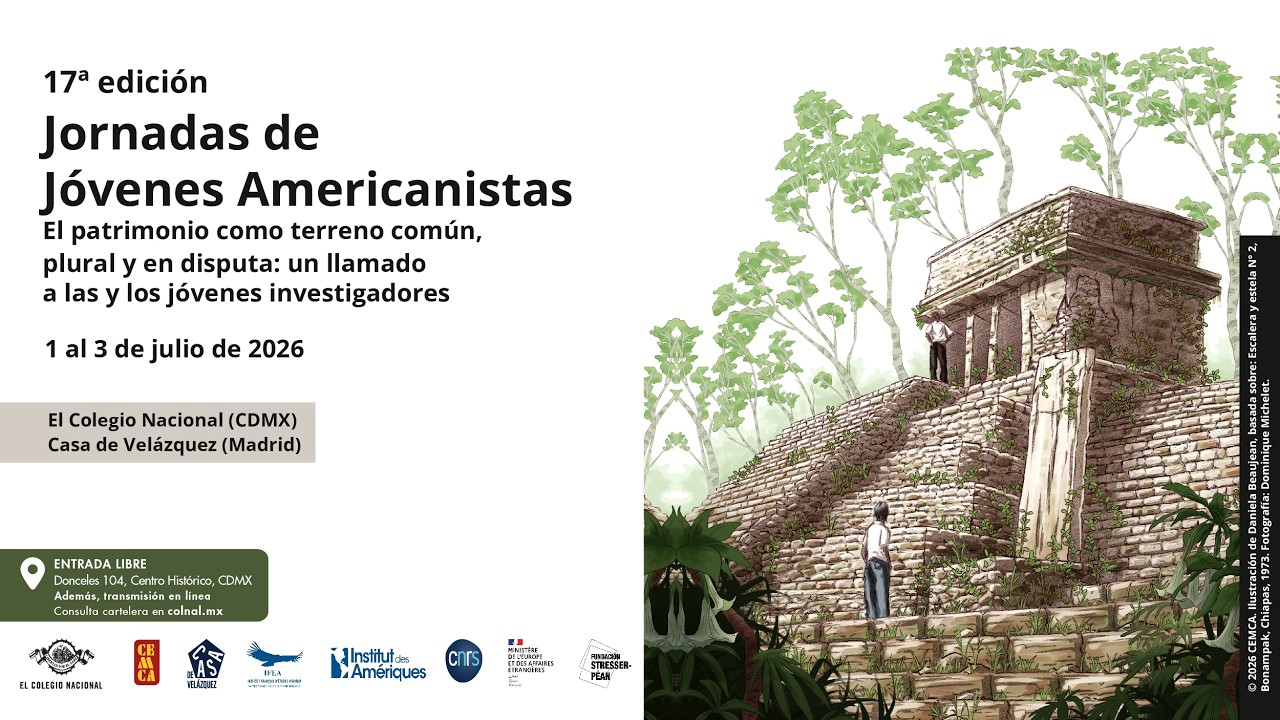
Mesa redonda 4. Patrimonialización y conflictos territoriales
Keywords
Summary
115 words
Critical Evaluation
The round table offers a rich and nuanced exploration of heritage-making processes in Latin America, grounded in empirical case studies. The first presentation on Mexicali effectively illustrates the gap between official heritage discourses and local practices, using the concept of ‘imaginarios urbanos’ to analyze how interventions reshape urban identity. The second presentation on the Sondondo Valley provides a detailed account of how heritage conservation can become a tool for territorial control, highlighting the tensions between local communities, the state, and economic actors. The third presentation on the Paseo de la Reforma offers a critical perspective on coloniality and memory, showing how heritage can be used to reinforce dominant narratives. The speakers demonstrate strong theoretical grounding and methodological rigor, drawing on fieldwork and archival research. However, the format of a round table limits the depth of analysis, and some arguments could benefit from more extensive evidence. The sources cited are primarily academic and institutional, lending credibility to the presentations. The title accurately reflects the content, and the discussions are well-structured. Overall, the round table provides valuable insights into the complexities of heritage-making, making it a useful resource for scholars and students interested in cultural heritage, urban studies, and political ecology.
199 words
Title / Content Match
The title accurately reflects the content, which focuses on heritage-making processes and territorial conflicts in two Latin American cases.
Quality & Reliability
7/10
The video is a round table with academic presentations from researchers, providing detailed case studies and theoretical frameworks. The content is well-structured and grounded in fieldwork, but the lack of peer-reviewed sources and the format of a conference presentation limit its reliability.
Key Moments
Markers derived by PSI from the transcript: the creator did not define chapters.
- Introduction and first presentation on Mexicali's heritage disputes.
- Discussion of the Chinese cook monument controversy.
- Second presentation on the Sondondo Valley terraces.
- Analysis of heritage conservation and political interests in Peru.
- Third presentation on the Paseo de la Reforma and coloniality.
- Discussion on memory and heritage conflicts in Mexico City.
Cited Sources
- Ley Federal de Monumentos Históricos y Zonas Arqueológicas — Mentioned in the first presentation as the legal framework for heritage in Mexico.
- Programa Parcial de Desarrollo Urbano del Centro Histórico de Mexicali — Referenced as the official plan for revitalizing the historic center.
- Ministerio de Cultura del Perú — Mentioned as the institution promoting conservation of the Sondondo terraces.
Concurring Sources
- UNESCO World Heritage Centre — International framework for heritage conservation.
Dissenting Sources
- Local community perspectives — The presentations highlight that local communities often disagree with official heritage designations and interventions.
Contribution & Novelties
The round table provides original insights into heritage-making processes in Latin America, highlighting the tensions between official discourses and local practices. It contributes to the understanding of how heritage is used as a political tool and how communities resist or negotiate these processes.
Pour aller plus loin :
- Patrimonio cultural — Overview of the concept of cultural heritage.
- Imaginarios urbanos — Theoretical framework used in the first presentation.
- Colonialidad del poder — Concept relevant to the third presentation on coloniality.
80 words
Radar Profile
The radar profile shows high scores in information quantity and quality, reflecting the detailed case studies and theoretical depth. The technical level is moderate, indicating accessibility to a general audience. Overall, the video is a reliable and informative resource on heritage conflicts.