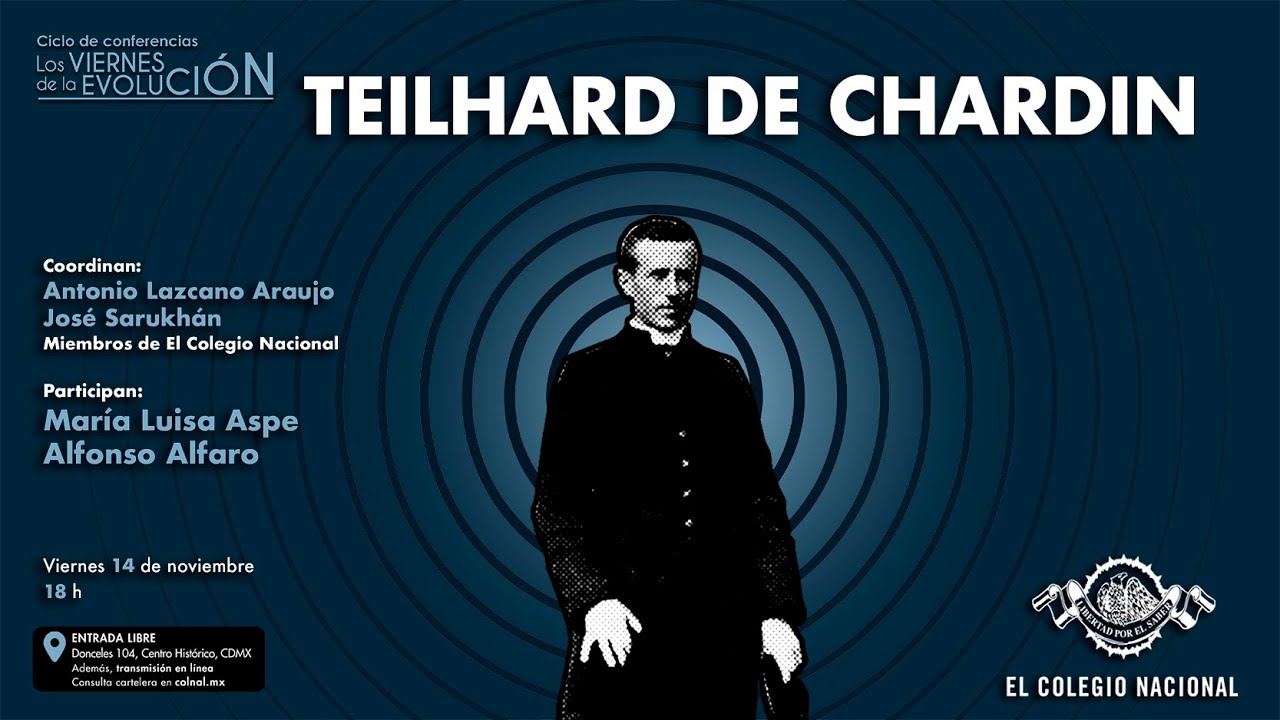
Teilhard de Chardin | Ciclo Los viernes de la evolución
Keywords
Summary
153 words
Critical Evaluation
The lecture provides a rich, historically grounded analysis of Teilhard de Chardin’s significance, drawing on archival research and expert knowledge. The speakers successfully debunk common misconceptions, such as the idea that the Catholic Church formally condemned Darwin’s theory, by citing specific documents and historical events. The discussion of Erich Wasmann as a precursor to Teilhard adds depth, showing that Teilhard was part of a longer Jesuit tradition of engaging with evolution. The argumentation is solid, with careful attention to the political and theological nuances of the time. However, the lecture is primarily an expert opinion piece rather than a systematic review, and it lacks visual aids or detailed citations on screen, which might limit its accessibility. The title accurately reflects the content, and the focus on historical context is appropriate. The speakers’ expertise is evident, and they provide a balanced view, acknowledging both Teilhard’s contributions and the controversies surrounding his work. The main strength is the contextualization of Teilhard within the broader history of science and religion, which is often oversimplified. The lecture could be improved by including more direct quotes from Teilhard’s writings and by addressing criticisms of his work more thoroughly. Overall, it is a valuable resource for understanding Teilhard’s legacy, though it assumes some prior knowledge of the topic.
212 words
Title / Content Match
The title accurately reflects the content, which is a lecture on Teilhard de Chardin within a series on evolution.
Quality & Reliability
8/10
The video features expert speakers (historians and scientists) discussing Teilhard de Chardin's legacy with nuanced historical context, referencing primary sources and archival research. However, it is a conference recording with limited visual aids and no formal citations displayed, relying on spoken references.
Key Moments
Markers derived by PSI from the transcript: the creator did not define chapters.
- Introduction by Antonio Lazcano, welcoming attendees and introducing the topic of Teilhard de Chardin.
- Discussion of the Catholic Church's historical stance on evolution, referencing the Scopes trial and the lack of formal condemnation.
- Introduction of Erich Wasmann as a precursor to Teilhard, highlighting his work on social insects and his reconciliation with evolution.
- Examination of the Jesuit order's initial opposition to Darwinism, citing articles from La Civiltà Cattolica.
- Discussion of Teilhard's unique contributions, including his concept of the Omega Point and his integration of evolution into theology.
- Analysis of Teilhard's controversial views on original sin and the Church's response to his writings.
- Reflections on Teilhard's legacy and the importance of re-evaluating his work in the context of modern science and religion.
Cited Sources
- Negotiating Darwin: The Vatican Confronts Evolution — Referenced by Antonio Lazcano as a key source on the Vatican's stance on evolution.
- La Civiltà Cattolica — Mentioned as a Jesuit journal that initially opposed Darwinism.
- Erich Wasmann's works — Discussed as a precursor to Teilhard, with references to his studies on social insects.
Concurring Sources
- The Phenomenon of Man — Teilhard's major work, likely referenced implicitly in the discussion of his ideas.
Dissenting Sources
- Criticisms of Teilhard's theology — The lecture mentions that Teilhard's views were controversial within the Church, but does not detail specific criticisms.
Contribution & Novelties
This lecture offers a fresh perspective on Teilhard de Chardin by situating him within a broader Jesuit tradition of engaging with evolution, particularly highlighting the role of Erich Wasmann. It also clarifies misconceptions about the Catholic Church’s official stance on Darwinism, drawing on archival research. The discussion provides a nuanced historical context that is often missing in popular accounts.
Pour aller plus loin :
- Teilhard de Chardin — Overview of his life and work.
- Erich Wasmann — Information on the Jesuit entomologist and his views on evolution.
- Scopes Trial — Historical context for the debate on teaching evolution.
98 words
Radar Profile
The radar profile shows high scores in quantity and quality of information, reflecting the depth of historical detail and expert analysis. The technical level is moderate, indicating that the content is accessible to a general audience but still requires some background knowledge. The overall reliability is high due to the speakers' expertise and use of archival sources.