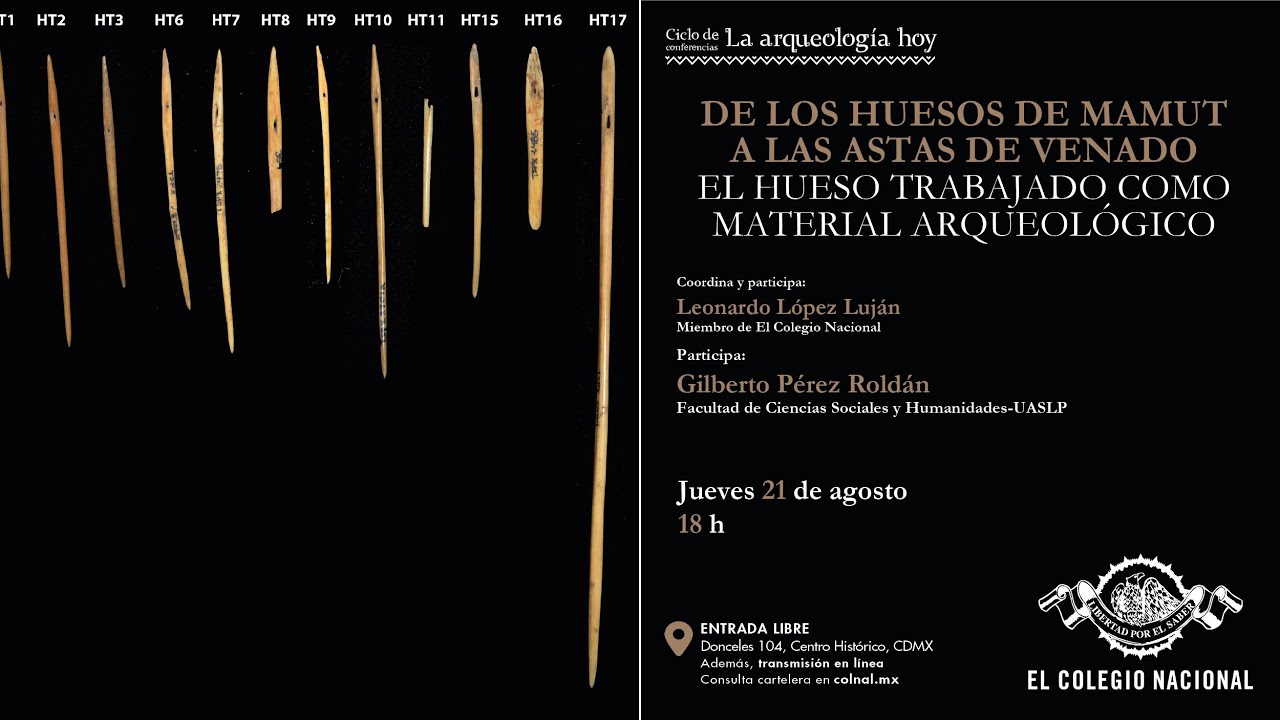
De los huesos de mamut a las astas de venado. El hueso trabajado como material arqueológico
Keywords
Summary
122 words
Critical Evaluation
The lecture provides a comprehensive overview of bone as an archaeological material, drawing on specific examples and research. The speakers demonstrate deep knowledge and use a rigorous scientific approach, referencing specific artifacts and studies. The argumentation is solid, with clear explanations of the technological processes and cultural contexts. The sources cited are credible, including museum collections and academic publications. The title accurately reflects the content, which is both informative and engaging. The lecture is well-structured, with a clear introduction, main body, and conclusion. The Q&A session adds value by addressing audience questions. Overall, the lecture is of high quality, suitable for an academic audience, and contributes to the field of archaeology.
111 words
Title / Content Match
The title accurately reflects the content, which focuses on the use of bone as an archaeological material, with examples from mammoth bones to deer antlers.
Quality & Reliability
8/10
The lecture is given by a recognized archaeologist (Leonardo López Luján) and a specialist (Gilberto Pérez Roldán) from a prestigious institution (El Colegio Nacional). The content is based on archaeological research and references specific artifacts and studies. The presentation is scholarly, with a clear methodology and critical analysis.
Key Moments
Markers derived by PSI from the transcript: the creator did not define chapters.
- Introduction by Leonardo López Luján, welcoming audience and presenting upcoming activities.
- Discussion of recent publications, including the Altar de los Guerreros del Sol study.
- Main lecture begins: Gilberto Pérez Roldán introduces the topic of worked bone.
- Examples of bone tools and ornaments from Mesoamerican sites.
- Discussion of mammoth bone use and its significance.
- Deer antler artifacts and their symbolic meanings.
- Technological analysis of bone working techniques.
- Case studies from specific archaeological sites.
- Cultural and ritual aspects of bone artifacts.
- Q&A session with the audience.
Cited Sources
- Arqueología Mexicana — Mentioned as a publication with recent issues on prehispanic cuisine and trade in western Mesoamerica.
- Metropolitan Museum of Art — Mentioned as the location of the Altar de los Guerreros del Sol.
- British Museum — Mentioned as holding a ceremonial block with similar iconography.
- Museo Nacional de Antropología — Mentioned as holding the Teocalli de la Guerra Sagrada and other comparative pieces.
Concurring Sources
- Arqueología Mexicana — The publication is referenced for its coverage of related topics.
- Metropolitan Museum of Art — The museum's collection includes the discussed altar.
Contribution & Novelties
The lecture provides a detailed overview of bone as an archaeological material, with specific examples from Mesoamerica. It highlights the technological and symbolic importance of bone artifacts, contributing to the understanding of ancient societies. The discussion of the Altar de los Guerreros del Sol offers new insights into its origin and iconography.
Pour aller plus loin :
- Bone tool — Overview of bone tools in archaeology.
- Mammoth — Context on mammoth remains and their use.
- Deer antler — Information on antler as a raw material.
85 words
Radar Profile
The radar profile shows high scores in information quantity, quality, and reliability, with a slightly lower technical level. This indicates a well-informed and reliable lecture that is accessible to a broad audience.