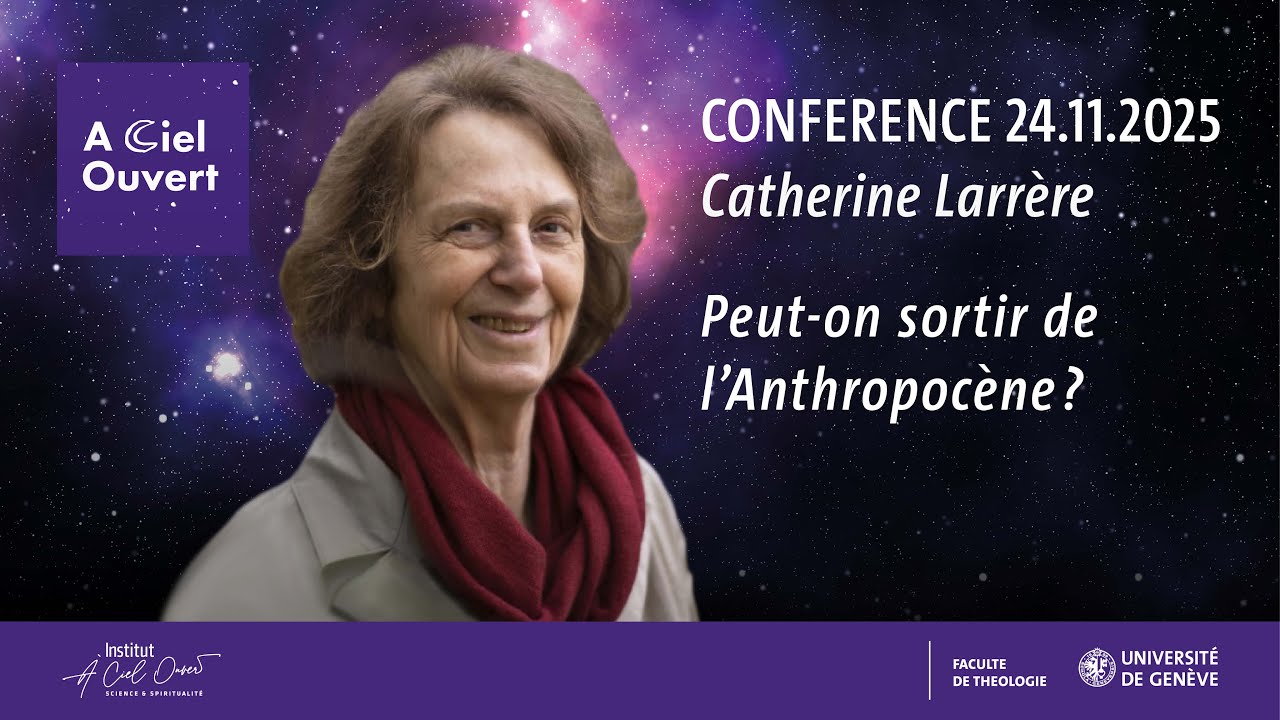
Catherine Larrère : "Peut-on sortir de l'Anthropocène?"
Keywords
Summary
141 words
Critical Evaluation
Value of the Information & Strength of the Argument
The lecture provides valuable insights into the philosophical and political dimensions of the Anthropocene. Larrère effectively synthesizes scientific history with ethical considerations, offering a nuanced argument that distinguishes between technocratic management and deeper existential questions. She supports her points with references to key thinkers and events, such as the Stockholm conference, the Brundtland Report, and the work of the Anthropocene Working Group. Her argumentation is coherent and well-structured, though it remains an expert opinion rather than an empirical study.
Scientific Rigor, Source Quality, Title Accuracy
Larrère demonstrates scientific rigor by referencing specific scientific programs, reports, and academic works, such as the International Geosphere-Biosphere Programme and the IPCC. She also acknowledges the controversial rejection of the Anthropocene by geologists, providing a balanced view. The title accurately reflects the content, as the lecture directly addresses the question of exiting the Anthropocene. The sources cited are credible and relevant, though the lecture is not a peer-reviewed publication.
163 words
Title / Content Match
The title accurately reflects the content, as the lecture explores the concept of the Anthropocene and discusses whether and how humanity can exit it.
Quality & Reliability
8/10
The speaker is a recognized philosopher specializing in environmental thought, with a solid academic background. The lecture is well-structured, references scientific and philosophical works, and presents a balanced view of controversies. However, it is an opinion lecture rather than a peer-reviewed study, and some claims rely on personal interpretation.
Key Moments
Markers derived by PSI from the transcript: the creator did not define chapters.
- Introduction by the host, presenting Catherine Larrère and her work.
- Larrère begins her lecture, discussing the current environmental situation and the COP30.
- Definition of the Anthropocene and its origins with Crutzen and Stoermer.
- Historical context of environmental awareness since the 1970s.
- Controversies: Capitalocene and postcolonial critiques.
- The rejection of the Anthropocene by geologists in 2024.
- Two models of action: planetary boundaries vs. ethical-political approach.
- The alternative between producing and inhabiting the Earth.
- Conclusion and Q&A session.
Cited Sources
- The Anthropocene: conceptual and historical perspectives — Referenced as the original article by Crutzen and Stoermer, published in the IGBP newsletter in 2000.
- Nature article on the Anthropocene — Mentioned as the 2002 article in Nature that brought the term to wider attention.
- The Limits to Growth — Referenced as the 1972 report by the Club of Rome, which highlighted the consequences of unlimited growth.
- Our Common Future (Brundtland Report) — Mentioned as the 1987 report that introduced the concept of sustainable development.
- The Climate of History: Four Theses — Referenced as the 2009 article by Dipesh Chakrabarty, which raised questions about the Anthropocene from a postcolonial perspective.
- L'événement Anthropocène — Mentioned as a book by Christophe Bonneuil and Jean-Baptiste Fressoz, which discusses the Capitalocene and critiques Chakrabarty.
Concurring Sources
- IPCC Reports — The Intergovernmental Panel on Climate Change reports, which Larrère references as authoritative sources on climate change.
Dissenting Sources
- Geological rejection of the Anthropocene — The International Commission on Stratigraphy rejected the Anthropocene as a formal geological epoch in 2024, which contrasts with the continued use of the term in social sciences and public discourse.
Contribution & Novelties
The lecture offers a philosophical perspective on the Anthropocene, emphasizing the distinction between a technocratic management approach and a more ethical-political one. It highlights the importance of the concept despite its official rejection, and suggests that the choice between ‘producing’ and ‘inhabiting’ the Earth is central to addressing environmental crises.
Pour aller plus loin :
- Anthropocene — Wikipedia article providing an overview of the concept and its debates.
- Planetary boundaries — Official page of the Stockholm Resilience Centre explaining the planetary boundaries framework.
- Capitalocene — Wikipedia article on the alternative term proposed by Jason Moore and others.
- Dipesh Chakrabarty — Wikipedia article on the historian who wrote ‘The Climate of History’.
111 words
Radar Profile
The radar profile shows high scores in information quantity, quality, technical level, and reliability, indicating a well-informed and rigorous lecture. The balance between these dimensions suggests a comprehensive and credible presentation, with a slight emphasis on technical depth.