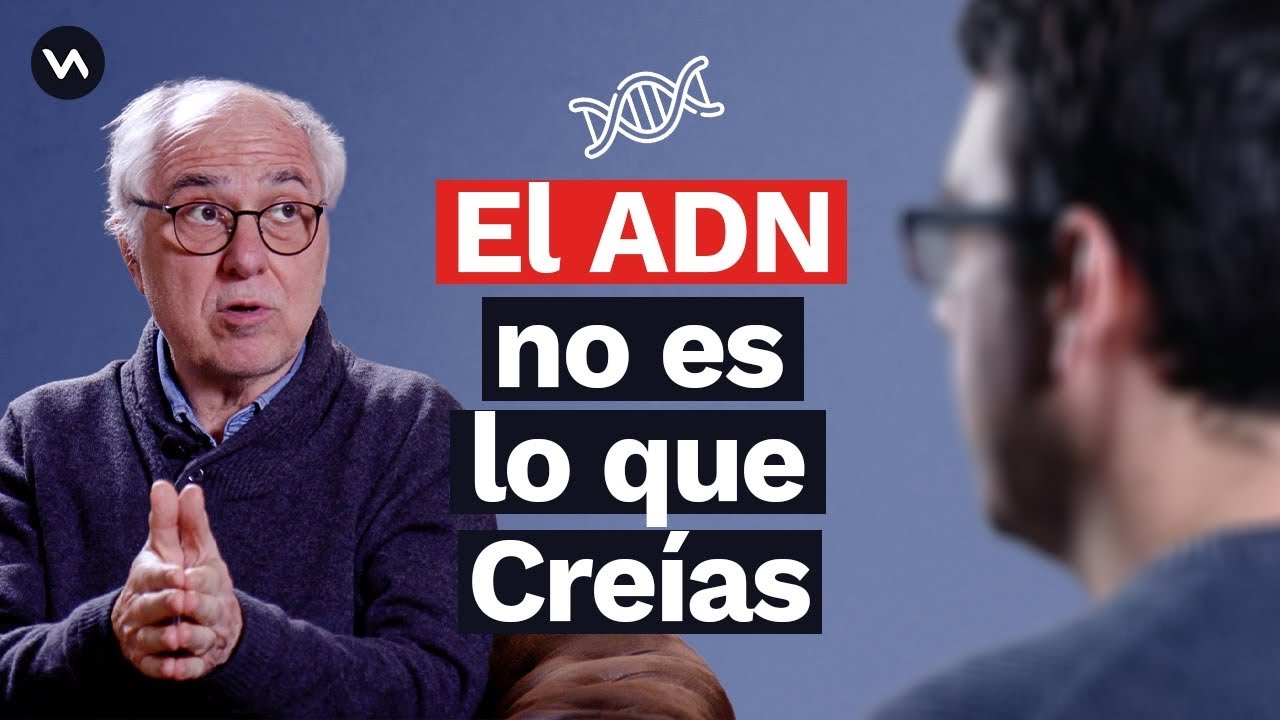
Experto en Genética: Olvida TODO lo que Sabes sobre el ADN | Dr. Alfonso Martínez Arias
Keywords
Summary
134 words
Critical Evaluation
The interview provides a compelling and accessible critique of genetic determinism, grounded in the expertise of Dr. Martínez Arias. His arguments are well-structured, using concrete examples such as the chimera case and the variability of fingerprints to illustrate the limitations of a purely genetic perspective. The discussion is scientifically rigorous, referencing established concepts in developmental biology, and he is careful to nuance his claims, acknowledging the role of genes while emphasizing the primacy of cellular decision-making. The sources cited are primarily his own book and general scientific knowledge, which is appropriate for an expert opinion format. The title accurately reflects the content, and the interview does not overstate its claims. The main strength is the clarity of the argument and the authority of the speaker. A minor weakness is that some claims, such as the percentage of heritability of longevity, are presented without specific citations, but they are consistent with current scientific literature. Overall, this is a high-quality, thought-provoking interview that effectively challenges a common misconception.
166 words
Title / Content Match
The title accurately reflects the content: a provocative discussion challenging common beliefs about DNA, with the expert advocating a cell-centric view of biology.
Quality & Reliability
8/10
The interview features a highly qualified developmental biologist (ICREA researcher, former Cambridge professor) presenting a well-argued critique of genetic determinism, supported by concrete examples and references to his book. The claims align with current scientific understanding in developmental biology, though some are presented as the author's perspective rather than established consensus.
Key Moments
Markers derived by PSI from the transcript: the creator did not define chapters.
- Introduction of the guest and the topic of genetic determinism.
- Discussion of the case of Karen Keegan, a human chimera, and its implications for identity.
- Explanation of how cells, not genes, are the architects of the body.
- Examples of traits not determined by genes, such as fingerprints and longevity.
- Historical overview of why genetic determinism became so popular.
- Discussion of the role of genes as a toolbox and the importance of cellular decisions.
- Implications for understanding disease and potential therapies.
- Q&A segment addressing audience questions.
Cited Sources
- Las arquitectas de la vida — Book by Dr. Martínez Arias that presents his thesis on the role of cells in development.
- Vidas Ajenas Club (La Isla) — Community platform for further discussion.
- Entiende la Física Cuántica — Recommended video from the channel.
- El Mayor Misterio del Universo — Recommended video from the channel.
- Entiende el Cosmos — Recommended video from the channel.
Concurring Sources
- The developing cell — Article discussing the role of cells in development, supporting the idea that cells are the primary drivers.
- Beyond the genome — Article exploring the limitations of genetic determinism and the importance of cellular processes.
Dissenting Sources
- The Selfish Gene — Richard Dawkins' book presents a gene-centric view of evolution, which contrasts with the cell-centric perspective of Dr. Martínez Arias.
Contribution & Novelties
The interview offers a clear and accessible presentation of the cell-centric view of development, challenging the common narrative of genetic determinism. It provides concrete examples and analogies that make complex biological concepts understandable to a broad audience. The discussion with Dr. Martínez Arias adds depth by exploring the philosophical implications for identity and the history of genetics.
Pour aller plus loin :
- Developmental biology — Overview of the field that studies how organisms develop from a single cell.
- Epigenetics — Study of heritable changes in gene expression that do not involve changes to the DNA sequence, relevant to the discussion of environmental influences.
- Cell fate determination — Concept explaining how cells become specialized, central to the idea of cellular decision-making.
120 words
Radar Profile
The radar profile shows high scores in information quantity, quality, and reliability, with a moderate technical level. This indicates a content-rich interview that is scientifically sound but accessible to a general audience.
💬 Très positif. Sur les 30 commentaires analysés, la grande majorité exprime admiration et enthousiasme pour la clarté et la profondeur de l'interview, avec quelques mentions de références complémentaires comme Maturana et Varela.