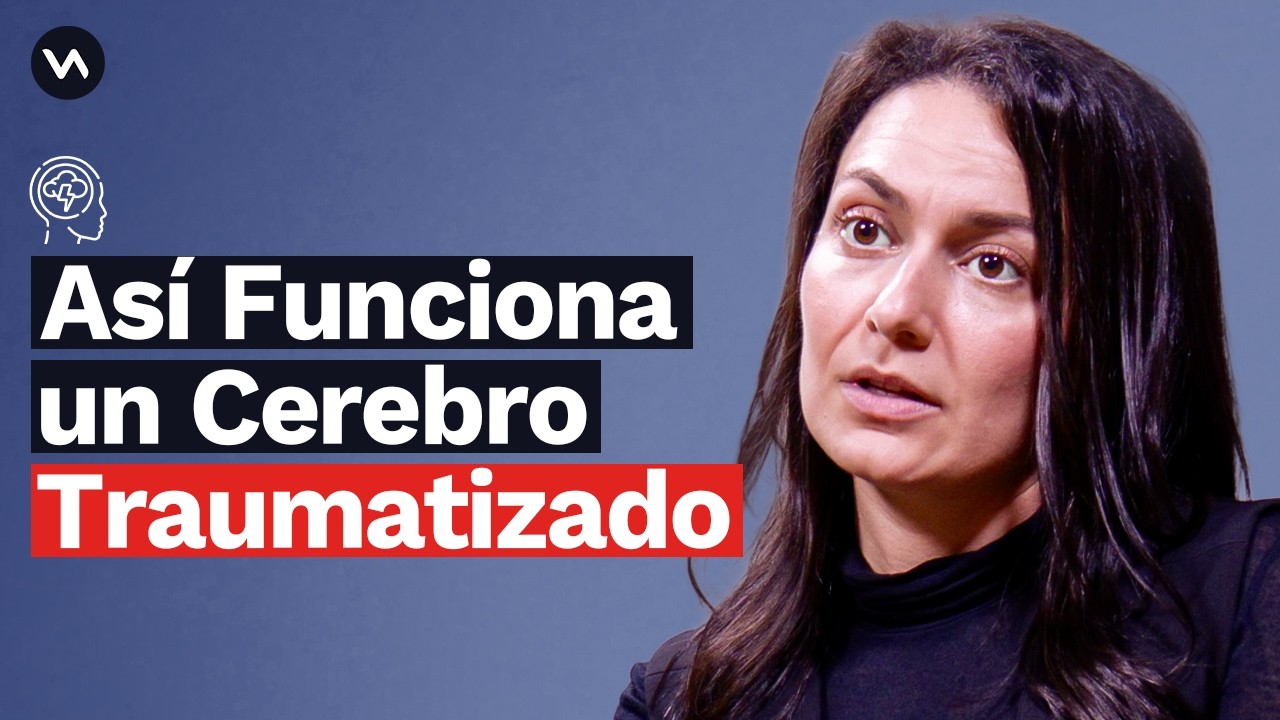
Experta en Trauma: La señal nº1 de que tu CEREBRO sigue Traumatizado
Keywords
Summary
143 words
Critical Evaluation
The video is a high-quality expert interview that provides a comprehensive and accessible explanation of trauma. Dr. Álvarez demonstrates deep knowledge and communicates complex neuroscientific concepts in an understandable manner. The argumentation is solid, grounded in established psychological theories, and she carefully distinguishes between the event and the resulting wound, addressing common misconceptions. The use of metaphors like the ‘alarm system’ and ‘indigestion’ effectively aids comprehension. However, the video lacks direct references to specific studies or scientific literature, which could enhance its credibility for a more academic audience. The interviewer’s role is supportive, allowing the expert to elaborate without interruption. The title accurately reflects the content, focusing on the primary sign of a traumatized brain. Overall, the video is informative and reliable, though it could benefit from citing sources for further reading. The public comments indicate a strong positive reception, with many viewers sharing personal experiences and expressing gratitude for the clarity provided. The video successfully bridges expert knowledge and public understanding, making it a valuable resource for those seeking to understand trauma.
173 words
Title / Content Match
The title accurately reflects the content, focusing on the primary sign of a traumatized brain, which is discussed in depth.
Quality & Reliability
8/10
The video features a clinical psychologist with 15 years of experience, providing a clear and scientifically grounded explanation of trauma. The content aligns with established concepts in trauma psychology, such as amygdala hyperactivation and the fight-flight-freeze response. The speaker avoids overgeneralization and emphasizes the subjective nature of trauma. However, the video is an interview and does not provide direct citations to specific studies, relying instead on the expert's authority.
Key Moments
Markers derived by PSI from the transcript: the creator did not define chapters.
- Introduction and definition of trauma as a wound, not the event.
- Explanation of the amygdala's role as the brain's alarm system.
- Discussion on how trauma fragments memories and leads to re-experiencing.
- Metaphor of 'indigestion' for unprocessed trauma and the importance of early intervention.
- Explanation of the fight-flight-freeze response and its long-term effects.
- Discussion on how trauma affects relationships and daily functioning.
- Steps to alleviate the 'backpack' of trauma, including seeking professional help.
- Emphasis on the possibility of healing and re-regulating the nervous system.
Cited Sources
- Vidas Ajenas Club (community) — Mentioned as a community for further discussion.
- Cerebros Rotos (related video) — Recommended as a follow-up video.
Concurring Sources
- National Institute of Mental Health (NIMH) on PTSD — Provides scientific information on PTSD, aligning with the video's discussion of trauma symptoms and treatment.
Contribution & Novelties
The video provides a clear and accessible explanation of trauma, emphasizing the distinction between the traumatic event and the resulting wound. It offers a practical metaphor (‘indigestion’) to understand the process of trauma and highlights the importance of early intervention. The expert’s insights on the amygdala’s role and the nervous system’s response add depth to common understanding.
Pour aller plus loin :
- Trauma and the Brain — Official resource on PTSD and brain mechanisms.
- Amygdala and Fear — Scientific article on amygdala function in fear.
- Polyvagal Theory — Overview of the theory explaining nervous system responses to threat.
98 words
Radar Profile
The radar profile shows high scores in information quantity, quality, and reliability, with a slightly lower but still strong technical level. This indicates a well-balanced, informative, and credible content, suitable for a general audience seeking expert knowledge.
💬 Très positif. Sur les 30 commentaires analysés, la grande majorité exprime une profonde gratitude et un soulagement, partageant des expériences personnelles et soulignant la clarté et l'empathie de l'experte.