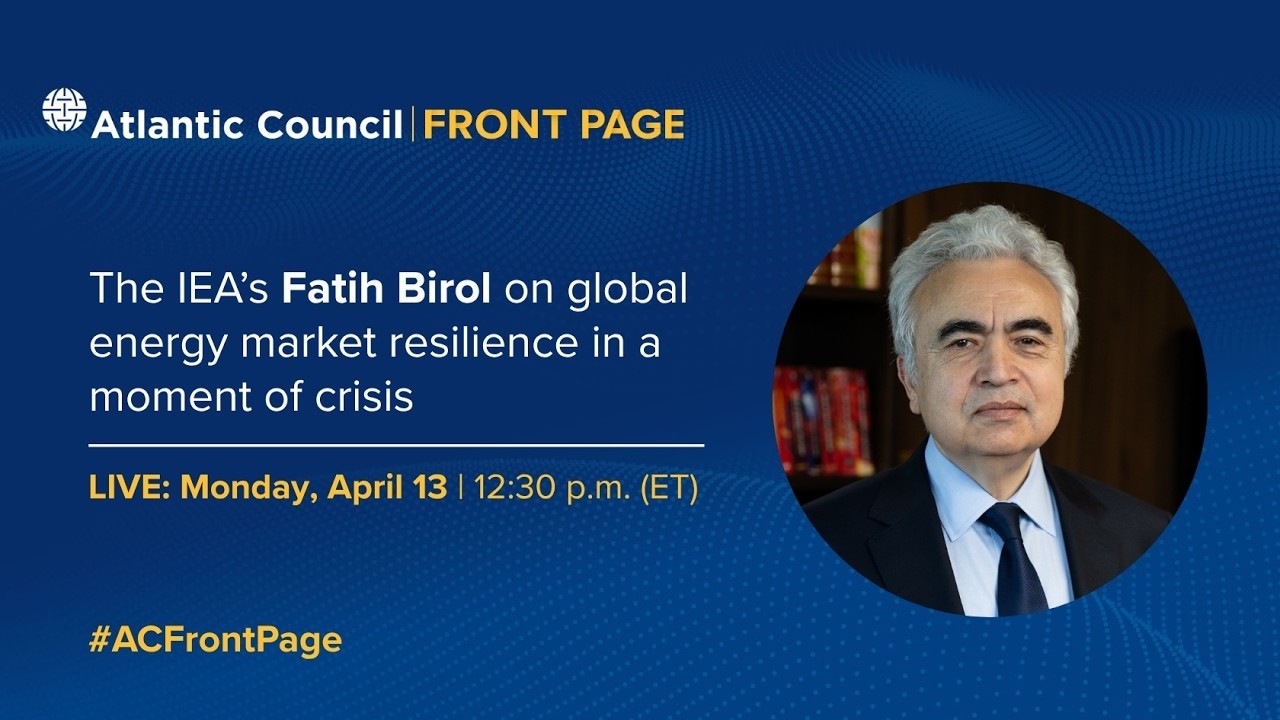
The IEA’s Fatih Birol on global energy market resilience in a moment of crisis
Keywords
Summary
143 words
Critical Evaluation
The video provides a valuable expert perspective on the current energy crisis, with Fatih Birol offering detailed insights into the scale of the disruption and the IEA’s response. His assessment that this is the greatest energy security threat in history is based on quantitative comparisons with past crises, lending credibility to his argument. The discussion of the coordinated stock release demonstrates the diplomatic efforts involved and the limitations of such measures. Birol’s analysis of regional vulnerabilities is nuanced, acknowledging that while all countries are affected, some are more exposed than others. The content is well-structured and accessible, though it remains at an expert level without delving into technical details. The sources cited are primarily the IEA’s own data and reports, which are reliable but not independent. The title accurately reflects the content, and the video serves as a timely and informative update on global energy security. However, the analysis is inherently subjective and based on the speaker’s institutional role, which may introduce bias. The lack of opposing viewpoints or critical examination of IEA policies is a limitation. Overall, the video is a high-quality expert opinion piece that provides valuable context for understanding the current energy crisis.
196 words
Title / Content Match
The title accurately reflects the content, which focuses on global energy market resilience and the IEA's response to the crisis.
Quality & Reliability
8/10
The video features Fatih Birol, Executive Director of the IEA, providing expert analysis on the current energy crisis. The information is based on his institutional role and direct involvement in policy responses. The content is credible but primarily opinion and situational analysis rather than peer-reviewed research.
Key Moments
Markers derived by PSI from the transcript: the creator did not define chapters.
- Introduction of Fatih Birol and the event's context.
- Birol describes the crisis as the largest energy security threat in history.
- Discussion on the coordinated release of 400 million barrels from emergency reserves.
- Analysis of economic impacts on different regions, including Iraq and developing Asian countries.
- Birol explains the potential duration of facility repairs and the long-term effects.
- Discussion on the IEA's role in the energy transition and emerging technologies.
Cited Sources
- IEA official website — The IEA's official website provides data and reports on global energy markets, referenced implicitly by Birol.
Concurring Sources
- IEA Oil Market Report — The IEA's own reports provide data on oil supply disruptions and market balances, supporting Birol's statements.
Contribution & Novelties
The video provides an authoritative, up-to-date assessment of the energy crisis from the IEA’s perspective, offering unique insights into the scale of the disruption and the coordinated response. It highlights the unprecedented nature of the crisis and the challenges of restoring energy infrastructure.
Pour aller plus loin :
- International Energy Agency - Oil Market Report — Official IEA publication providing detailed analysis of oil markets.
- Strait of Hormuz - Wikipedia — Background on the strategic waterway central to the crisis.
- Strategic Petroleum Reserve (United States) — Information on emergency oil reserves and their role in market stabilization.
97 words
Radar Profile
The radar profile shows high scores in information quantity, quality, and reliability, with a moderate technical level. This indicates a well-informed expert discussion that is accessible to a broad audience while maintaining depth.
💬 No comments were provided for analysis.