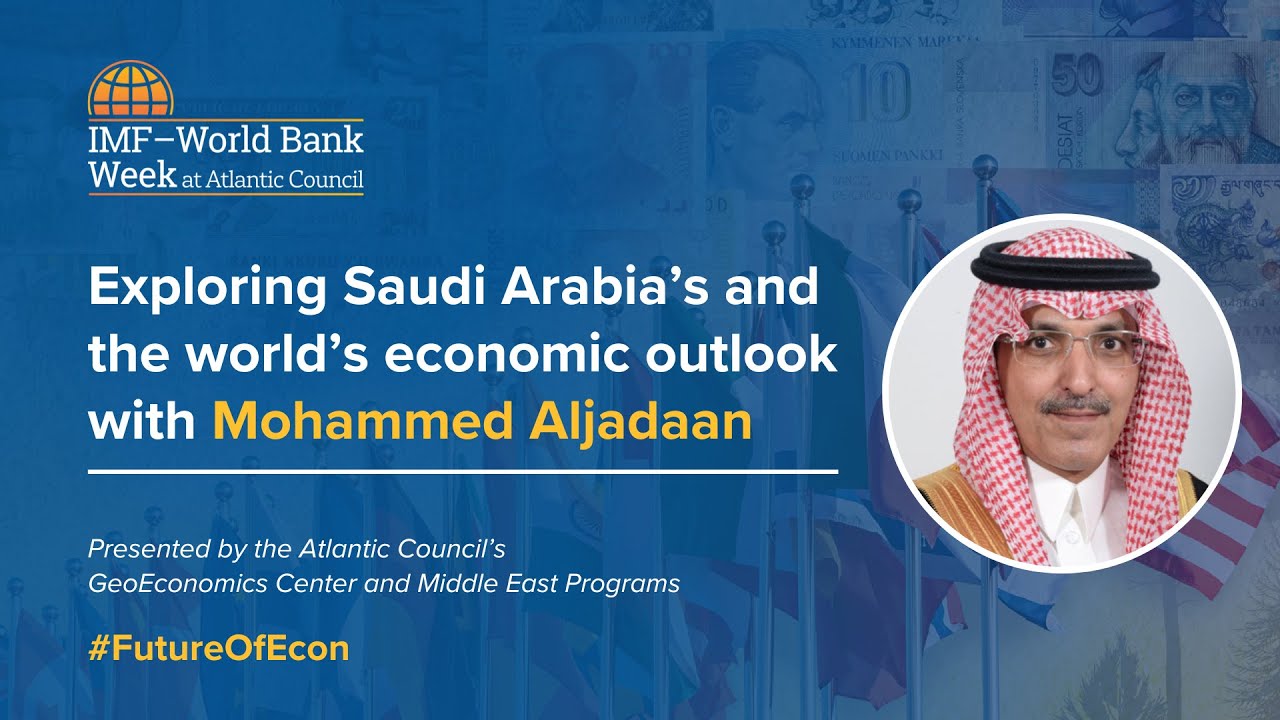
Exploring Saudi Arabia's and the world's economic outlook with Mohammed Aljadaan
Keywords
Summary
144 words
Critical Evaluation
The video features a high-level discussion between Atlantic Council President Fred Kemp and Saudi Finance Minister Mohammed Aljadaan, offering authoritative perspectives on global economic issues and Saudi Arabia’s reform agenda. The content is valuable for its insider view on sovereign debt challenges and the G20 Common Framework, as well as the progress of Vision 2030. Aljadaan’s arguments are coherent and grounded in his experience, but the discussion lacks empirical data and detailed analysis, relying more on policy advocacy than rigorous economic evidence. The sources are primarily institutional (Atlantic Council, IMF), and the event is part of the IMF-World Bank Annual Meetings, lending credibility. However, the format is an interview, not a research presentation, so the depth is limited. The title accurately reflects the content, and the discussion stays on topic. The main strengths are the authoritative voice and the timely relevance of the topics. The weaknesses include a lack of critical examination of potential downsides or alternative viewpoints, and the promotional tone regarding Saudi Arabia’s achievements. Overall, it is a useful overview for those interested in global economic policy and Saudi Arabia’s economic transformation, but it should be complemented with more detailed and critical sources.
195 words
Title / Content Match
The title accurately reflects the content, focusing on Saudi Arabia's and the global economic outlook as discussed by Mohammed Aljadaan.
Quality & Reliability
8/10
High-level expert discussion with a finance minister and IMF committee chair, providing authoritative insights on global debt and Saudi reforms. However, it is an opinion-based talk without detailed data or citations, and the event is institutionally affiliated.
Key Moments
Markers derived by PSI from the transcript: the creator did not define chapters.
- Introduction of Minister Mohammed Aljadaan and event context.
- Aljadaan begins remarks on global economy and sovereign debt challenges.
- Discussion on the G20 Common Framework and need for institutionalization.
- Aljadaan highlights Saudi Arabia's non-oil GDP growth and Vision 2030 progress.
- Q&A on debt restructuring and global fiscal space.
- Discussion on AI's impact on global economy and potential divides.
- Aljadaan emphasizes women's workforce participation and unemployment reduction.
- Closing remarks on international cooperation and leadership.
Cited Sources
- Event page: 2025 IMF-World Bank Annual Meetings at the Atlantic Council — Official event page providing context and additional information.
- Atlantic Council LinkedIn — Institutional social media profile for the Atlantic Council.
- Atlantic Council YouTube channel — Channel subscription link for more content.
Concurring Sources
- IMF Global Debt Database — IMF data on global debt levels supporting the discussion on rising sovereign debt.
- World Bank International Debt Statistics — World Bank data on debt service and low-income countries.
Dissenting Sources
- Critical analysis of Saudi Vision 2030 — Some analysts argue that Vision 2030's achievements are overstated and that oil dependence remains high.
Contribution & Novelties
The video provides unique insights from a key global economic policymaker on the urgent need to address sovereign debt and the importance of transforming debt into productive investments. It offers an insider perspective on the G20 Common Framework’s limitations and the need for institutional reform. The discussion also highlights Saudi Arabia’s economic diversification progress, which is often underreported.
Pour aller plus loin :
- G20 Common Framework — Official IMF page explaining the framework.
- Saudi Vision 2030 — Official government site detailing the reform agenda.
- Sovereign Debt Restructuring — Overview of debt restructuring mechanisms.
93 words
Radar Profile
The radar profile shows high scores in quality of information and reliability, reflecting the authoritative source and expert speaker. The quantity of information is moderate, and the technical level is accessible, making it suitable for a broad audience interested in economic policy.
💬 Sur les 0 commentaires analysés, aucune tendance n'est disponible.