Winning hearts and markets? China’s reach in the Global South
Keywords
Summary
228 words
Critical Evaluation
The panel provides a nuanced and balanced examination of China’s engagement with the Global South, drawing on the expertise of academics and practitioners. Professor Hong’s analysis of the BRI as a domestic stimulus tool is insightful, and Melanie Hart’s practical examples from her government experience add credibility. However, the discussion lacks rigorous empirical evidence and relies heavily on anecdotal cases. The panelists do not engage deeply with counterarguments or alternative perspectives, and some claims, such as the ‘debt trap’ narrative, are presented without thorough examination. The sources cited are primarily institutional reports and personal experiences, which may not be fully representative. The title accurately reflects the content, and the discussion is accessible to a general audience. The panel could have benefited from more specific data and a deeper exploration of the environmental and social impacts of Chinese projects. Overall, the discussion is informative and thought-provoking, but it falls short of a comprehensive academic analysis.
154 words
Title / Content Match
The title accurately reflects the content, which examines China's economic and political influence in the Global South.
Quality & Reliability
7/10
Panel discussion with experts from the Atlantic Council, Johns Hopkins, and Afrobarometer. Provides balanced perspectives, but lacks detailed citations and relies on anecdotal evidence. Some claims are contested, but overall credible.
Key Moments
Markers derived by PSI from the transcript: the creator did not define chapters.
- Introduction by moderator Jeremy Mark, setting the stage for the panel.
- Professor Hou Fang Hong begins his overview of China's economic development and its impact on the Global South.
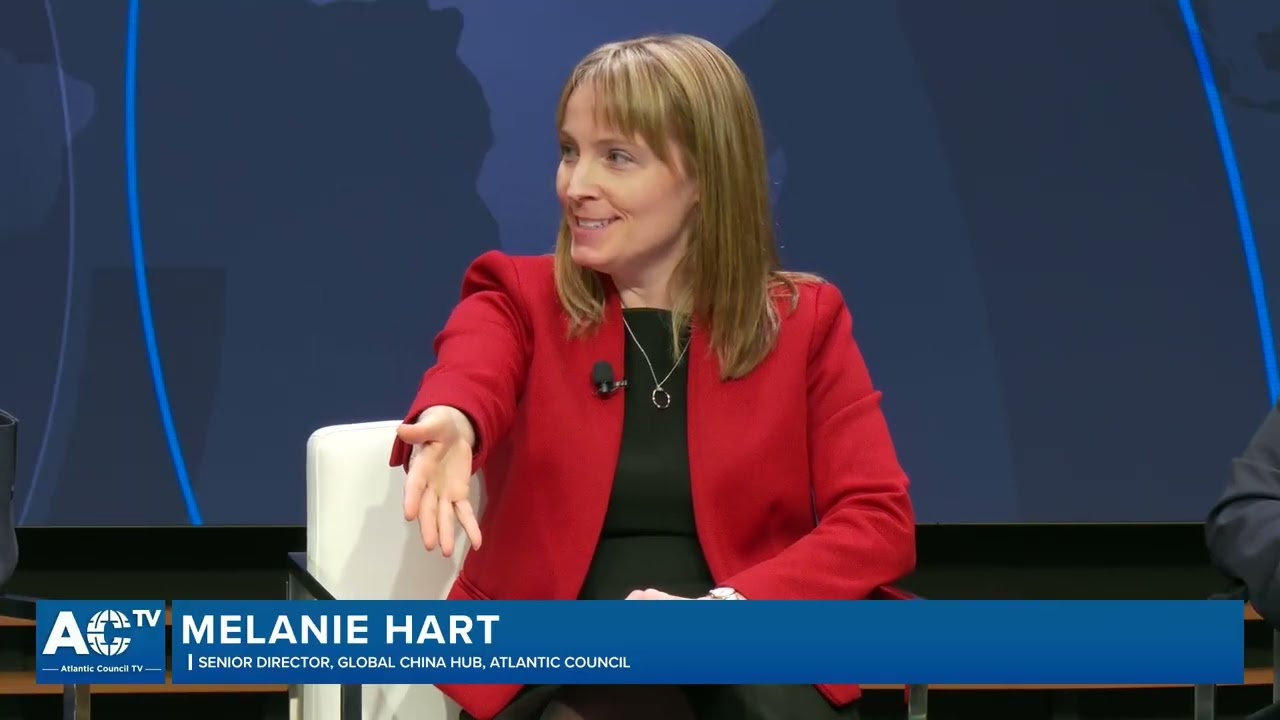
- Melanie Hart discusses the Belt and Road Initiative's role in exporting Chinese overcapacity and the issue of overbuilding.
- Joseph Ouna presents Afrobarometer data on African perceptions of Chinese influence.
- Panelists discuss the role of Chinese telecom companies and economic coercion.
- Q&A session with the audience, addressing topics such as the impact of the Ukraine war and the future of Chinese lending.
Cited Sources
- Afrobarometer — Joseph Ouna, CEO of Afrobarometer, presents survey data on African perceptions of China.
- Atlantic Council Global China Hub — Melanie Hart is the senior director of this hub, which publishes research on China's global engagement.
Concurring Sources
- Atlantic Council report on Chinese mining in Africa — Melanie Hart references Atlantic Council publications on environmental concerns with Chinese mining.
Dissenting Sources
- Debt-trap diplomacy: A critical review
Contribution & Novelties
The panel provides a nuanced perspective on China’s engagement with the Global South, highlighting both benefits and drawbacks. It emphasizes the domestic motivations behind the BRI and the need for recipient countries to consider alternatives. The discussion also touches on the role of US institutions like the DFC in providing alternative financing.
Pour aller plus loin :
- Belt and Road Initiative — Overview of the initiative and its global impact.
- Debt-trap diplomacy — Discussion of the controversial concept and its evidence.
- Afrobarometer — Survey data on African public opinion, including perceptions of China.
93 words
Radar Profile
The radar profile shows balanced scores across all dimensions, indicating a well-rounded discussion with moderate depth and reliability. The panel excels in providing qualitative insights but lacks quantitative rigor.
💬 No comments were provided for analysis.