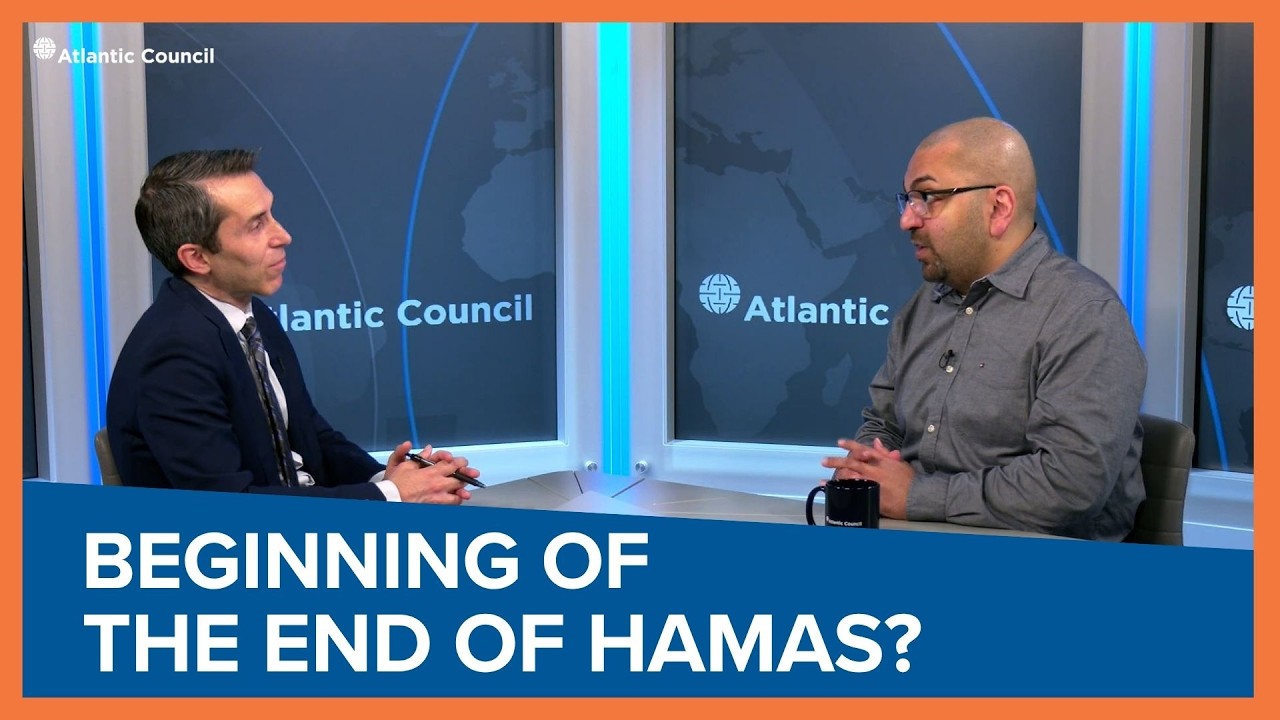
Is this the ‘beginning of the end of Hamas?’ Ahmed Fouad Alkhatib on Gaza’s future
Keywords
Summary
165 words
Critical Evaluation
The interview provides a nuanced and informed perspective on the complex issue of Hamas disarmament and Gaza’s future. Ahmed Fouad Alkhatib brings unique personal experience as a Gazan and political asylum recipient, which lends authenticity and depth to his analysis. His argument that Hamas is being coerced into disarmament due to a combination of military attrition, financial isolation, and popular discontent is well-supported by the context he provides, such as the loss of leadership, inability to replenish fighters, and regional shifts. The discussion of a ’narrative component’ and the need for deradicalization is insightful, though it remains at a conceptual level without concrete implementation strategies. The interview is strong on geopolitical analysis, referencing the roles of Qatar, Turkey, Egypt, and the US, but it lacks empirical data or citations to substantiate claims about public opinion in Gaza or the specifics of the deal. The title accurately reflects the content, and the conversation stays focused on the topic. However, the analysis is inherently speculative, as it relies on interpretation of Hamas’s motivations and potential outcomes. The lack of opposing viewpoints or critical examination of the deal’s feasibility weakens the overall rigor. Additionally, the discussion of ‘deradicalization’ could be seen as biased, given the Atlantic Council’s institutional stance. Despite these limitations, the interview offers valuable insights into the complexities of the situation and the challenges ahead, making it a useful resource for understanding the geopolitical dynamics at play.
236 words
Title / Content Match
The title accurately reflects the content, which focuses on the potential end of Hamas and Gaza's future.
Quality & Reliability
7/10
The video features an expert with direct personal experience and a new book on the topic, providing informed analysis. However, it is an opinion-based discussion without verifiable data or citations, and the channel is a think tank with potential institutional bias.
Key Moments
Markers derived by PSI from the transcript: the creator did not define chapters.
- Introduction of the topic and guest Ahmed Fouad Alkhatib.
- Alkhatib discusses the timing of the deal and Hamas's weakened position.
- Alkhatib explains the narrative component and potential for transformation.
- Discussion of deradicalization and the need for a new covenant with Gazans.
- Alkhatib describes the population's suffering under Hamas and the need for accountability.
- Analysis of regional pressures from Qatar, Turkey, and Egypt on Hamas.
- Alkhatib argues that Hamas is being coerced and has no option but to disarm.
- Discussion of potential spoilers and the possibility of partial disarmament.
- Alkhatib emphasizes the finite nature of weapons and the role of Israeli and Egyptian controls.
- Conclusion with hopes for a peaceful and prosperous Gaza.
Cited Sources
- Hamas and Its Two Million Hostages — Alkhatib's new book, mentioned as published last week, arguing that Hamas has held the population hostage.
Concurring Sources
- Atlantic Council - Realign for Palestine — The project led by Alkhatib, aiming to cultivate Palestinian voices for non-violence and two-state solution.
Contribution & Novelties
The interview provides a unique insider perspective on the Hamas disarmament deal, emphasizing the need for a narrative shift and deradicalization alongside disarmament. Alkhatib’s proposal for a ’new covenant’ with Gazans offers a novel framework for post-conflict governance.
Pour aller plus loin :
- Hamas - Wikipedia — Background on the organization’s history and ideology.
- Palestinian National Authority - Wikipedia — Context on Palestinian governance structures.
- Oslo Accords - Wikipedia — Historical precedent for disarmament and peace processes.
77 words
Radar Profile
The radar profile shows balanced scores across information quantity, quality, technical level, and reliability, indicating a well-rounded but not exceptional analysis. The high reliability score reflects the expert's credibility, while the moderate technical level suggests accessibility to a general audience.