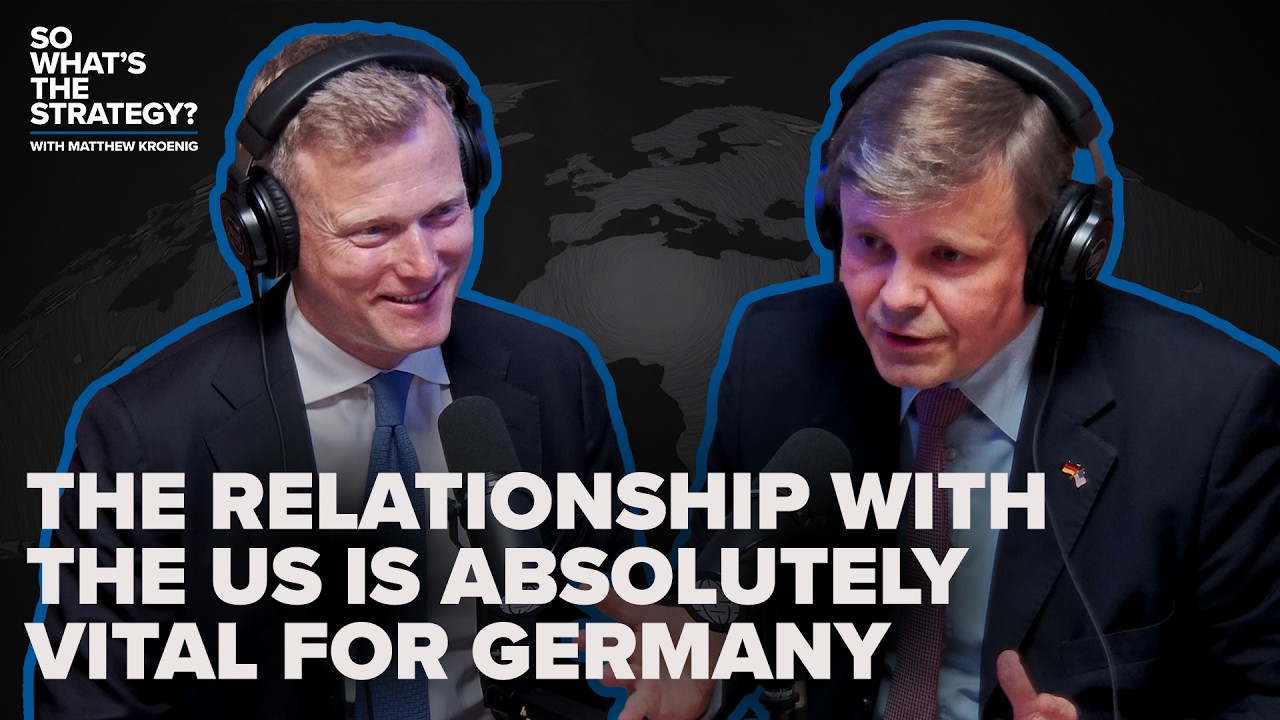
So what’s the strategy for Germany?
Keywords
Summary
168 words
Critical Evaluation
The video provides a valuable insider perspective on Germany’s strategic thinking, articulated by a senior official directly involved in policy planning. The discussion is coherent and structured around three clear pillars, which helps the audience understand the foundational principles of German foreign policy. The guest’s expertise is evident, and he offers concrete examples, such as the increase in defense spending from 32 billion to 110 billion euros and the permanent brigade in Lithuania, which lend credibility to his statements. However, the content is largely opinion-based, reflecting the official government line, and lacks critical examination of potential contradictions or challenges. For instance, while Linz emphasizes the transatlantic partnership, he does not address the recent tensions over Greenland and Iran in depth, merely acknowledging that partnerships are changing. The discussion of the ‘Zeitenwende’ is compelling, but it would benefit from a more nuanced analysis of its implementation and the domestic political constraints. The sources cited are not explicitly referenced, though the video is produced by the Atlantic Council, a reputable think tank, which adds some credibility. The title accurately reflects the content, and the interview format allows for a focused exploration of the topic. Overall, the video is informative and insightful for those interested in German foreign policy, but it should be viewed as an official perspective rather than an independent analysis.
220 words
Title / Content Match
The title accurately reflects the content, which focuses on Germany's strategic approach in a changing geopolitical landscape.
Quality & Reliability
7/10
The video features a senior German foreign policy official providing authoritative insights into Germany's strategic posture. The discussion is grounded in official policy positions and concrete examples, but lacks independent verification and detailed data. The format is an interview, so the content is largely opinion-based, though informed by expertise.
Key Moments
Markers derived by PSI from the transcript: the creator did not define chapters.
- Introduction of the show and guest Dr. Oliver Linz.
- Discussion on Germany's grand strategy and its three pillars.
- Explanation of the transatlantic partnership and challenges.
- Germany's commitment to NATO and defense spending increase.
- Definition of success in security and economic terms.
- The Zeitenwende speech and its significance for German strategy.
- Germany's support for Ukraine and its role as first line of defense.
- Discussion on Germany's pre-2022 strategy and historical context.
Cited Sources
- Atlantic Council — The video is produced by the Atlantic Council, a think tank that hosts the D10 strategy forum.
Concurring Sources
- NATO — NATO's official website provides information on member states' defense spending and commitments, which aligns with the video's discussion.
Dissenting Sources
- No discordant sources identified — The video presents an official perspective, and no conflicting sources were mentioned or found in the provided data.
Contribution & Novelties
The video offers a rare, high-level official perspective on Germany’s evolving grand strategy, particularly the post-2022 shift. It provides concrete policy details, such as the 5% GDP defense spending goal and the permanent brigade in Lithuania, which are not widely known. The discussion of the ‘Zeitenwende’ and its implications for German foreign policy is insightful.
Pour aller plus loin :
- Zeitenwende - Wikipedia — Context on the term and its political significance.
- NATO Defence Expenditure — Official data on defense spending commitments.
- German Federal Foreign Office — Official source for German foreign policy documents and strategies.
96 words
Radar Profile
The radar profile shows high scores in quality of information and reliability, reflecting the authoritative source and coherent argumentation. The quantity of information is moderate, and the technical level is accessible, making it suitable for a general audience interested in geopolitics.