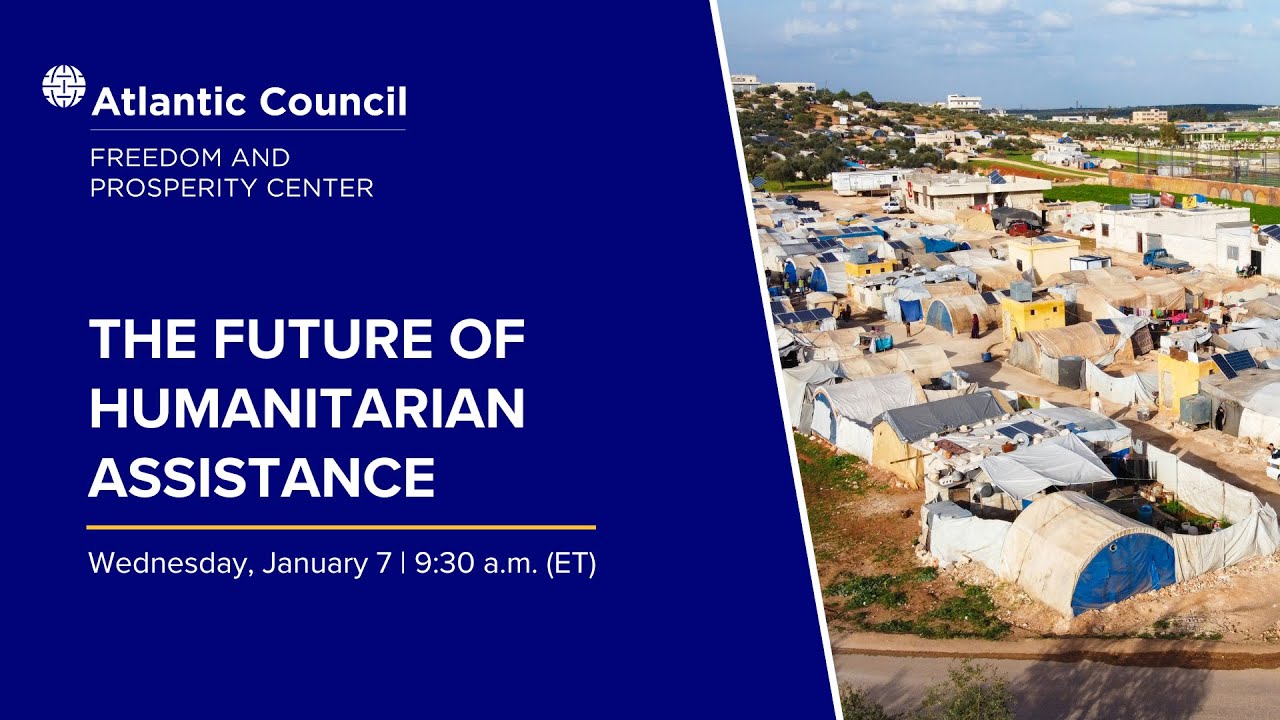
The future of humanitarian assistance
Keywords
Summary
193 words
Critical Evaluation
The panel discussion provides a valuable overview of the current state and future directions of humanitarian assistance from the perspectives of experienced practitioners. The speakers bring diverse backgrounds: Polizer from an NGO, Nott from a for-profit development firm, and Burton from a tech company. This diversity enriches the conversation, offering insights into different operational models and challenges. The discussion is particularly strong in highlighting the importance of flexibility, speed, and local partnerships in humanitarian response. Polizer’s emphasis on building a base of private donors to ensure flexibility and his example of responding to neglected crises like Sudan are compelling. Nott’s argument for maintaining presence, expertise, and partnerships aligns with established best practices in development and humanitarian aid. Burton’s presentation of Zipline’s drone technology illustrates how innovation can improve efficiency, though she also acknowledges the need to avoid increasing complexity and cost. The panelists’ practical experience lends credibility to their statements, but the discussion lacks rigorous data or citations to support their claims. For instance, specific metrics on the effectiveness of drone deliveries or the impact of IsraAID’s programs are not provided. The conversation also tends to be general, without delving into the complexities of political constraints or the ethical dilemmas inherent in humanitarian work. The moderator’s framing remarks set the stage well, but the discussion could have benefited from more critical examination of the challenges and potential downsides of the proposed approaches. Overall, the panel offers a useful, practitioner-oriented perspective, but it is not a rigorous scientific analysis. The lack of concrete evidence and the potential biases of the speakers (e.g., DAI’s commercial interests, IsraAID’s advocacy) should be considered when evaluating the reliability of the information. The adéquation between the title and content is good, as the discussion directly addresses the future of humanitarian assistance. However, the title could be more specific, as the focus is primarily on the US and Africa. In summary, this is a thought-provoking discussion that provides valuable insights, but it should be complemented with more data-driven research for a comprehensive understanding.
336 words
Title / Content Match
The title accurately reflects the content, which focuses on the evolving landscape of humanitarian assistance and the roles of various actors.
Quality & Reliability
7/10
The discussion features experienced practitioners from NGOs, a development firm, and a tech company, providing practical insights. However, it lacks rigorous data or citations, and the panelists' perspectives may be biased by their organizational interests.
Key Moments
Markers derived by PSI from the transcript: the creator did not define chapters.
- Introduction by moderator Patrick Wark, setting the context of humanitarian crises and the need for new approaches.
- Yotam Polizer discusses IsraAID's model, emphasizing flexibility, speed, and the importance of private donors.
- Teyuhelah Nott highlights the importance of presence, expertise, and partnerships for effective humanitarian response.
- Caitlin Burton introduces Zipline's drone delivery systems and their role in improving logistics in Africa.
- Discussion on the role of technology in humanitarian assistance, including potential inefficiencies and benefits.
- Panelists answer questions from the audience, covering topics such as evidence-based decision-making and local partnerships.
Cited Sources
- Atlantic Council Freedom and Prosperity Center — The event was hosted by this center, which focuses on policies to strengthen democracy and economic growth.
- IsraAID — Yotam Polizer is the CEO of IsraAID, and he discussed their operations and approach.
- DAI — Teyuhelah Nott is the CEO of DAI, and she discussed their development and humanitarian work.
- Zipline — Caitlin Burton is the CEO of Zipline Africa, and she discussed their drone delivery systems.
Concurring Sources
- UN OCHA — The UN Office for the Coordination of Humanitarian Affairs provides data and reports on humanitarian crises, aligning with the panel's discussion of growing needs.
- World Bank — The World Bank's work on fragility, conflict, and violence supports the panel's emphasis on the importance of presence and partnerships.
Dissenting Sources
Contribution & Novelties
The panel provides a contemporary snapshot of the humanitarian sector’s challenges and opportunities, emphasizing the need for innovation and private sector engagement. It offers practical insights from leaders in the field, highlighting the importance of flexibility, local partnerships, and technology. The discussion underscores the shift towards more diversified funding sources and the potential of tech-driven solutions like drone logistics.
Pour aller plus loin :
- Humanitarian Innovation Guide — A resource for understanding innovation in humanitarian contexts.
- The Grand Bargain — An agreement to improve the efficiency of humanitarian aid.
- World Humanitarian Summit — A UN summit that set the agenda for humanitarian reform.
103 words
Radar Profile
The radar profile shows moderate to high scores across all dimensions, with the highest in 'quantite_information' and 'fiabilite_globale', indicating a well-rounded discussion with credible speakers. The 'niveau_technique' is lower, reflecting the non-technical nature of the conversation.
💬 No comments were provided for analysis.