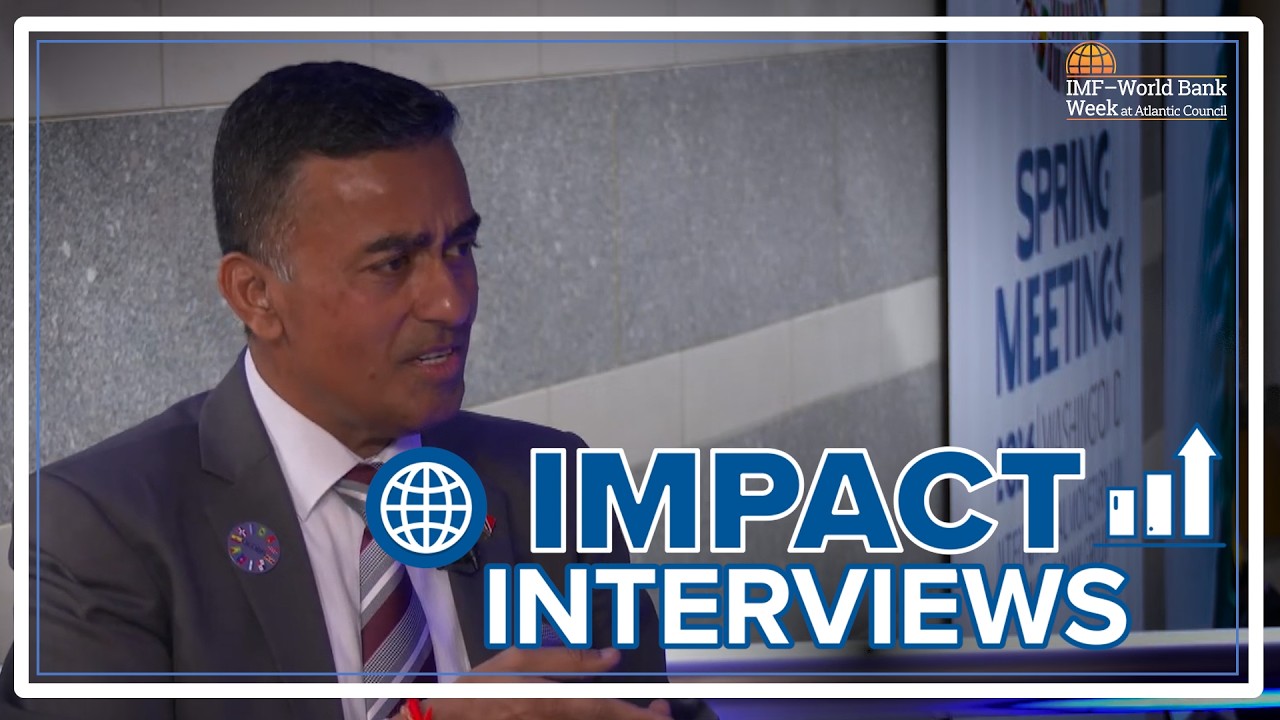
Impact interview with Trinidad and Tobago's Davendranath Tancoo
Keywords
Summary
136 words
Critical Evaluation
The interview provides a valuable insider perspective on Trinidad and Tobago’s economic strategy from the Minister of Finance. The information is presented in a coherent and structured manner, reflecting the government’s policy agenda. However, the discussion lacks critical scrutiny; the minister’s statements are taken at face value without challenging assumptions or probing for evidence. For instance, claims about improved revenue collection and economic diversification are not substantiated with specific data or examples. The reliance on energy revenues as a driver of growth is acknowledged, but the risks of volatility and over-dependence are not deeply explored. The discussion on multilateralism is insightful, highlighting the need for international financial institutions to adapt to the vulnerabilities of small island states. The minister’s call for metrics beyond GDP per capita is a valid point, but the conversation does not delve into potential solutions or counterarguments. The sources cited are limited to the minister’s own statements and the institutional context of the Atlantic Council and IMF. No external references are provided, which limits the ability to verify claims. The adéquation between title and content is strong, as the interview directly addresses the minister’s views. Overall, the content is informative for understanding the government’s perspective, but it would benefit from more rigorous questioning and supporting evidence.
210 words
Title / Content Match
The title accurately reflects the content: an interview with the Minister of Finance of Trinidad and Tobago.
Quality & Reliability
7/10
The interview features a government official presenting policy perspectives without independent verification. Economic claims are plausible but not backed by data or external sources. The discussion is coherent and grounded in the official's role, but lacks critical scrutiny.
Key Moments
Markers derived by PSI from the transcript: the creator did not define chapters.
- Introduction of Minister Tancoo and topic.
- Minister discusses economic outlook and impact of Middle East events.
- Discussion on energy sector and revenue projections.
- Policy priorities: fiscal sustainability, diversification, and digital services.
- Views on multilateralism and IMF/World Bank support.
- Call for metrics beyond GDP per capita for small states.
- Discussion on spillover effects and Caribbean fragility.
- Closing remarks and future outlook.
Cited Sources
- Atlantic Council — Hosting institution and publisher of the interview.
- International Monetary Fund (IMF) — Context of the interview at IMF/World Bank meetings.
- World Bank — Mentioned as a multilateral institution in the discussion.
Concurring Sources
- IMF Article IV Consultation with Trinidad and Tobago — Official IMF assessments of the country's economy.
- World Bank on Small Island Developing States — General context on challenges faced by small island states.
Dissenting Sources
- No specific discordant sources — No conflicting sources were identified within the video content.
Contribution & Novelties
The interview offers a direct account of Trinidad and Tobago’s economic strategy from a key policymaker, highlighting the government’s focus on fiscal sustainability and diversification. It provides insights into the country’s energy sector plans and its engagement with multilateral institutions. The discussion on the need for alternative metrics for small island states is a relevant contribution to the debate on development finance.
Pour aller plus loin :
- IMF Article IV Consultation with Trinidad and Tobago — Official IMF country page with economic reports.
- World Bank on Small Island Developing States — Overview of challenges and support for SIDS.
- CARICOM official website — Regional organization context for Caribbean economies.
108 words
Radar Profile
The radar profile shows moderate scores across all dimensions, indicating a balanced but not deeply technical or highly rigorous presentation. The interview provides a good overview of policy priorities but lacks in-depth analysis and external validation.
💬 No comments were provided for analysis.