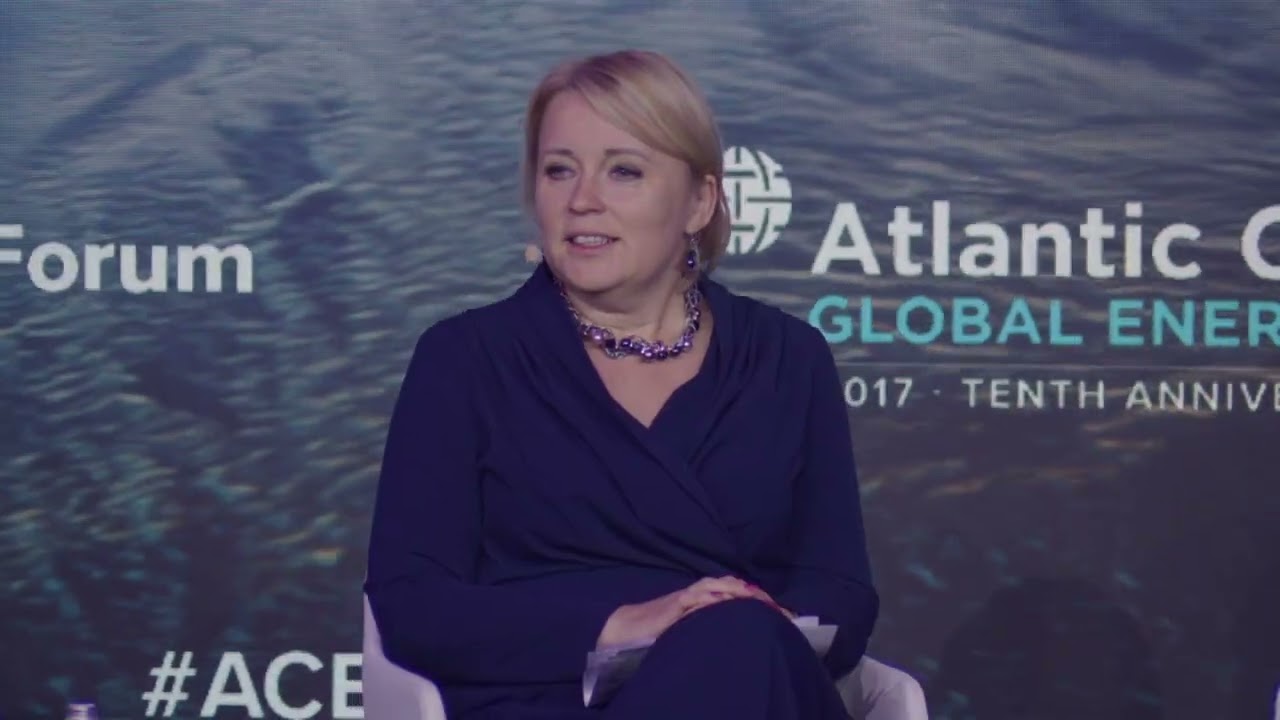
Panel: Europe’s path from energy crisis to lasting resilience
Keywords
Summary
106 words
Critical Evaluation
The panel provides a high-level, expert discussion on European energy security, with participants holding senior positions in government, diplomacy, and industry. The value of the information is significant for understanding current policy directions and geopolitical dynamics. The argumentation is generally solid, relying on the speakers’ expertise and references to specific initiatives like the vertical corridor and EU legislation. However, the discussion is largely opinion-based, with limited data or detailed analysis, and some claims are forward-looking without concrete evidence. The sources cited are institutional (Atlantic Council reports) and personal experiences, which adds credibility but not empirical rigor. The title accurately reflects the content, and the panel stays on topic. The main strengths are the diversity of perspectives (EU, US, industry) and the practical insights into policy implementation. Weaknesses include a lack of critical examination of potential drawbacks or alternative viewpoints, and a tendency to focus on gas rather than broader energy transition. Overall, the panel is informative for a policy-oriented audience, but it lacks the depth of a rigorous scientific analysis.
170 words
Title / Content Match
The title accurately reflects the panel's focus on Europe's energy security and resilience, with discussion of crisis response and long-term strategies.
Quality & Reliability
7/10
Panel of high-level experts (ambassadors, government officials, industry leaders) providing informed opinions and policy insights. No original research, but credible institutional affiliations and references to reports. Some statements are forward-looking and not verifiable.
Key Moments
Markers derived by PSI from the transcript: the creator did not define chapters.
- Introduction by Charles Hendry, framing the discussion on energy security.
- Ambassador Neliupšienė discusses diversification and EU legislative measures.
- Joshua Volz explains US energy dominance and the vertical corridor.
- Geoffrey Pyatt highlights LNG infrastructure and regulatory bottlenecks.
- Discussion on Ukraine's role in gas storage and market integration.
- Panelists address questions on emissions and future investments.
Cited Sources
- Atlantic Council report on European energy security — Mentioned by Geoffrey Pyatt as a new report available at the event.
Concurring Sources
- IEA report on European gas security — Supports the discussion on diversification and storage.
Dissenting Sources
- Critique of LNG expansion
Contribution & Novelties
The panel offers current perspectives from key stakeholders on Europe’s energy security strategy, emphasizing diversification and transatlantic cooperation. It highlights specific initiatives like the vertical corridor and EU legislative timelines.
Pour aller plus loin :
- EU energy security strategy — Official EU page on energy security measures.
- Vertical Corridor — Information on the gas corridor connecting Greece to Eastern Europe.
- US LNG exports — EIA data on US LNG exports to Europe.
72 words
Radar Profile
The radar profile shows balanced scores across all dimensions, with slightly higher scores in information quantity and reliability, reflecting the expert panel's depth but limited technical detail.
💬 No comments were provided for analysis.