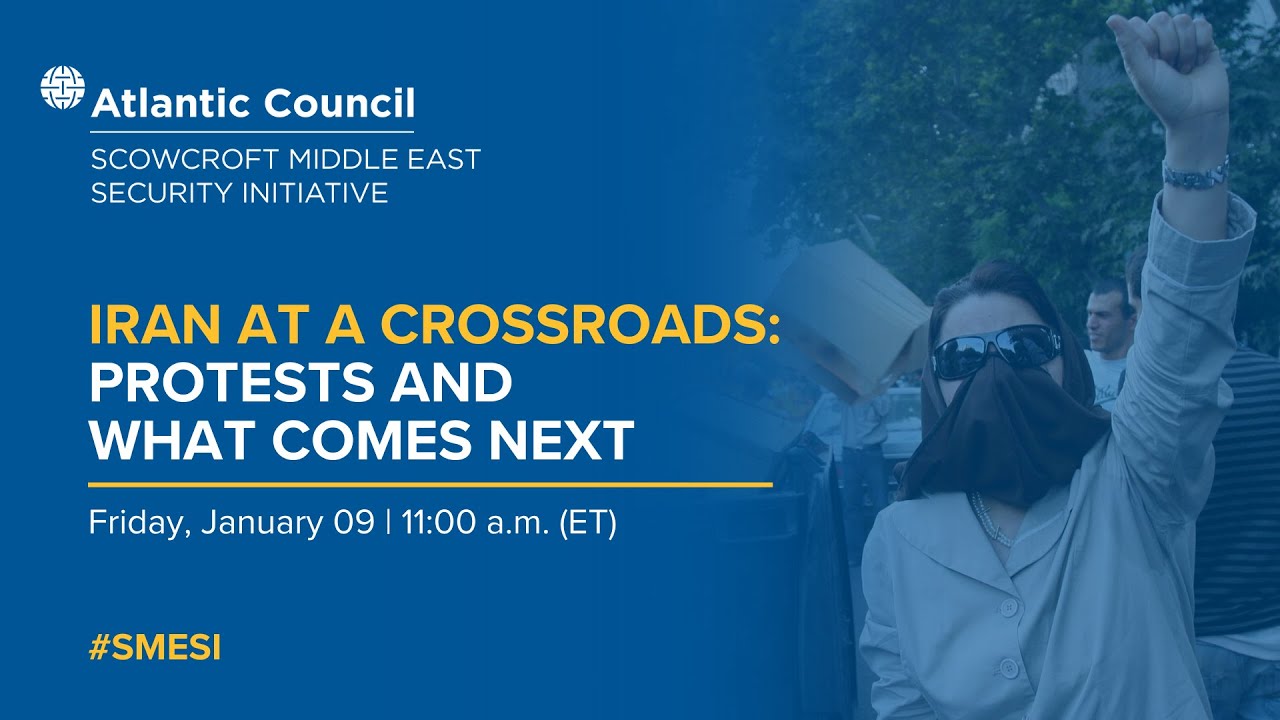
Iran at a crossroads: Protests and what comes next
Keywords
Summary
174 words
Critical Evaluation
The panel provides a high-quality, expert analysis of the protests in Iran, offering valuable insights into the economic, political, and social dynamics. The discussion is well-structured, with each panelist bringing a unique perspective. Holly Dagres sets the scene with vivid descriptions of the protests and their demands, grounding the discussion in on-the-ground reports. Esfandyar Batmanghelidj offers a rigorous economic analysis, citing survey data to support his arguments about economic pessimism and inequality. Behnam Ben Taleblu contextualizes the protests within the broader history of Iranian uprisings, highlighting the unique aspects of the current wave. The panelists engage in a respectful debate, acknowledging areas of disagreement, such as the role of the diaspora and the potential for regime change. The analysis is grounded in verifiable events and public opinion research, though the panelists do not cite specific sources for all claims. The discussion is balanced, avoiding sensationalism and providing a nuanced understanding of the situation. The main strength of the panel is its depth of expertise and the diversity of perspectives, which allows for a comprehensive assessment. However, the discussion is limited by the lack of primary sources and the reliance on anecdotal evidence for some claims. Additionally, the panel does not deeply explore the potential international implications of the protests, focusing primarily on domestic dynamics. Overall, the panel is a valuable resource for understanding the complexities of the current situation in Iran, offering both immediate analysis and long-term context.
238 words
Title / Content Match
The title accurately reflects the content: a discussion of the protests in Iran and their potential trajectory.
Quality & Reliability
8/10
Panel of recognized experts with direct knowledge of Iran, providing nuanced analysis based on survey data and on-the-ground reports. No primary sources cited, but the discussion is grounded in verifiable events and public opinion research.
Key Moments
Markers derived by PSI from the transcript: the creator did not define chapters.
- Introduction of panelists and framing of the discussion.
- Holly Dagres describes the origins of the protests and their expansion.
- Discussion of the role of the diaspora and the call for a return of the Pahlavi dynasty.
- Esfandyar Batmanghelidj analyzes the economic drivers of the protests.
- Behnam Ben Taleblu compares the current protests to previous waves.
- Discussion of the internet shutdown and its impact on protest coordination.
- Panelists debate the potential for regime change and the challenges of transition.
- Analysis of the role of the security forces and the regime's response.
- Discussion of the international community's response and potential policy implications.
- Concluding remarks and outlook for the future.
Cited Sources
- Human Rights Activists in Iran — Cited by Holly Dagres for statistics on arrests and casualties.
- BBC Verify — Cited by Holly Dagres for verification of protest footage.
- The Guardian — Cited by Holly Dagres for a protester's testimony.
- Gallup — Cited by Esfandyar Batmanghelidj for polling data on Iranian economic outlook.
- University of Maryland — Cited by Esfandyar Batmanghelidj for polling data.
Concurring Sources
- Human Rights Activists in Iran — Provides data on arrests and casualties consistent with the panel's discussion.
- BBC Verify — Verifies the widespread nature of the protests as described by the panel.
Dissenting Sources
- No discordant sources identified — The panelists largely agree on the fundamental facts and interpretations, with minor differences in emphasis.
Contribution & Novelties
The panel provides a timely and nuanced analysis of the protests in Iran, synthesizing economic, political, and social perspectives. It offers a unique combination of on-the-ground reporting and survey-based research, highlighting the role of economic pessimism and inequality in driving unrest. The discussion also explores the historical context and the potential for political change, offering insights into the dynamics of the protests and the regime’s response.
Pour aller plus loin :
- Iranian Revolution — Historical background on the 1979 revolution that established the Islamic Republic.
- Women, Life, Freedom Movement — Overview of the 2022 protests in Iran, which are referenced as a precursor to the current wave.
- Economic sanctions against Iran — Context for the economic pressures discussed in the panel.
121 words
Radar Profile
The radar profile shows high scores in quantity and quality of information, reflecting the panel's depth and expertise. The technical level is moderate, as the discussion is accessible to a general audience while still providing substantive analysis. The overall reliability is high, given the credibility of the panelists and the use of verifiable data.
💬 No comments were provided for analysis.