From theory to practice: Making aid and investment work
Keywords
Summary
146 words
Critical Evaluation
The video provides a valuable expert perspective on the practical challenges of promoting economic development through aid and investment. The speakers, Colin Buckley and Carrie Monahan, bring substantial experience from major development finance institutions, lending credibility to their insights. The discussion is grounded in real-world examples, such as Ukraine and Georgia, which illustrate the complex interplay between economic freedom, rule of law, and political stability. However, the content is largely qualitative and relies on anecdotal evidence rather than rigorous empirical analysis. The Freedom and Prosperity Indexes are referenced but not explained in detail, and no specific data or methodology is presented. The lack of citations or links to supporting research in the description limits the ability to verify claims. The panel format allows for diverse perspectives, but the conversation occasionally veers into generalities. The adéquation between title and content is strong, as the discussion indeed bridges theoretical concepts with practical applications. Overall, the video offers useful insights for practitioners and policymakers, but its scientific rigor is moderate, and it would benefit from more concrete data and references.
177 words
Title / Content Match
The title accurately reflects the content, which focuses on translating theoretical concepts of aid and investment effectiveness into practical strategies.
Quality & Reliability
7/10
The video features experts from development finance institutions (BII, MCC) and UNHCR, discussing the relationship between rule of law, economic freedom, and prosperity. They reference the Freedom and Prosperity Indexes and specific country examples (Ukraine, Georgia, Senegal). The content is grounded in practical experience and data, but lacks detailed citations or verifiable sources in the description. The discussion is largely qualitative and based on expert opinion rather than rigorous empirical analysis.
Key Moments
Markers derived by PSI from the transcript: the creator did not define chapters.
- Introduction and opening remarks by the moderator.
- Colin Buckley (BII) discusses the relationship between investment, economic freedom, and rule of law.
- Buckley highlights Ukraine as a case study for the importance of rule of law in attracting investment.
- Buckley reflects on Georgia's reform experience and the need for a coherent approach.
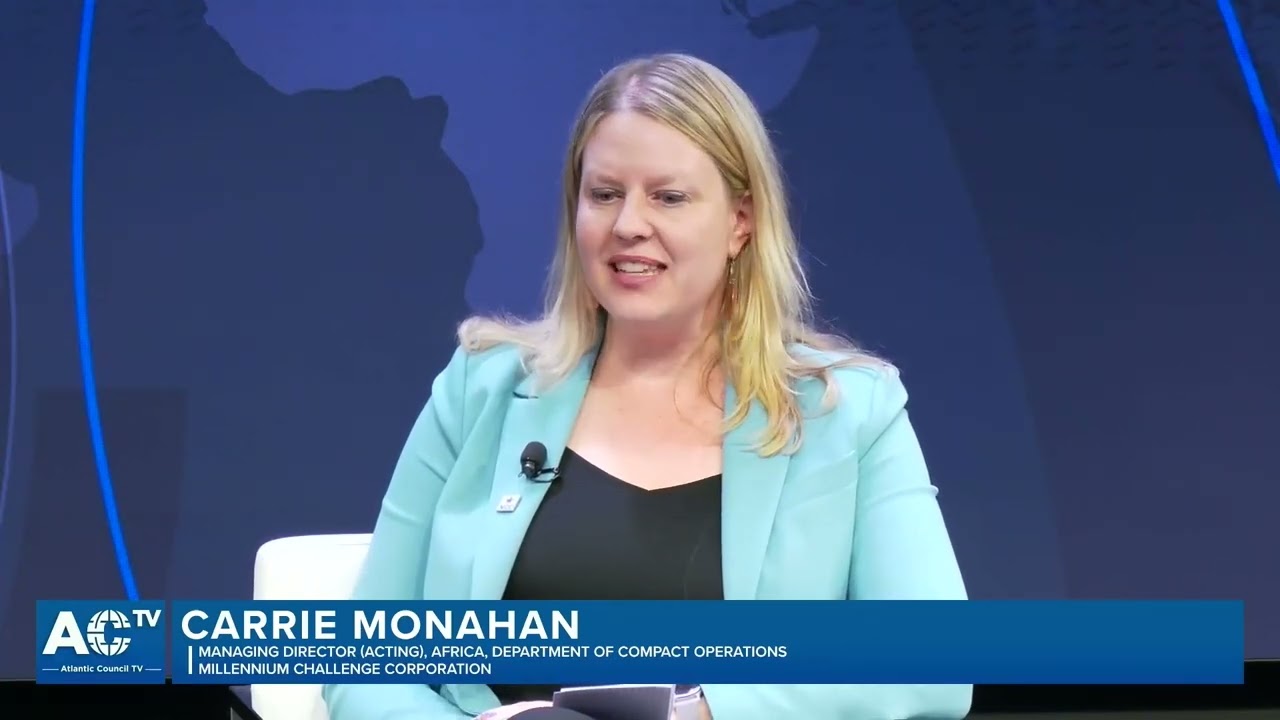
- Carrie Monahan (MCC) explains MCC's principles of selectivity, accountability, and evidence-based decision-making.
- Monahan discusses MCC's work in Senegal on power sector reforms and the importance of regulatory environment.
- Discussion on challenges and the role of development organizations in conflict zones.
Cited Sources
- Freedom and Prosperity Indexes — The indexes are the central data source discussed, providing metrics on economic freedom, political freedom, rule of law, and prosperity across 171 countries.
Concurring Sources
- Freedom and Prosperity Indexes — The video is based on the data from these indexes, which align with the speakers' arguments about the importance of rule of law and economic freedom.
Contribution & Novelties
The video contributes practical insights from development finance institutions on the importance of a holistic approach to economic growth, emphasizing that investment alone is insufficient without accompanying reforms in rule of law and economic freedom. It highlights the need for coordination among various stakeholders.
Pour aller plus loin :
- Rule of law — Foundational concept for understanding the legal and institutional framework discussed.
- Economic freedom — Key metric in the indexes and central to the discussion.
- Millennium Challenge Corporation — The agency’s model of selectivity and evidence-based aid is a practical example.
- British International Investment — The UK’s development finance institution, whose strategy is discussed.
105 words
Radar Profile
The radar profile shows balanced scores across information quantity, quality, technical level, and reliability, indicating a well-rounded discussion with moderate depth and credibility.