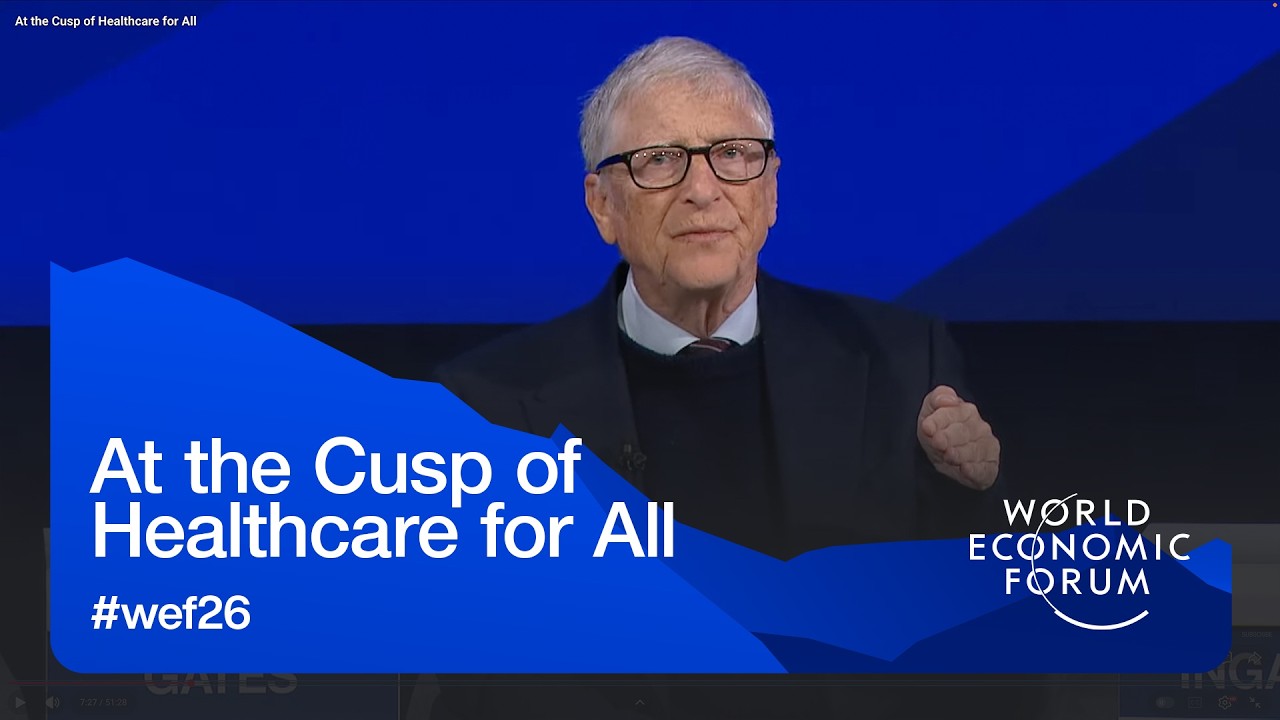
At the Cusp of Healthcare for All | World Economic Forum Annual Meeting 2026
Keywords
Summary
167 words
Critical Evaluation
Value of the Information & Strength of the Argument
The discussion provides valuable insights into the practical applications of AI in global health, with concrete examples from Rwanda and other African countries. The argumentation is persuasive, drawing on the credibility of the speakers and their direct involvement in initiatives. However, the value is somewhat limited by the lack of detailed data or rigorous analysis; the arguments rely more on anecdotal evidence and personal conviction than on systematic evidence. The panel effectively argues that AI can address critical health challenges, but the discussion remains at a strategic level rather than delving into technical specifics.
103 words
Title / Content Match
The title accurately reflects the content, which focuses on the potential of AI to improve global healthcare access and delivery.
Quality & Reliability
7/10
Panel discussion featuring high-level experts (Bill Gates, Paula Ingabire, Peter Sands) with concrete examples and initiatives, but limited technical depth and no formal citations. The content is credible but relies on anecdotal evidence and personal opinions.
Key Moments
Markers derived by PSI from the transcript: the creator did not define chapters.
- Introduction by moderator Sara Eisen, setting the stage for discussion on healthcare and AI.
- Bill Gates announces the Horizon 1000 initiative with OpenAI, targeting 1,000 primary healthcare clinics in Africa.
- Gates discusses the role of AI in healthcare delivery, emphasizing its importance in developing countries.
- Paula Ingabire explains Rwanda's digital transformation journey and its focus on leveraging AI for healthcare.
- Peter Sands highlights Rwanda's achievements and the potential of AI in TB screening and malaria resistance tracking.
- Discussion on the challenges of infrastructure, such as internet connectivity, and the need for problem-focused AI applications.
- Gates and Ingabire discuss the use of AI in maternal health and demand forecasting for health commodities.
- Comparison between US and African healthcare systems, highlighting the potential for AI to leapfrog traditional models.
- Panelists emphasize the importance of training local talent and avoiding brain drain.
- Closing remarks on the need for public-private partnerships and scaling AI solutions.
Cited Sources
- World Economic Forum — Official website of the World Economic Forum, hosting the event.
- World Economic Forum YouTube Channel — Channel where the video is published.
Concurring Sources
- World Health Organization on AI in health — WHO's perspective on AI in health, aligning with the discussion's themes.
Dissenting Sources
- Potential risks of AI in healthcare — Some studies highlight risks such as bias and data privacy, which are not deeply explored in the video.
External References
Contribution & Novelties
The video provides an insightful overview of the current state and future potential of AI in global health, with a focus on Africa. It highlights a new partnership between the Gates Foundation and OpenAI, which is a significant development. The discussion offers a balanced perspective, acknowledging both opportunities and challenges.
Pour aller plus loin :
- Artificial intelligence in healthcare — Overview of AI applications in healthcare.
- Global Fund to Fight AIDS, Tuberculosis and Malaria — Organization led by Peter Sands, relevant to the discussion.
- Rwanda’s digital health strategy — Official site of Rwanda’s Ministry of Health, providing context on their initiatives.
101 words
Radar Profile
The radar profile shows high scores in information quantity and reliability, reflecting the credibility of the speakers and the breadth of topics covered. The technical level is moderate, indicating that the content is accessible to a general audience but lacks deep technical detail. The overall balance suggests a well-rounded discussion with a strong focus on practical applications.