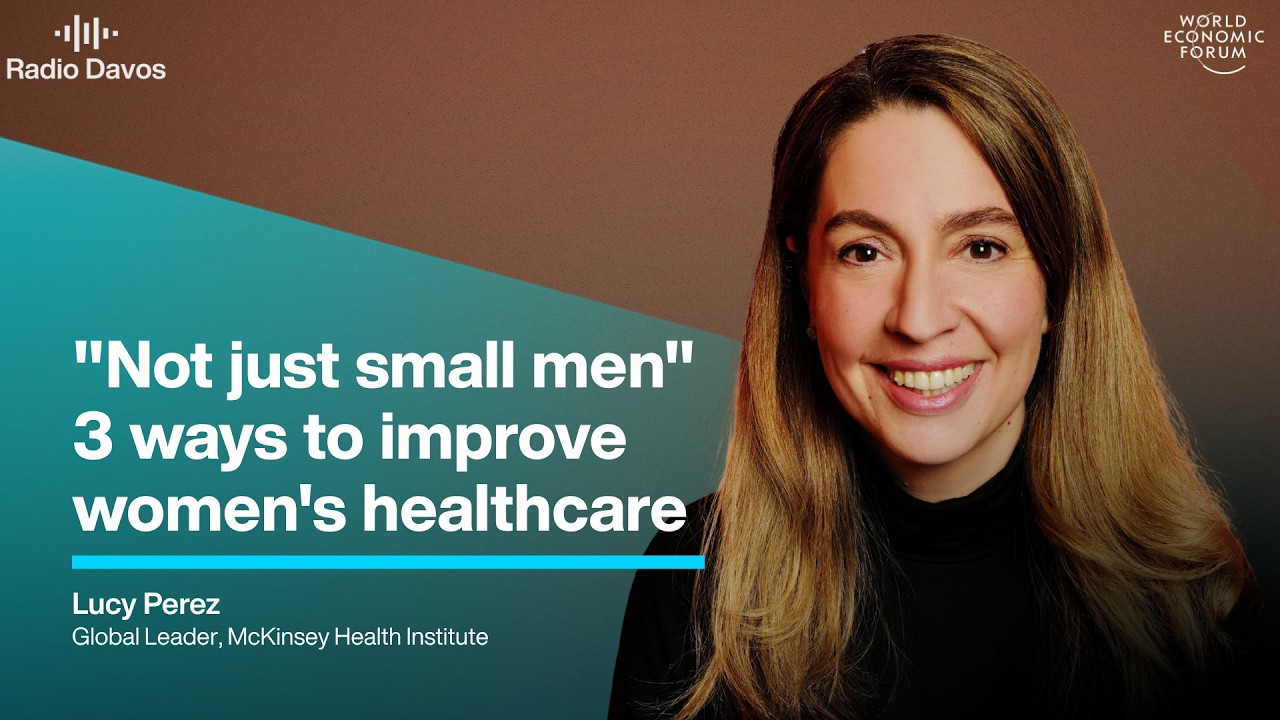
Not just small men - how healthcare is failing women, and what can be done
Keywords
Summary
195 words
Critical Evaluation
Value of the Information & Strength of the Argument
The video provides valuable insights into women’s health disparities and presents concrete, evidence-based solutions. The argumentation is solid, relying on data from a reputable report and expert testimony. The host asks pertinent questions, and the guest provides clear explanations with examples. The economic case for prevention is compelling, with specific ROI figures. The discussion is well-structured and accessible.
Scientific Rigor, Source Quality, Title Accuracy
The video is based on a joint report by the World Economic Forum and McKinsey Health Institute, which adds credibility. The guest is a senior expert, and the statistics cited are from the report. The title accurately reflects the content. The description provides links to the report and related resources, which are relevant and verifiable. No major discrepancies were noted.
133 words
Title / Content Match
The title accurately reflects the content, which discusses how healthcare fails women and potential solutions.
Quality & Reliability
8/10
The video features an expert from the McKinsey Health Institute, referencing a joint report with the World Economic Forum. The claims are supported by statistics and the report is cited. However, the content is largely an interview and promotional in nature, with limited independent verification.
Key Moments
Markers derived by PSI from the transcript: the creator did not define chapters.
- Introduction: women spend 25% more time in poor health than men, and the economic impact.
- Lucy Perez introduces the McKinsey Health Institute and the report 'CARE for Women'.
- Discussion on the health gap during working years and the trillion-dollar economic loss.
- Example of heart disease: women 50% more likely to die after a heart attack, and the 'atypical' presentation issue.
- First solution: annotating mammograms for breast arterial calcification to predict heart disease risk.
- Second solution: improving follow-up care for pregnancy-related conditions like preeclampsia and gestational diabetes.
- Third solution: expanding screening for perinatal depression, including earlier in pregnancy.
- Challenges in implementing these changes in complex health systems, and the role of AI and data quality.
- Lucy Perez's personal journey and the importance of studying sex-based differences for better health for all.
Cited Sources
- CARE for Women: Investing in Care Delivery to Improve Women’s Lives and Livelihoods — The report discussed in the video, providing the data and recommendations.
- Blog: CARE for Women: A high-impact investment in health system redesign — A blog post summarizing the report's key points, referenced by the host.
- McKinsey Health Institute — The organization where Lucy Perez works and co-leads, providing the research.
- Centre for Health and Healthcare — The World Economic Forum centre involved in the report.
Concurring Sources
- World Economic Forum — The organization that published the report and hosts the podcast.
External References
Contribution & Novelties
The video highlights the significant health gap between women and men, emphasizing that it is not just about reproductive health but also about conditions like heart disease. It presents three actionable, low-cost interventions that can be integrated into existing health systems, with a strong economic case. The discussion underscores the importance of considering sex as a biological variable in medical research and practice, a point often overlooked.
Pour aller plus loin :
- Sex as a biological variable — Relevant to the core message of the video.
- Breast arterial calcification — Directly related to the first intervention discussed.
- Perinatal depression — Related to the third intervention, though the video uses a broader term.
- Endometriosis — Mentioned in the video as an underfunded condition.
122 words
Radar Profile
The radar profile shows high scores in quality of information and reliability, reflecting the expert guest and cited report. The quantity of information is moderate, as the video is a focused interview. The technical level is moderate, making it accessible to a general audience while still providing substantive content.