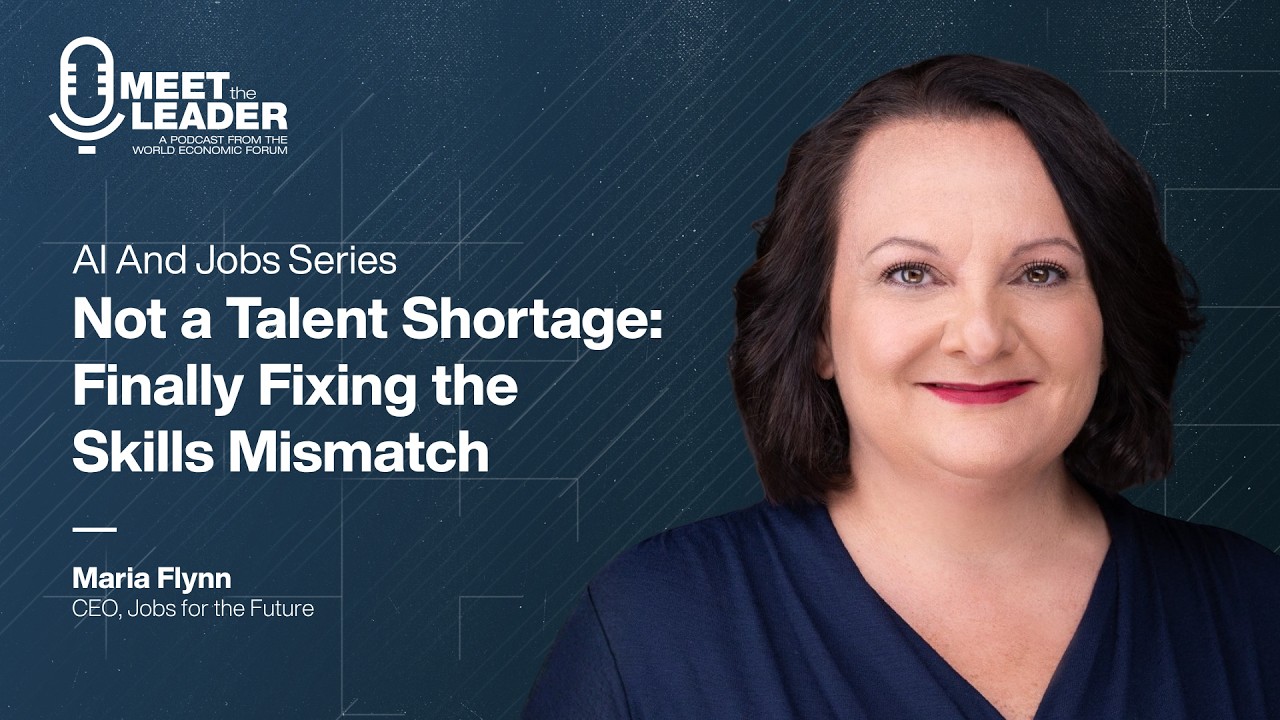
AI and Jobs Series: Fixing the Skills Mismatch and Navigating Upskilling's 'Messy Middle'
Keywords
Summary
187 words
Critical Evaluation
Value of the Information & Strength of the Argument
The episode provides valuable insights into the skills mismatch and workforce challenges in the AI era. Maria Flynn offers a nuanced perspective, backed by data from JFF’s surveys and reports. She argues convincingly that the problem is not a talent shortage but a mismatch, and she supports this with evidence from the WEF Chief People Officer Outlook. The discussion on job quality is particularly valuable, introducing a framework with five dimensions that goes beyond pay. Flynn’s advocacy for skills-based hiring is well-argued, acknowledging both progress and cultural barriers. She also addresses gender gaps in AI, citing specific findings and suggesting practical solutions. The argumentation is solid, though it relies heavily on anecdotal evidence and organizational research rather than independent academic studies. The episode is balanced, acknowledging uncertainties and the ‘messy middle’ of AI transformation.
Scientific Rigor, Source Quality, Title Accuracy
The episode demonstrates scientific rigor by referencing specific research: JFF’s AI for Workers & Learners Survey, the American Job Quality Study, and the WEF Chief People Officer Outlook. These sources are credible and directly relevant. The title accurately reflects the content, focusing on skills mismatch and upskilling challenges. The discussion is well-structured and stays on topic. However, the episode is primarily an expert opinion piece, and while it cites research, it does not provide detailed methodology or independent verification. The sources are reputable, but the reliance on organizational reports limits the generalizability. The title is appropriate and does not overpromise.
249 words
Title / Content Match
The title accurately reflects the content, focusing on skills mismatch and upskilling challenges in the AI era.
Quality & Reliability
8/10
The episode features an expert interview with Maria Flynn, CEO of Jobs for the Future, a reputable nonprofit. Claims are supported by references to JFF research and WEF reports, but no independent verification is provided. The discussion is balanced and acknowledges uncertainties.
Key Moments
Markers derived by PSI from the transcript: the creator did not define chapters.
- Introduction to the episode and the skills mismatch topic.
- Maria Flynn explains the worst-case scenario of skills mismatch.
- Definition of quality jobs and the five essential elements.
- Discussion on worker voice and its importance in AI adoption.
- Findings from JFF's AI survey, including growing skepticism and gender gaps.
- Strategies to address gender gaps in AI and STEM fields.
- Advice for workers to be open to AI and build skills.
- The importance of human skills and how to teach them effectively.
- Skills-based hiring and the need for culture change.
- Rapid-fire game: red light, green light on future work trends.
Cited Sources
- Jobs for the Future — Organization website
- JFF AI for Workers & Learners Survey — Survey mentioned in the episode
- JFF American Job Quality Study — Study defining job quality dimensions
- 2026 Chief People Officer Outlook — WEF report cited for skills mismatch data
Concurring Sources
- World Economic Forum Future of Jobs Report — Report on job trends and skills, aligning with the episode's themes.
- McKinsey: The state of AI in 2023 — Survey on AI adoption and workforce impact, supporting the discussion on AI's effects.
Dissenting Sources
- Acemoglu & Restrepo (2020) 'Robots and Jobs: Evidence from US Labor Markets' — This study suggests that robots have a negative effect on employment and wages, contrasting with the episode's more optimistic view on AI's potential for job creation.
External References
Contribution & Novelties
This episode contributes to the discourse on AI and workforce by highlighting the skills mismatch as a key challenge, offering a framework for job quality, and advocating for skills-based hiring. It provides practical insights for leaders and workers navigating the ‘messy middle’ of AI transformation. The discussion on gender gaps in AI and the importance of worker voice adds valuable perspectives.
Pour aller plus loin :
- Skills-based hiring — Overview of the concept and its adoption.
- Future of Jobs Report — WEF report on job trends and skills.
- Secretary’s Commission on Achieving Necessary Skills (SCANS) — Historical report on necessary skills, referenced in the episode.
105 words
Radar Profile
The radar profile shows high scores in information quantity and quality, reflecting the episode's rich content and credible sources. The technical level is moderate, making it accessible to a broad audience. Overall, the episode is reliable and informative, with a balanced perspective on AI's impact on work.
💬 Sur les 0 commentaires analysés, aucune tendance n'est disponible.