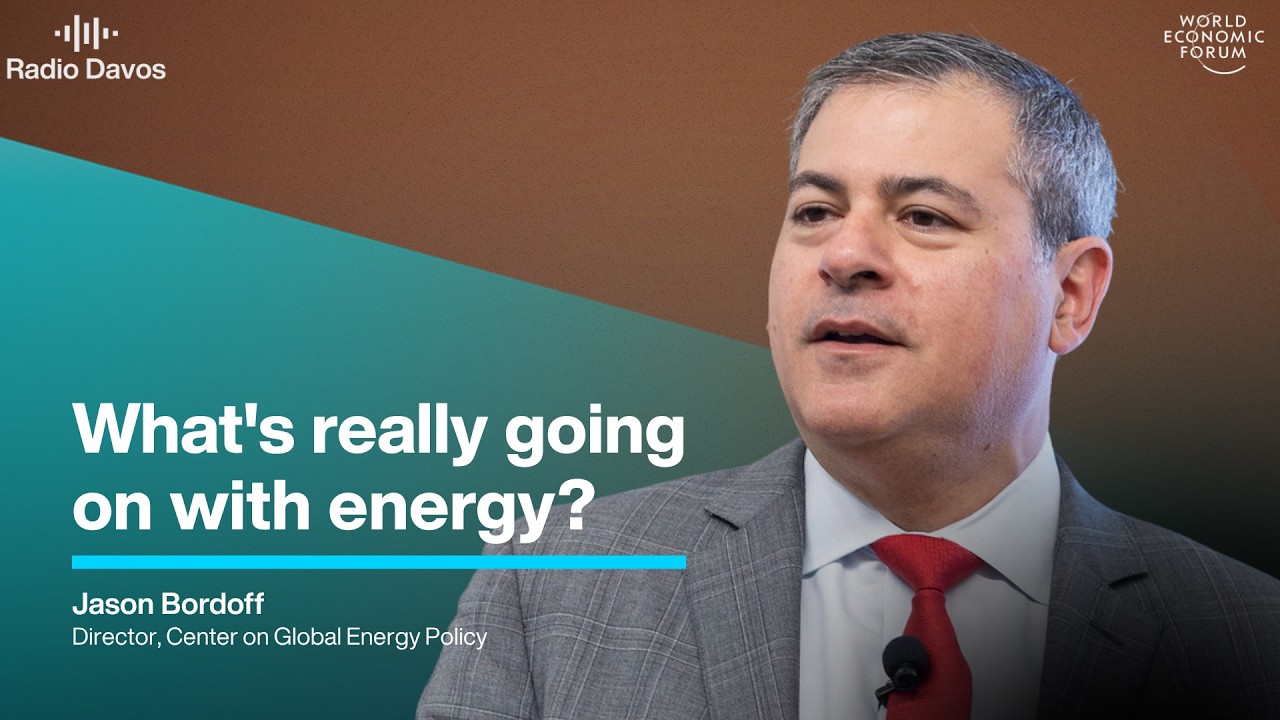
The Hormuz shock, AI and China: the state of global energy, with Jason Bordoff
Keywords
Summary
203 words
Critical Evaluation
Value of the Information & Strength of the Argument
The value of the information is high, offering expert insights into the recent Hormuz crisis and its implications for global energy security. Bordoff provides a balanced analysis, acknowledging the resilience of the oil market while also highlighting the uneven impacts on lower-income countries. The argumentation is solid, drawing on his experience in government and academia, and he presents nuanced perspectives on complex issues such as China’s role in clean energy supply chains and the potential of AI. He avoids oversimplification, emphasizing the need for careful risk assessment and the distinction between different types of dependencies.
Scientific Rigor, Source Quality, Title Accuracy
The discussion is rigorous, with Bordoff referencing his own work and that of colleagues, such as a Foreign Affairs article co-authored with Meghan O’Sullivan. The World Economic Forum provides institutional credibility, and the episode is part of a series of related podcasts and reports, including the Energy Transition Index 2026. The title accurately reflects the content, covering the Hormuz shock, AI, and China’s role in energy. The sources cited are authoritative, including the Center on Global Energy Policy and the World Economic Forum’s publications.
194 words
Title / Content Match
The title accurately reflects the main topics: the Hormuz shock, AI's role in energy, and China's position in the global energy transition.
Quality & Reliability
8/10
The discussion features Jason Bordoff, a recognized energy policy expert with high-level government experience, and is hosted by the World Economic Forum, an established international organization. The content is well-structured, nuanced, and grounded in current events, though it is primarily an opinion-based analysis rather than peer-reviewed research.
Key Moments
Markers derived by PSI from the transcript: the creator did not define chapters.
- Introduction to the episode and the topic of the Hormuz energy shock.
- Jason Bordoff explains why the Hormuz closure was the largest supply disruption but not the largest price shock.
- Discussion on the resilience of the global oil market and the concept of a 'swing consumer'.
- Analysis of the 60-day deal on Iran's nuclear program and its implications for oil supply.
- Shift to the broader energy transition, electrification, and China's role.
- Discussion on the risks of dependence on Chinese clean energy supply chains.
- Roberto Bocca discusses the Energy Transition Index and investment gaps in developing countries.
- The role of AI in optimizing energy systems and its potential as a tool for the transition.
- Conclusion and reflections on the future of energy security and cooperation.
Cited Sources
- Energy Transition Index 2026 — Referenced by Roberto Bocca as a recent publication on global energy systems.
- World Economic Forum Centre for Energy and Materials — Roberto Bocca is the head of this centre, which is relevant to the discussion.
- Center on Global Energy Policy at Columbia University — Jason Bordoff is the founder of this center, providing his institutional background.
- Columbia Energy Exchange podcast — Jason Bordoff co-hosts this podcast, which is mentioned in the introduction.
- Related podcast: The Iran oil shock — A previous episode with Jason Bordoff on the same topic.
- Related podcast: Energy Transition Index 2026 — A related discussion on the Energy Transition Index.
- Related podcast: Chief Economists Outlook — Another perspective on the Hormuz crisis.
Concurring Sources
- International Energy Agency - World Energy Outlook — Provides global energy projections that align with the discussion on electrification and energy security.
- U.S. Energy Information Administration - Strait of Hormuz — Provides data on the importance of the Strait of Hormuz for global oil flows, supporting the context of the crisis.
Dissenting Sources
- OPEC Monthly Oil Market Report — OPEC's perspective on oil market dynamics may differ from Bordoff's analysis, particularly regarding the role of swing producers and the impact of the Hormuz closure.
External References
Contribution & Novelties
This episode provides a timely expert analysis of the Hormuz crisis and its implications, offering a nuanced perspective on the resilience of the oil market and the emerging concept of a ‘swing consumer.’ It also highlights the geopolitical complexities of the clean energy transition, particularly the dependence on Chinese supply chains, and argues for a more nuanced approach to de-risking. The discussion on AI’s dual role as both a driver of electricity demand and a tool for optimizing energy systems adds a forward-looking dimension.
Pour aller plus loin :
- International Energy Agency - Electricity — Provides data and analysis on global electricity trends, relevant to the ‘age of electrification’ mentioned.
- World Economic Forum - Energy Transition Index — The report referenced in the episode, offering a comprehensive assessment of energy systems.
- Columbia Center on Global Energy Policy — Jason Bordoff’s institution, with research on energy security and policy.
- Foreign Affairs - Article on Energy Security — The article co-authored by Bordoff and Meghan O’Sullivan is likely here, but exact URL not provided; search for ‘Bordoff O’Sullivan energy security’.
178 words
Radar Profile
The radar profile shows high scores across all dimensions, indicating a well-rounded and reliable discussion. The strengths are particularly in information quality and reliability, reflecting the expert guest and institutional backing. The technical level is also high, making it suitable for an informed audience.
💬 No comments were provided for analysis.