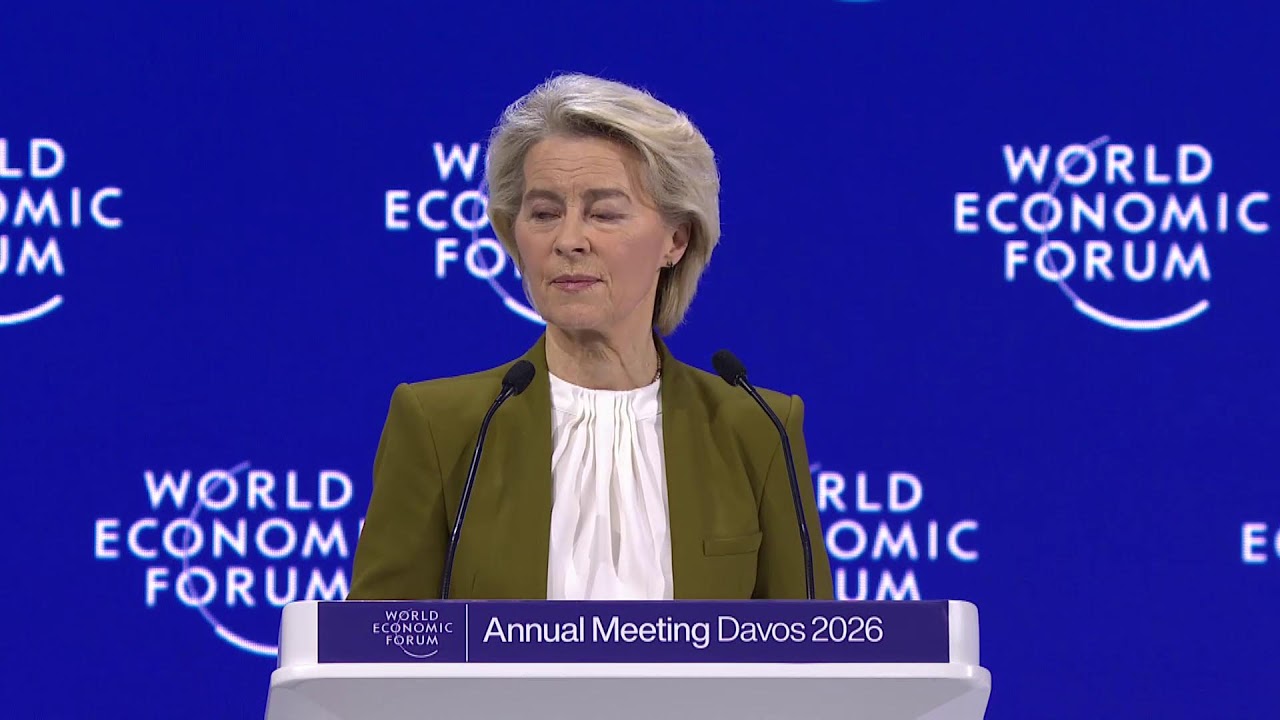
Special Address by Ursula von der Leyen, President of the European Commission
Keywords
Summary
188 words
Critical Evaluation
Value of the Information & Strength of the Argument
The speech provides valuable insights into the EU’s strategic priorities and policy directions, offering concrete examples of initiatives and agreements. The argumentation is coherent and persuasive, building a case for European independence by linking historical lessons to current events. However, it is a political speech, so the value lies in understanding the EU’s official stance rather than in objective analysis. The argumentation is solid in its internal logic, but it does not engage with potential counterarguments or criticisms.
Scientific Rigor, Source Quality, Title Accuracy
The speech is a primary source from a high-level official, so its scientific rigor is limited; it is a policy statement rather than a research presentation. The quality of sources is not applicable in the traditional sense, but the claims are consistent with publicly known EU policies and announcements. The title accurately reflects the content, and the speech is well-structured. No comments were provided for analysis.
159 words
Title / Content Match
The title accurately reflects the content: a special address by the European Commission President at Davos.
Quality & Reliability
8/10
The speech is a high-level policy address by a top EU official, presenting factual claims about EU initiatives (e.g., Mercosur agreement, defense spending) that are verifiable through official sources. The content is well-structured and consistent with known EU positions, but it is inherently political and promotional, lacking independent verification.
Key Moments
Markers derived by PSI from the transcript: the creator did not define chapters.
- Introduction by WEF President Børge Brende
- Von der Leyen begins her address, referencing the 1971 Nixon shock and its lessons for Europe
- Announcement of EU-Mercosur trade agreement and other trade deals
- Discussion of the 28th regime and 'EU Inc.' company structure
- Focus on investment and capital markets, savings and investment union
- Energy union and affordable energy action plan
- Defense spending surge and support for Ukraine
- Arctic security and Greenland, conclusion
Cited Sources
- EU-Mercosur trade agreement — Mentioned as a breakthrough after 25 years of negotiations, creating the largest free trade zone.
- EU Inc. proposal — Proposed 28th regime for a European company structure.
- Savings and Investment Union — Initiative to deepen capital markets.
- Affordable Energy Action Plan — Plan to interconnect energy markets and reduce prices.
- EU support for Ukraine — Loan of 90 billion euros for 2026-2027.
Concurring Sources
- European Commission press release on EU-Mercosur — Confirms the signing of the agreement.
- European Commission statement on EU Inc. — Details the proposal for a 28th regime.
Dissenting Sources
- Criticism of EU-Mercosur agreement — Environmental groups have raised concerns about deforestation and climate impact.
Contribution & Novelties
The speech provides an authoritative statement of the EU’s strategic direction under von der Leyen, emphasizing a shift towards ‘European independence’ in response to permanent geopolitical changes. It introduces specific policy proposals like ‘EU Inc.’ and the Savings and Investment Union, and highlights the EU-Mercosur agreement as a major achievement. The speech also signals a new focus on Arctic security and defense, with concrete commitments.
Pour aller plus loin :
- European Commission - Strategic Compass — Official document on EU security and defense strategy.
- EU-Mercosur Association Agreement — Overview of the trade agreement.
- Savings and Investment Union — EU initiative to deepen capital markets.
104 words
Radar Profile
The radar profile shows high scores in quantity of information and global reliability, reflecting the speech's comprehensive coverage and authoritative source. The technical level is moderate, as the content is policy-oriented rather than technical. The quality of information is high but not perfect due to its political nature.